Skip to content
The Better Trip

Destinations

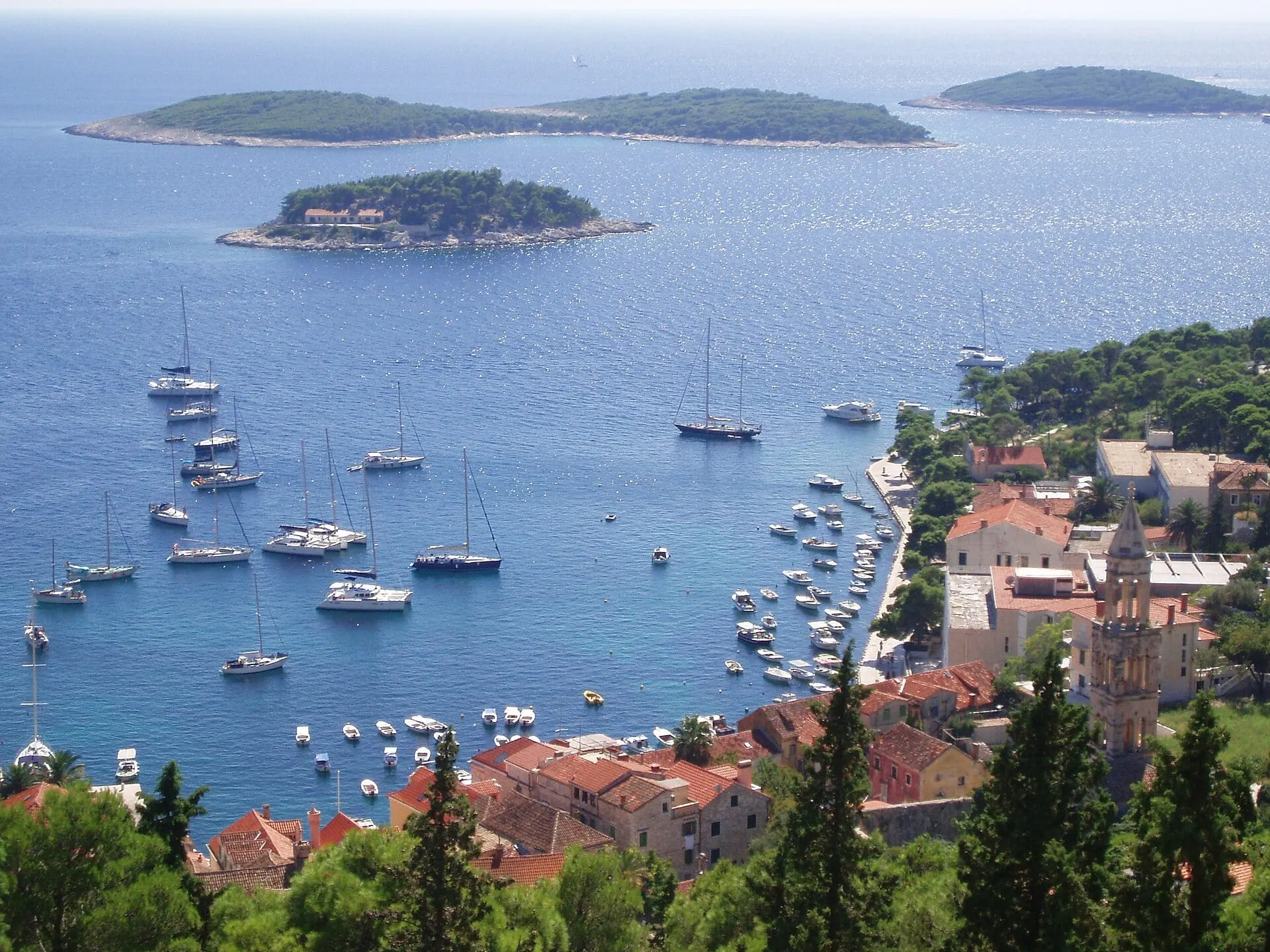
Yachts anchored in the blue bay of Hvar town with the Pakleni islands offshore.

FerrySpringSummerAutumn

Split to Hvar by catamaran and ferry

An hour across the Adriatic, through the Split Gate and past the Pakleni islands to a harbour under a Venetian fortress

The short answer

Fast catamarans run from Split ferry port to Hvar town in 50 to 65 minutes: in July 2026 Krilo and TP Line alone ran 15 a day, and Jadrolinija adds its own in season. Most cost €25; the two state-supported sailings a day cost €10 from 29 May to 27 September and €6.40 the rest of the year (2026 fares). Catamarans carry foot passengers only: with a car, Jadrolinija's ferry to Stari Grad takes 110 minutes, at €47.60 a car and €8.40 a passenger in summer 2026, then it is a 20-minute drive to Hvar town. Tickets for both are sold online for a fixed departure.

Leave Split's harbour with Diocletian's city behind you, slip between Šolta and Brač, and an hour later the boat eases into Hvar under the walls of the fortress, with the Pakleni islands passing to starboard. It is the quickest way onto the sunniest island in Croatia, with Venetian stone, lavender and swimming coves a short walk from the quay. Those who bring a car take the slower ferry into the deep bay at Stari Grad, where Greek settlers founded Pharos in 384 BC.

Croatia

Catamaran to Hvar town
50 to 65 minutes
Car ferry to Stari Grad
110 min, then 20 min by road
Catamarans a day (2026)
15 in July, 2 in winter
Cheapest catamaran (2026)
€10 summer, €6.40 off-season
Car on the ferry (2026)
from €35.60 (€47.60 summer)
Catamarans land in
Hvar town harbour

Why this short crossing is one of the Adriatic's great ones

Sailors have been making for this island for twenty-four centuries. In 384 BC Greeks from the island of Paros founded Pharos, today's Stari Grad, because its deep bay offered the best protection, and divided the plain behind it into plots of dry-stone walls that farmers still work. UNESCO listed the Stari Grad Plain in 2008.

The Venetians, invited back in 1278 against the pirates of Omiš, moved the island's seat across to Hvar town, and Hvar became Venice's main port in the eastern Adriatic. Its galleys were kept in an arsenal on the harbour, first built between 1292 and 1331. When the arsenal was renovated and enlarged in 1611, a theatre was opened on its upper floor in 1612, by the town's own account the first public theatre in Europe. Above it all stands the fortress, rebuilt in 1551, where the townspeople took refuge when the Ottoman fleet burned the town in 1571.

That is still the arrival: the catamaran runs in past the Pakleni islands and noses into the same harbour, slowly now, by order of the port authority. The town's square, the largest in Dalmatia, was once a bay that was filled in with stone over centuries. On the riva, backpackers step off beside superyachts.

The island earns its reputation. The Croatian weather service measures an average of 2,800 hours of sunshine a year on Hvar, the sea stays above 20°C for more than five months, and the lavender, olives and pines reach down to coves you can swim from within minutes of the boat.
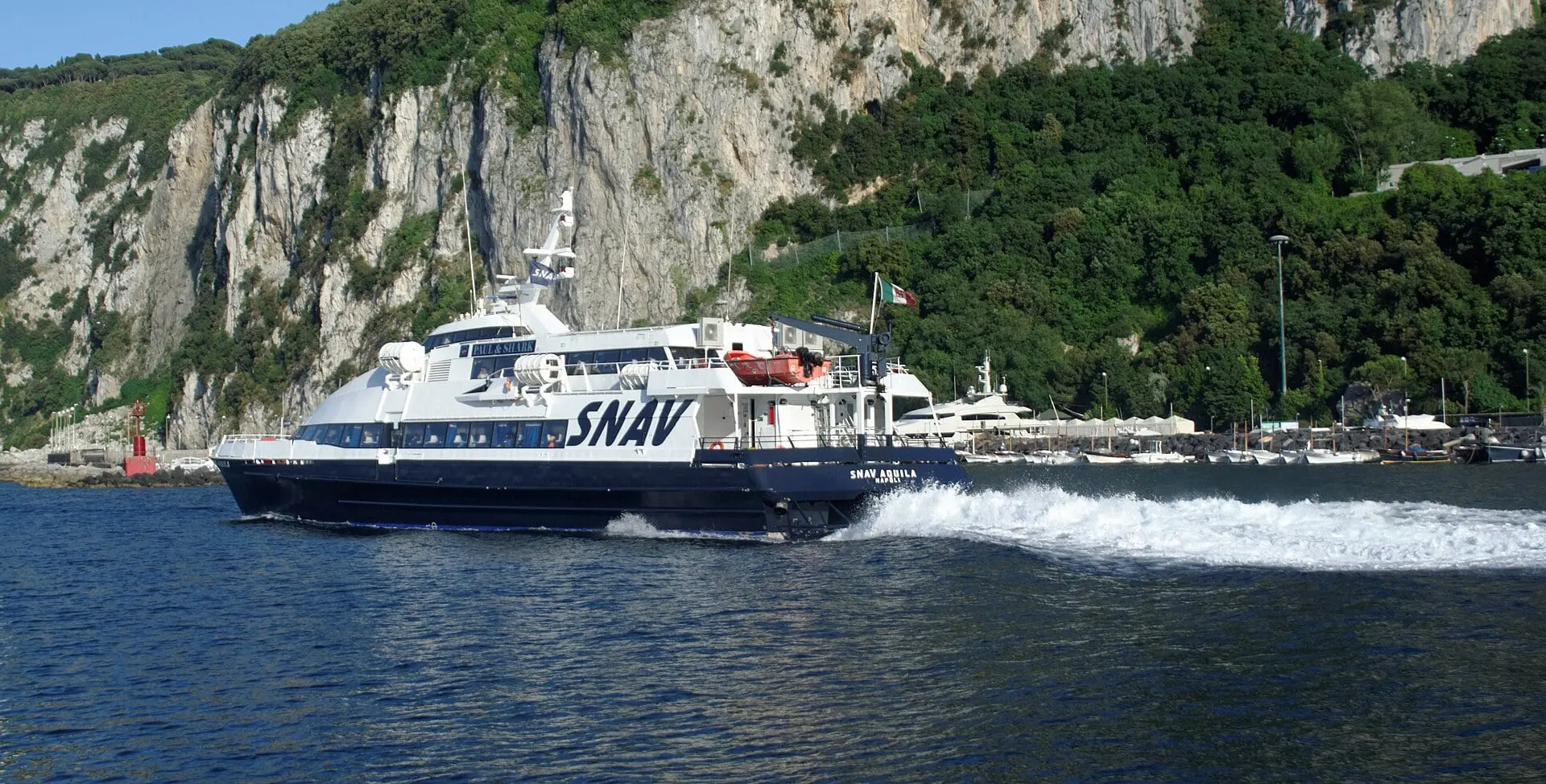
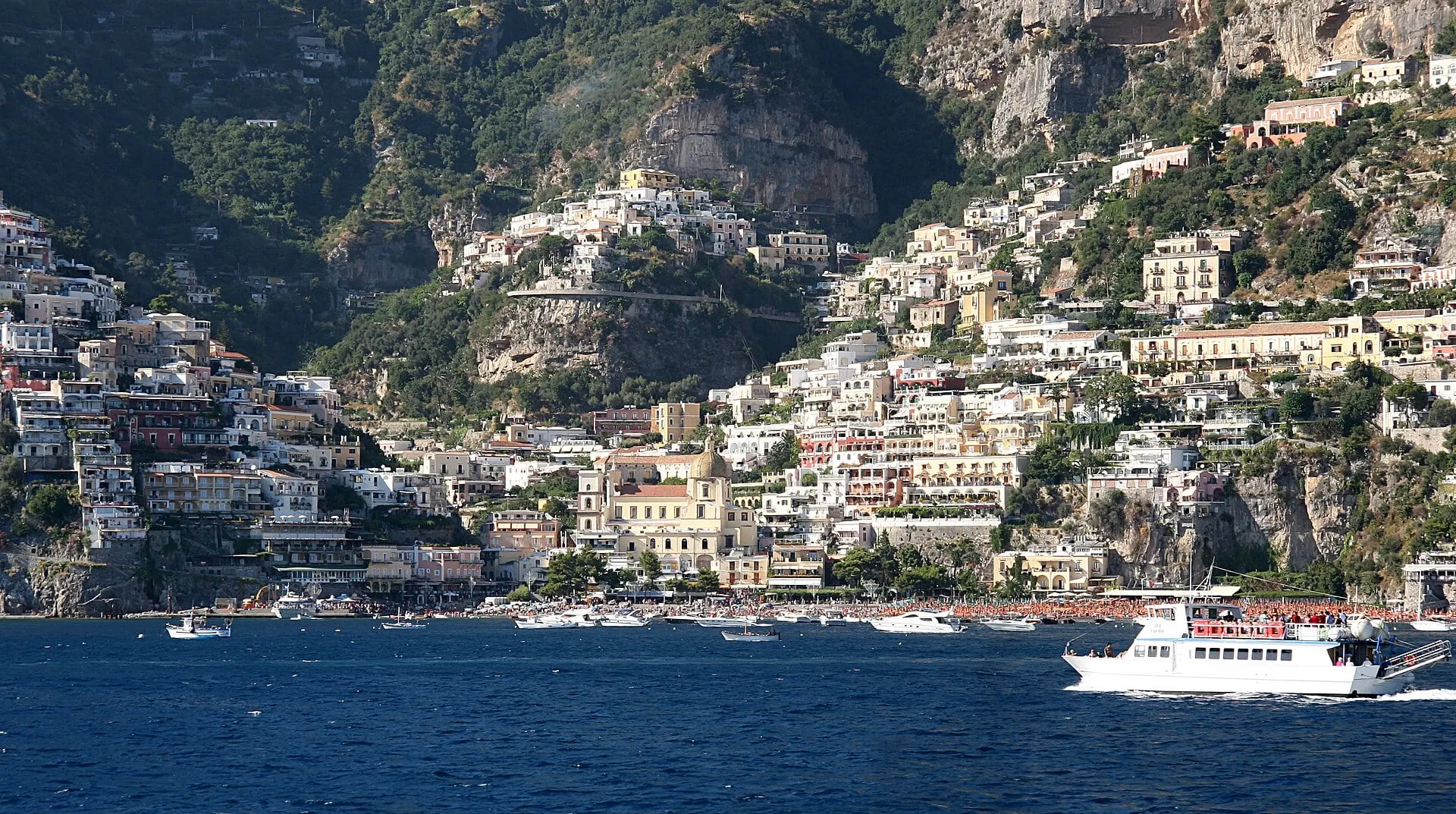
Along the way

  1. Split
  2. minute 0, Split ferry port

    Leaving Split's old harbour

    The catamarans and ferries leave from the city harbour, about 500 m from the centre, with the walls of Diocletian's palace along the waterfront behind you. Split is Dalmatia's largest port, and it handled 6.05 million passengers in 2025.

  3. leaving Split, between Šolta and Brač

    The Split Gate

    The boats head out through Splitska vrata, the narrow strait between Šolta on the right and the western tip of Brač on the left, the port authority's shortest approach to Split. Some Krilo and TP Line boats stop at Milna, the harbour village on Brač's side of the strait.

  4. the middle half hour

    Across the Hvar channel

    Beyond the Gate the sea opens and the long ridge of Hvar, the longest Croatian island, fills the southern horizon. This is the stretch where a jugo, the steady south-easterly that the Croatian weather service says blows hardest in the sea channels, makes itself felt.

  5. the last ten minutes, on the right

    The Pakleni islands

    Twenty-one islands, islets and reefs lie off Hvar town, once bare heathland with a few wheat fields, now protected as a significant landscape and for their Posidonia seagrass meadows. The largest, Sveti Klement, holds the ACI marina at Palmižana, 2.5 nautical miles from the town, and water taxis run out to the beaches daily.

  6. arrival, Hvar town riva

    Into Hvar harbour, under the fortress

    The town opens up in tiers: the fortress on the hill, rebuilt in 1551 on Venetian walls begun after 1278, the bell tower of St Stephen's cathedral, completed in 1549 or 1550, and the arsenal of 1611 at the water's edge, with what the town calls Europe's oldest public theatre (1612) upstairs. The port authority has cut the entry speed, so the last minutes are a slow glide.

  7. the final stretch of the 110-minute ferry

    By car ferry: the bay of Stari Grad

    The ferry turns into the long bay that the Greeks chose for Pharos in 384 BC. Behind the town lies the Stari Grad Plain, its rectangular Greek plots of about 180 by 900 m still bounded by dry-stone walls, and the road to Hvar town takes about 20 minutes; the old road climbs through Brusje, a former shepherds' village with views back to the mainland.

  8. Hvar

Where to sit or stand

On the catamarans you travel indoors: TP Line keeps passengers in the air-conditioned saloon for the whole voyage, and Krilo allows the outer deck only when the crew permits. Krilo's seats are first come, first served, so board early and take a window on the right-hand side heading to Hvar: the Pakleni islands pass on that side on the final approach, and the fortress and town come up ahead. On the way back to Split, sit on the left for the same view. On the car ferry, go up to the open top deck: Split's waterfront falls away behind, Brač lies on the left, and the slow run into the bay of Stari Grad is best seen from the rail.

Ways to do it

When to go

Tickets, fares and who runs the boats

Who runs the Split to Hvar ferry, and how much is it?

Three companies sail to Hvar town in 2026. Krilo (also known as Kapetan Luka) runs the most direct boats, plus a Split, Hvar, Korčula boat and a daily Split to Dubrovnik line that calls at Hvar. TP Line runs the two state-supported lines all year and its own direct, Korčula and Dubrovnik boats in season. Jadrolinija, the state ferry line, runs the car ferry to Stari Grad all year and seasonal catamarans to Hvar town, one of them continuing to Vis. On the commercial catamarans Split to Hvar is €25 whichever company you choose. On TP Line's two state-supported lines the fare is €10 in summer and €6.40 out of season. Buy online from each company's site or app, or at their ticket offices; e-tickets are shown on a phone. Every company ties the ticket to the departure chosen. TP Line refunds 90% up to six hours before sailing; Krilo refunds only up to 24 hours before, keeping 50%.

Commercial catamaran, Split to Hvar
€25 (Krilo, TP Line, Jadrolinija, 2026)
State-supported catamaran
€10 from 29 May to 27 September, €6.40 otherwise; children 3 to 12 €4.40
Car ferry, passenger
€8.40 summer, €5.90 otherwise (2026)
Car ferry, car up to 5 m and 2 m high
€47.60 summer, €35.60 otherwise (2026)
Car ferry, motorbike
€14.00 summer, €10.10 otherwise (2026)
Children
under 3 free on Krilo and TP Line; half fare 3 to 12 on TP Line, full fare from 3 on Krilo
Krilo cancellation
up to 24 hours before departure, 50% retained; a change costs 20%
TP Line cancellation
90% refunded up to 6 hours before; 100% if the sailing is cancelled

Timetable: how many boats, summer and winter

How often is the ferry from Split to Hvar?

Summer is generous and winter is thin, so the date decides the plan. In July 2026 Krilo's direct boat left Split at 09:00, 10:00, 11:10, 12:00, 15:30 and 18:00, its Korčula boat at 10:45 and its Dubrovnik boat at 08:00; TP Line's at 08:15 and 18:50, with through-boats at 09:00, 12:15 and 15:10 and the state catamarans at 15:00 and 17:00. The car ferry left Split at 05:00, 08:30, 11:00, 14:30, 17:00 and 20:30, with a 01:30 from 20 June. From late September the commercial boats thin out one by one, and by mid-November only the state catamarans remain, leaving Split at 14:00 and 16:00 and Hvar at 06:25 and 07:30 (Mon to Sat; later on Sundays), plus Krilo's Tuesday boat. The 2027 timetables are published by the companies in spring.

Catamarans, July 2026
at least 15 a day each way, 08:00 to 18:50 from Split
Catamarans, mid-November to mid-March
2 a day, from Split at 14:00 and 16:00
Car ferry, 19 June to 23 August 2026
7 a day; 110 minutes
Car ferry, 28 September to 31 December 2026
3 or 4 a day: 06:00 (weekdays to 23 October), 08:30, 14:30, 20:30 from Split
Last boat back to Split, summer
from Hvar town, Krilo 19:15 and TP Line 20:05 (2026); car ferry 23:00 from Stari Grad

The ports, luggage and getting from Stari Grad to Hvar town

Where does the Hvar ferry leave from in Split, and how do you get from Stari Grad to Hvar town?

Everything sails from Split's city harbour, about 500 m from the centre. TP Line and Krilo ask you to be at the boarding point 15 minutes before departure. In Hvar the catamarans arrive in the town harbour itself, in the centre. The car ferry lands at the terminal near Stari Grad, about 20 minutes by road from Hvar town. Čazmatrans buses meet it: from 7 September 2026 they left the ferry for Hvar town at 08:05, 10:20, 14:35, 18:10 and 22:15, timed to the boats from Split, with tickets bought from the driver. Bicycles go on the car ferry and, for a fee and space allowing, on Krilo; TP Line carries none.

Split ferry port to the centre
about 500 m
Be at the boat
15 minutes before (Krilo, TP Line)
Luggage
TP Line 20 kg each, Krilo 23 kg, Jadrolinija catamaran €5 per additional bag, car ferry hand luggage up to 20 kg free
Bus, ferry terminal to Hvar town
5 a day from 7 September 2026, tickets on the bus
On board
Krilo: snack bar, no wi-fi; TP Line: toilets and free wi-fi

Bura, jugo and cancellations

Is the Split to Hvar ferry cancelled in bad weather?

Sometimes, mostly between autumn and spring. The Croatian weather service describes two winds that matter. The bura is a cold, gusty north-easterly of the colder half of the year; on the central Adriatic it is weaker and rarer than in the north, but it is known for its strength in the Klis gap, directly above Split. The jugo is a steady, strong south-easterly that blows hardest in sea channels and is more frequent and stronger on the central and southern Adriatic. Catamarans are the sailings at risk: when a TP Line state catamaran is cancelled, the Ubli to Split ferry on line 604 calls at Hvar on its morning run, weather allowing, TP Line refunds the ticket in full, and Krilo offers a refund or a new date. Check the operators' live line status on the morning you sail.

Bura
north-easterly, gusty, colder months; strongest near Split in the Klis gap
Jugo
south-easterly, steady and strong, strongest in the sea channels
If your catamaran is cancelled
TP Line: full refund, and the line 604 ferry calls at Hvar on its morning run, weather allowing; Krilo: refund or new date

Worth knowing before you go

The journey in pictures

Hvar town seen from the sea, with the fortress on the hill above the harbour.
Split's harbour and waterfront from the water, with the cathedral bell tower and the mountains behind.
The Krilo Jet catamaran moored at the quay in Split harbour.
The Jadrolinija ferry Petar Hektorović entering Split harbour.
Fishing boats moored along the stone quay of Stari Grad on Hvar.

Questions people ask

Good questions about Split to Hvar

How long is the ferry from Split to Hvar?

To Hvar town the fast catamarans take 50 to 65 minutes: 50 on Krilo's direct boats, about an hour on TP Line's and 65 minutes on Jadrolinija's. Boats that call at Milna on Brač on the way take a little longer. The car ferry to Stari Grad takes 110 minutes, and Hvar town is then about 20 minutes away by road, so allow two and a half hours door to door with a car.

How much is the ferry from Split to Hvar?

In 2026 the commercial catamarans charged €25 one way with Krilo, TP Line and Jadrolinija alike. The two state-supported TP Line catamarans each day cost €10 from 29 May to 27 September and €6.40 the rest of the year, with children aged 3 to 12 at €4.40. On the Jadrolinija car ferry to Stari Grad a foot passenger paid €8.40 in summer and €5.90 out of season, and a car up to 5 m long €47.60 or €35.60.

Do I need to book the Split to Hvar ferry in advance?

In July and August, yes. Catamaran tickets are sold for a specific departure and seats are limited, so book online once your plans are fixed and arrive 15 minutes before departure. Out of season you can usually buy at the port on the day, as TP Line sells at the quay while seats remain, but booking ahead secures the time you want. With a car, a Jadrolinija ticket for the Stari Grad ferry also reserves your place on that sailing.

Can I take my car from Split to Hvar town?

Not on the catamarans, which carry foot passengers only. Cars cross on Jadrolinija's ferry from Split to Stari Grad, 110 minutes, from €35.60 out of season or €47.60 in summer 2026 for a car up to 5 m. From the terminal Hvar town is a 20-minute drive. If you are staying in Hvar town and need no car on the island, the catamaran lands you in the centre in under half the time.

Does the Split to Hvar ferry run in winter?

Yes, every day of the year, but with far fewer sailings. From mid-November to mid-March the catamarans to Hvar town are the two state-supported TP Line boats, leaving Split at 14:00 and 16:00 and Hvar early in the morning, with fares of €6.40. The Jadrolinija car ferry to Stari Grad sailed three or four times a day from late September to December 2026. Strong bura or jugo winds can cancel fast boats, so leave a day in hand before a flight.

Jadrolinija, TP Line or Krilo: which is best from Split to Hvar?

For speed and choice in summer, Krilo, also known as Kapetan Luka, runs the most direct sailings, 50 minutes. TP Line's state-supported boats are the cheapest at €10 in summer and €6.40 otherwise, and the only catamarans in winter. Jadrolinija runs the car ferry to Stari Grad all year and seasonal catamarans to Hvar town at €25. Choose by departure time: on the commercial boats the fare is the same.

Where does the Hvar ferry leave from in Split?

From the city harbour, Split ferry port, about 500 m from the old town. Catamarans and the Stari Grad car ferry all use it, from different berths, so check the boarding point on your ticket and be there 15 minutes before departure. In Hvar the catamarans arrive in the town harbour, in the centre.

Split to Hvar

An hour across the Adriatic, through the Split Gate and past the Pakleni islands to a harbour under a Venetian fortress

Split → Hvar

We may earn a commission when you book through Omio. It never changes what we write. · Last checked: October 2026

More ferry journeys

All the ferry journeys

Image credits: japus (CC BY 2.5) · User:Japus (CC BY 2.5) · Ian Gratton (CC BY 2.0) · Ivan T. (CC BY-SA 3.0) · muleni (CC BY-SA 3.0) · Jocelyn Erskine-Kellie from London, UK (CC BY 2.0)

Split → Hvar

Book this journey

Check times and prices