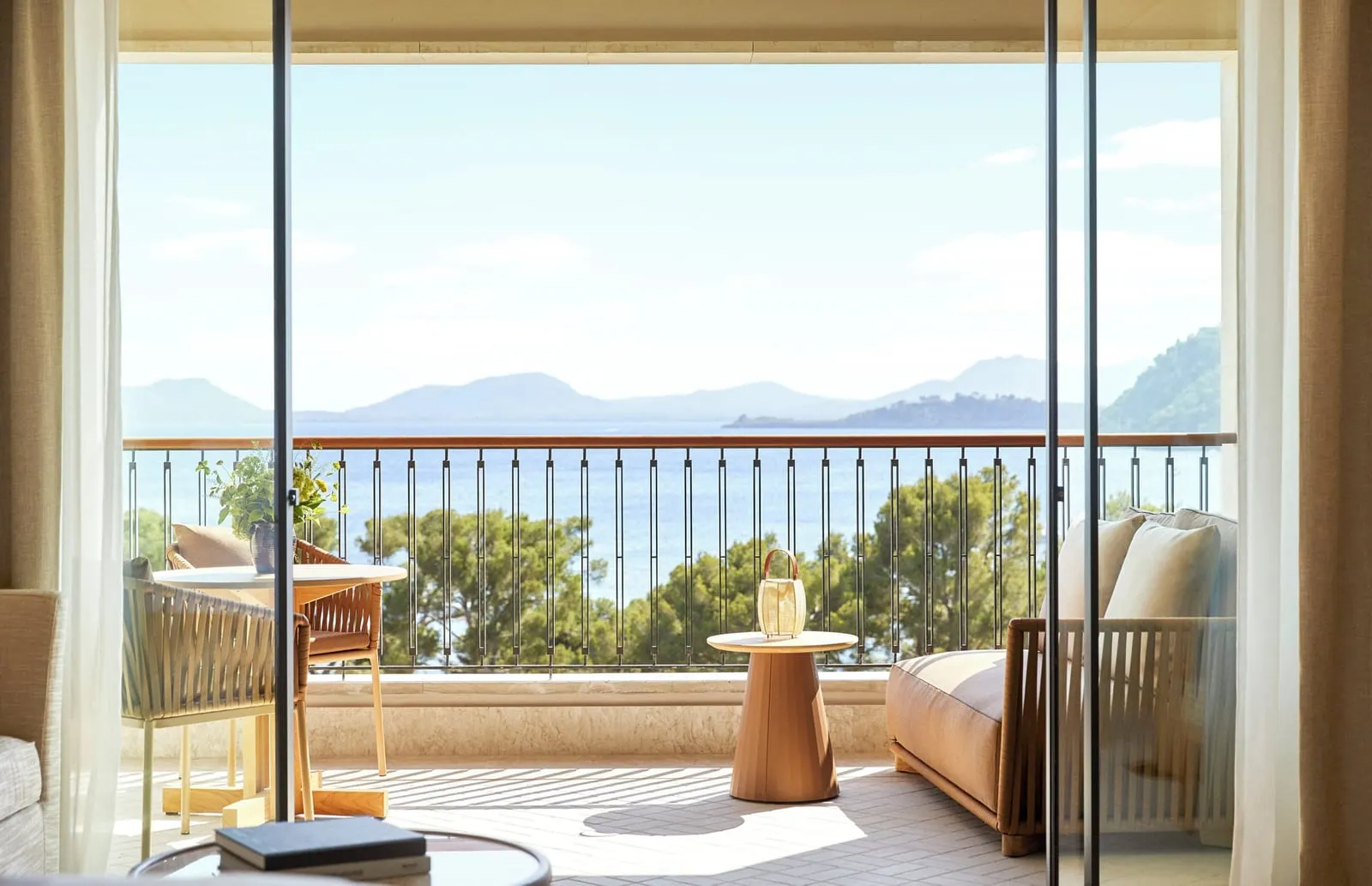
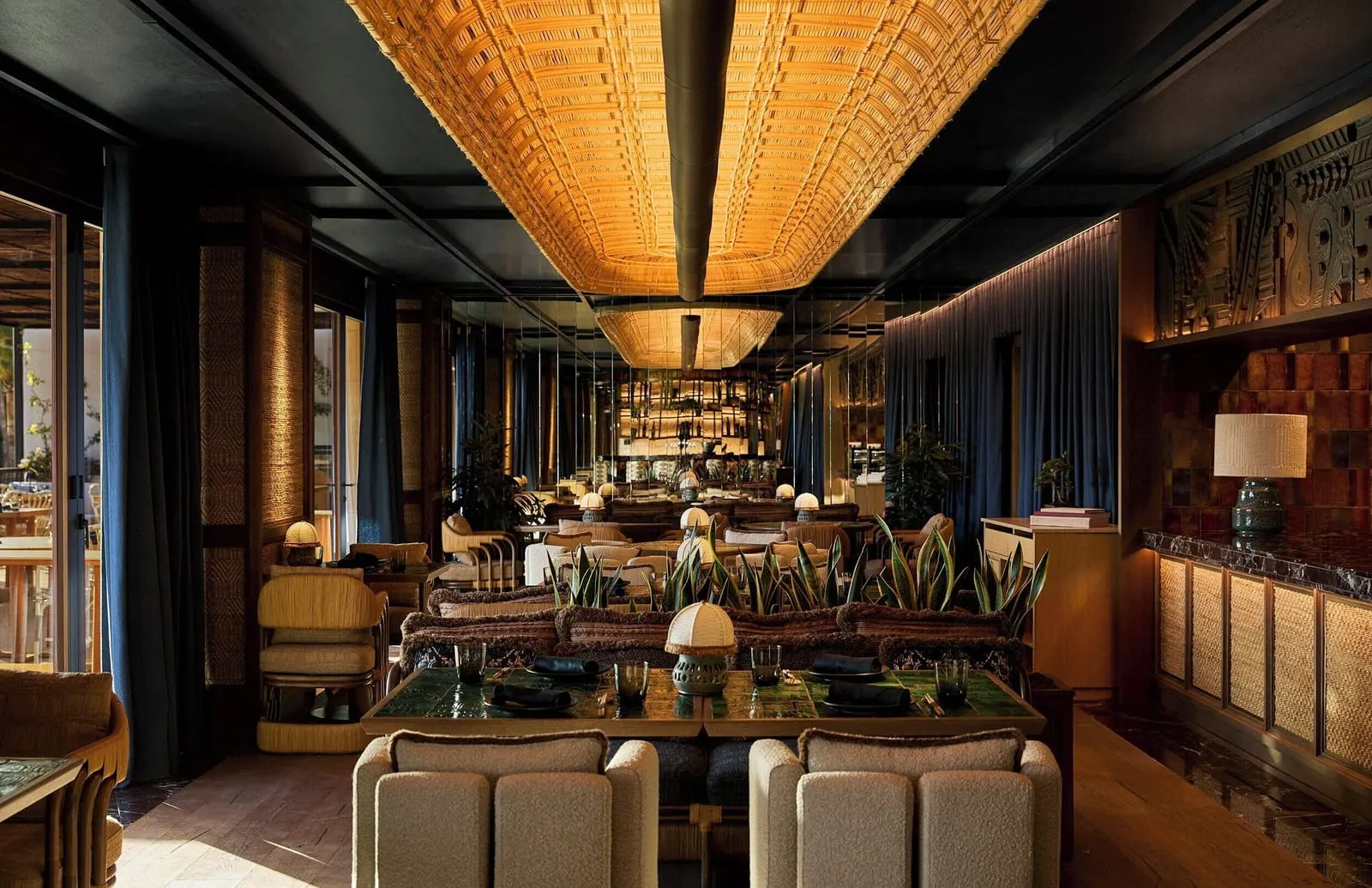
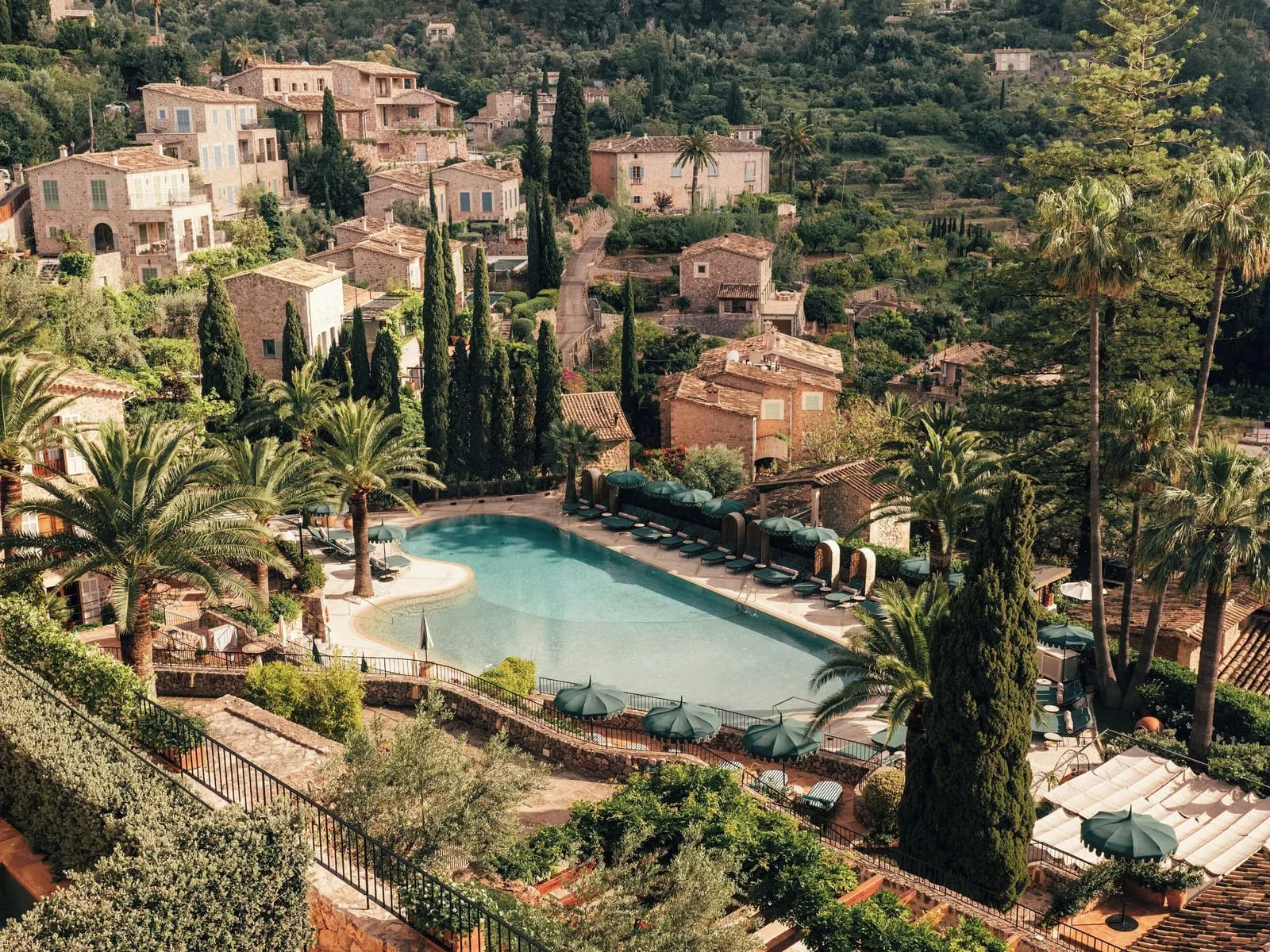
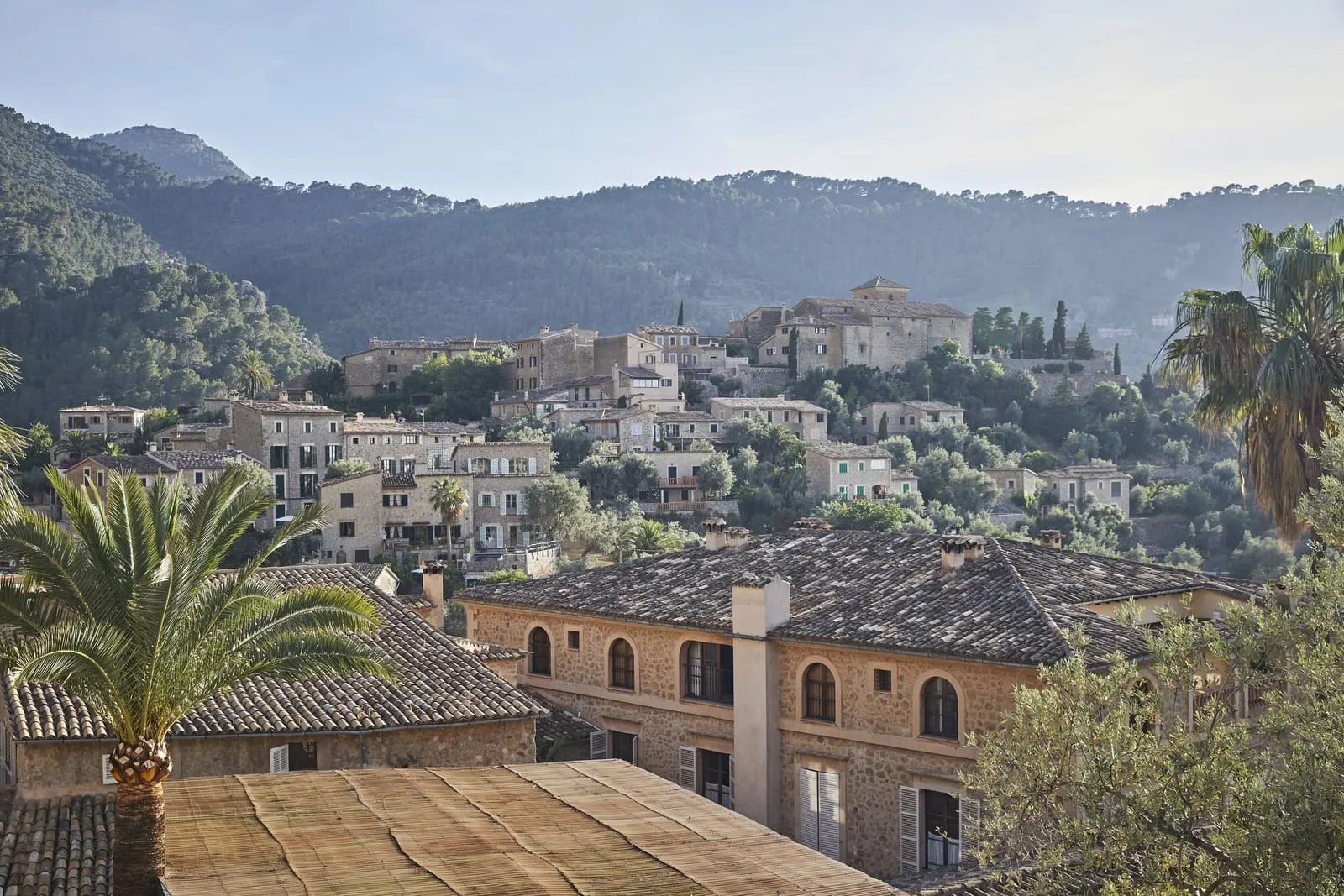
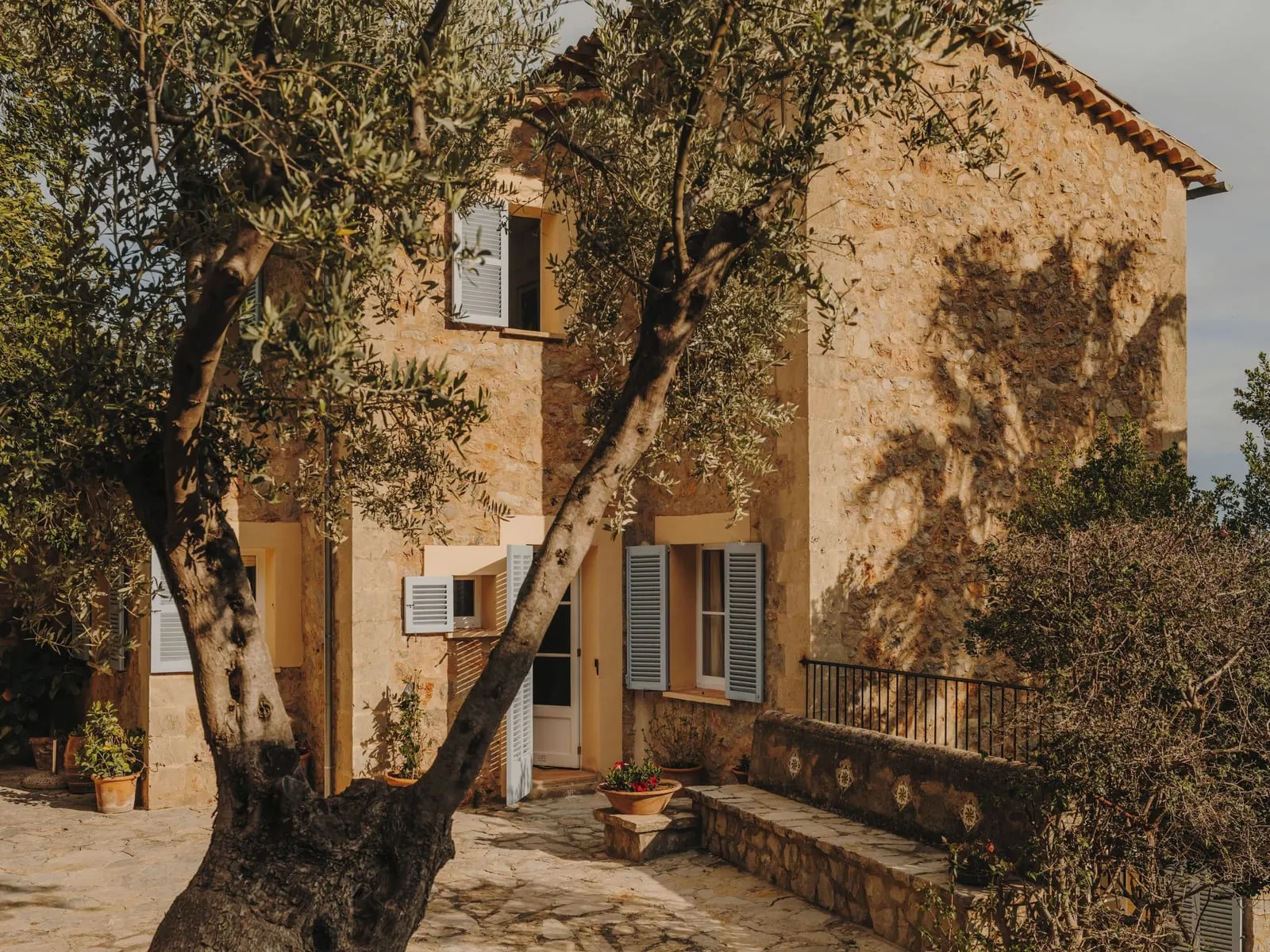
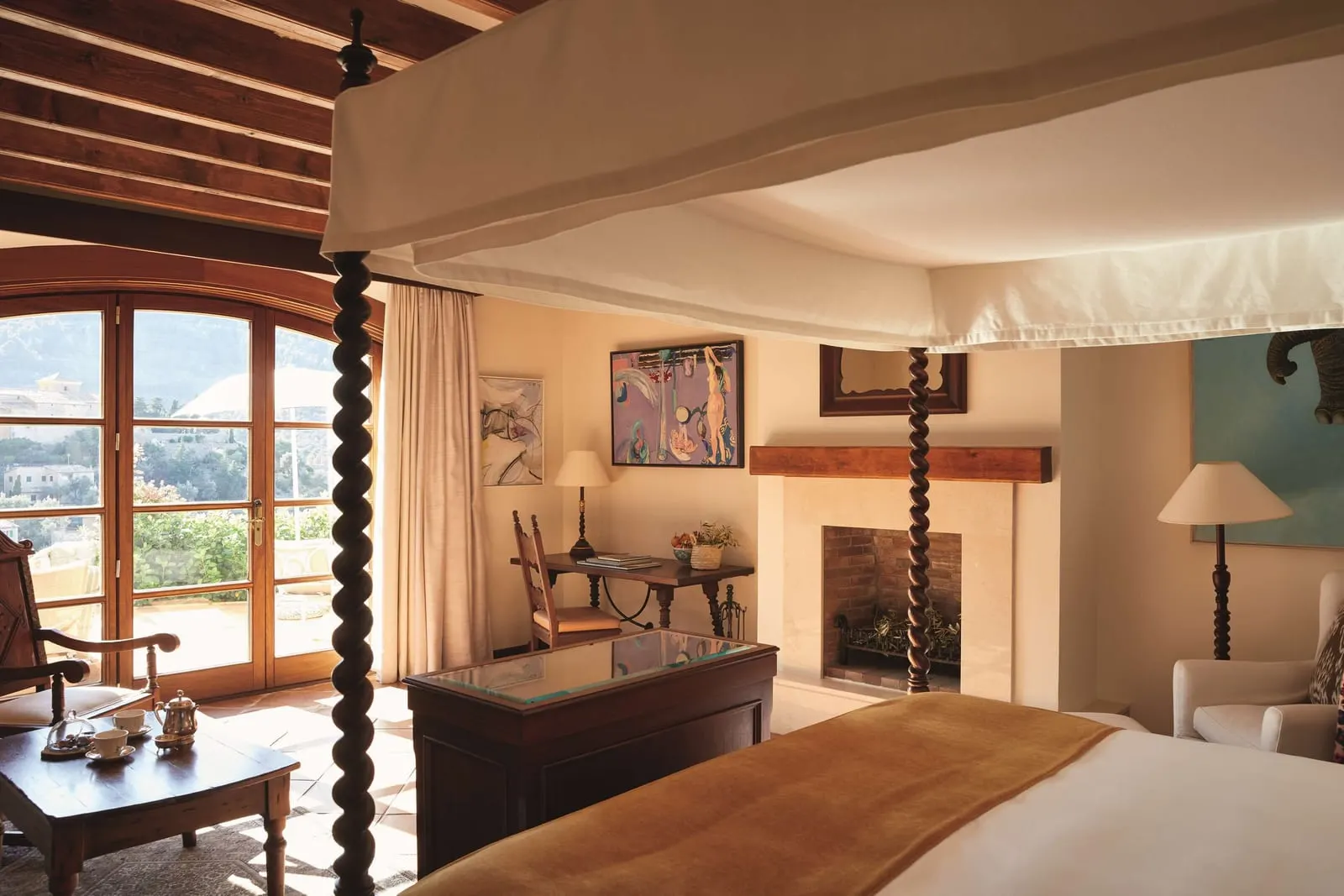
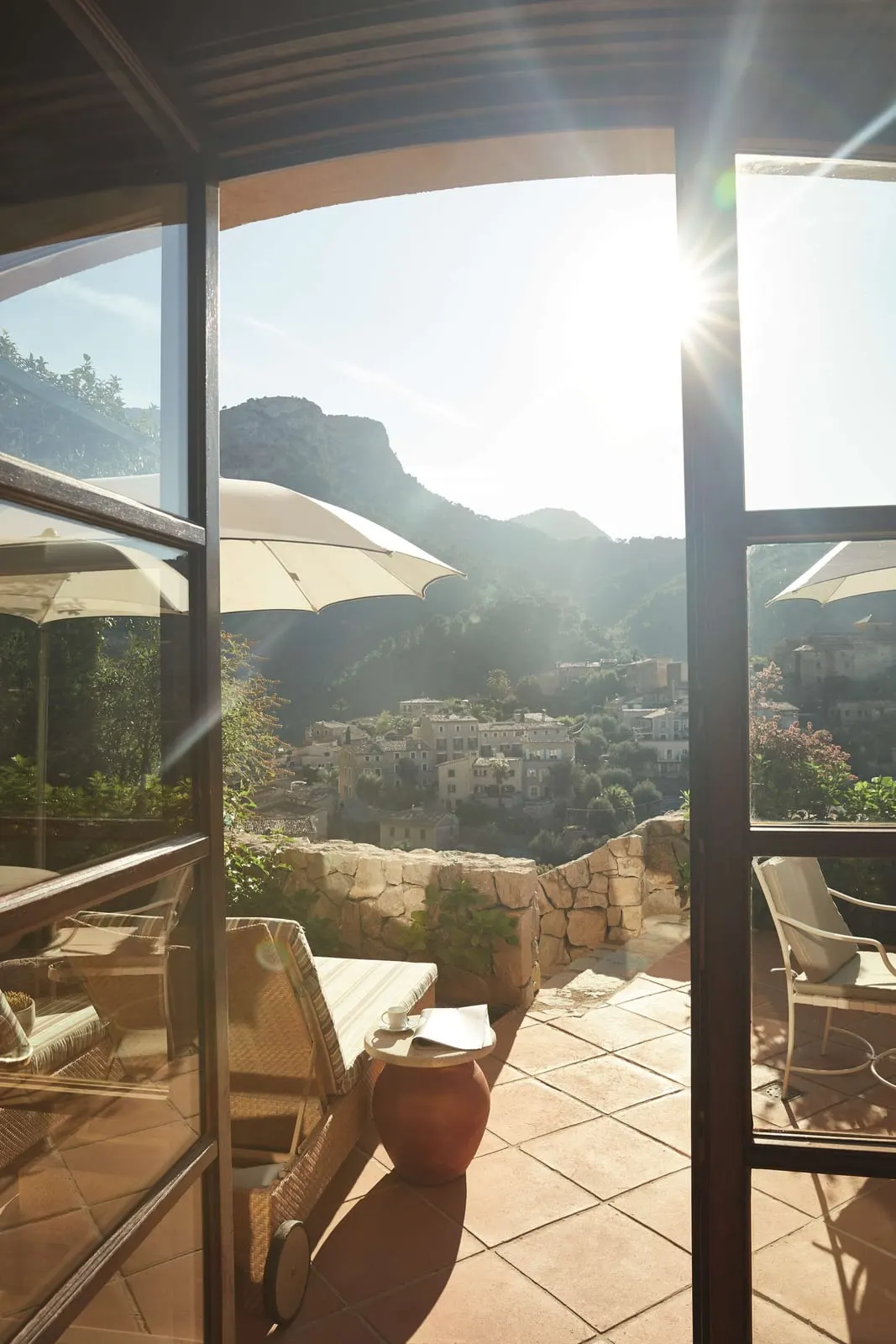
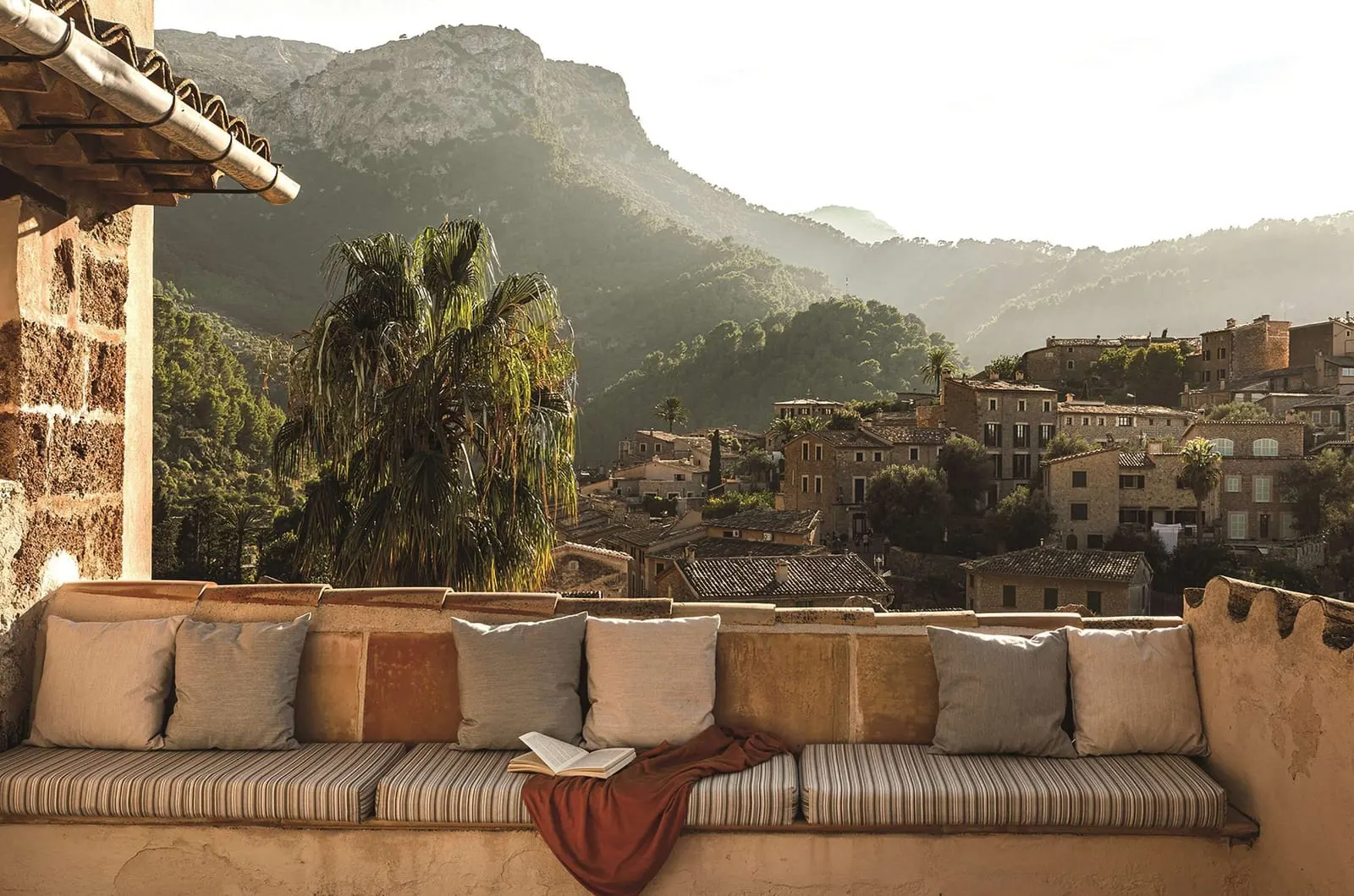
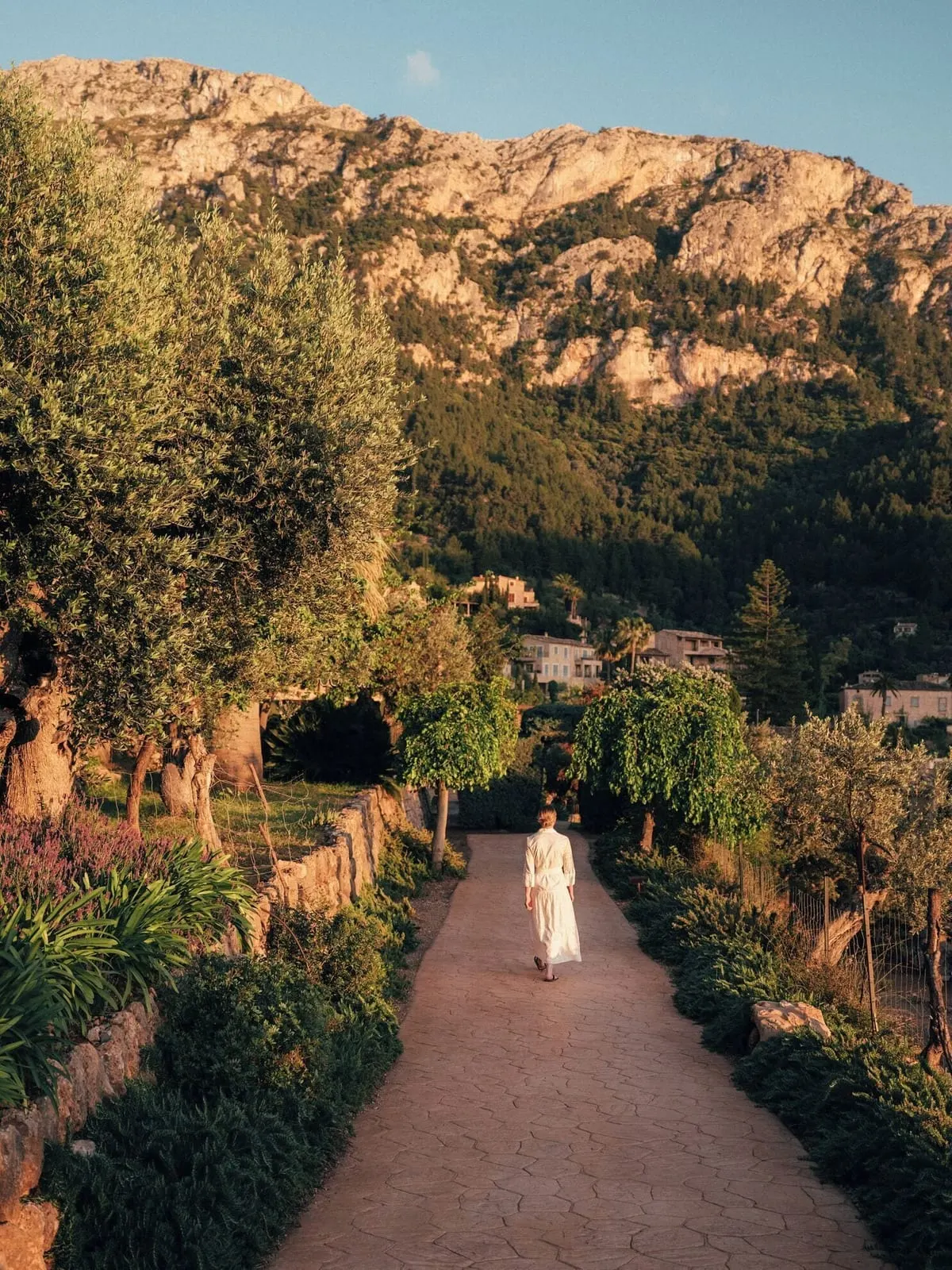
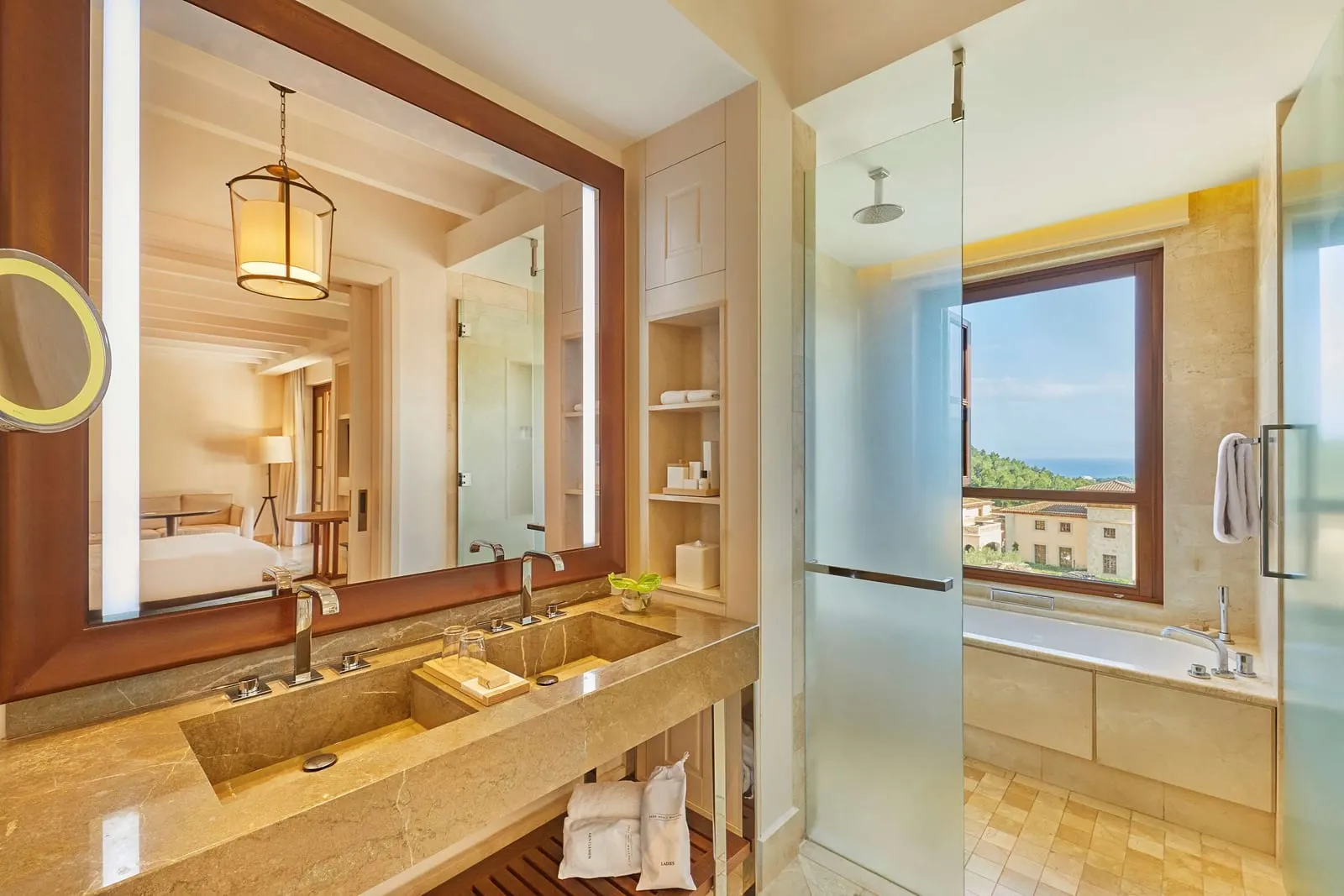
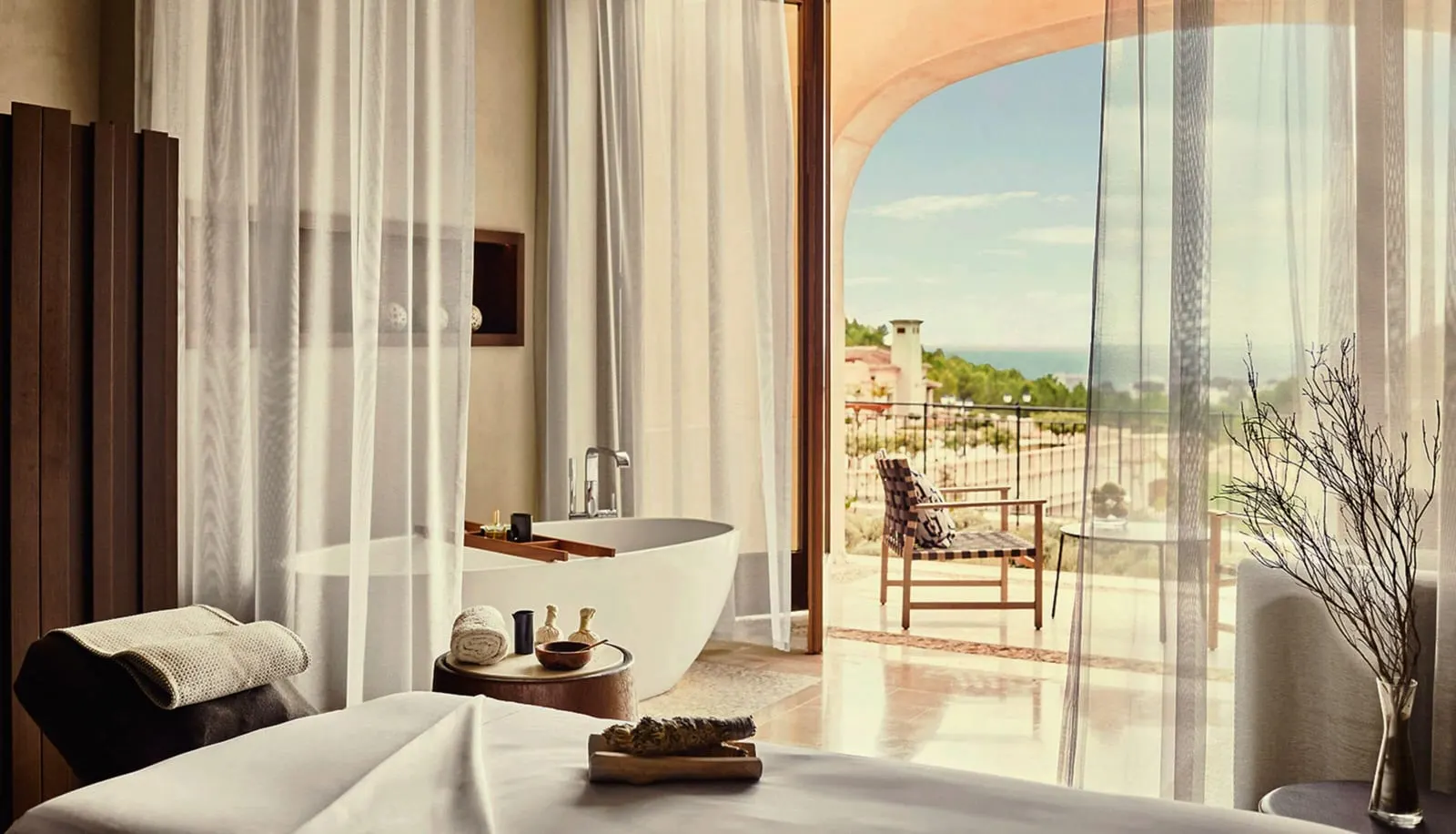
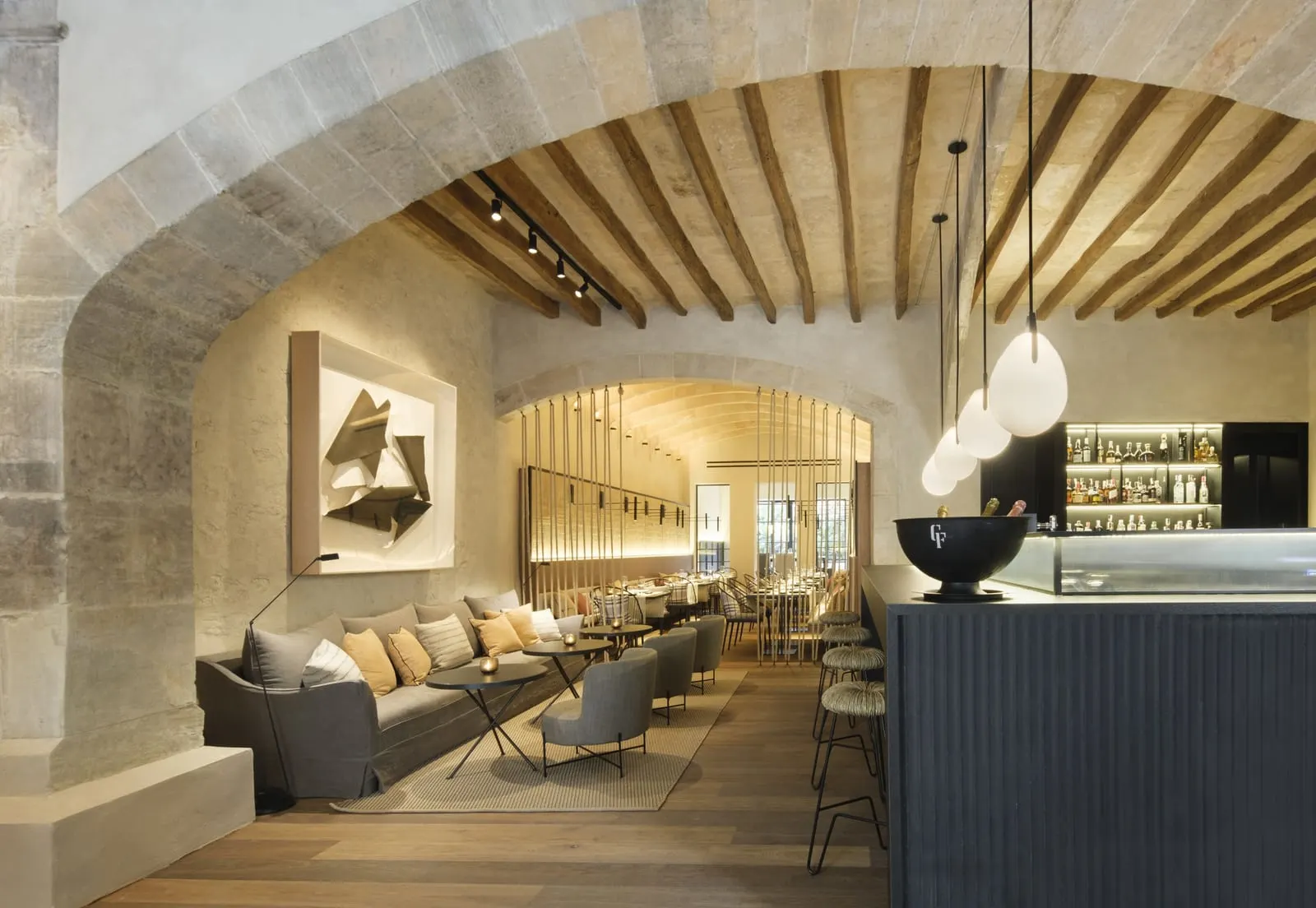
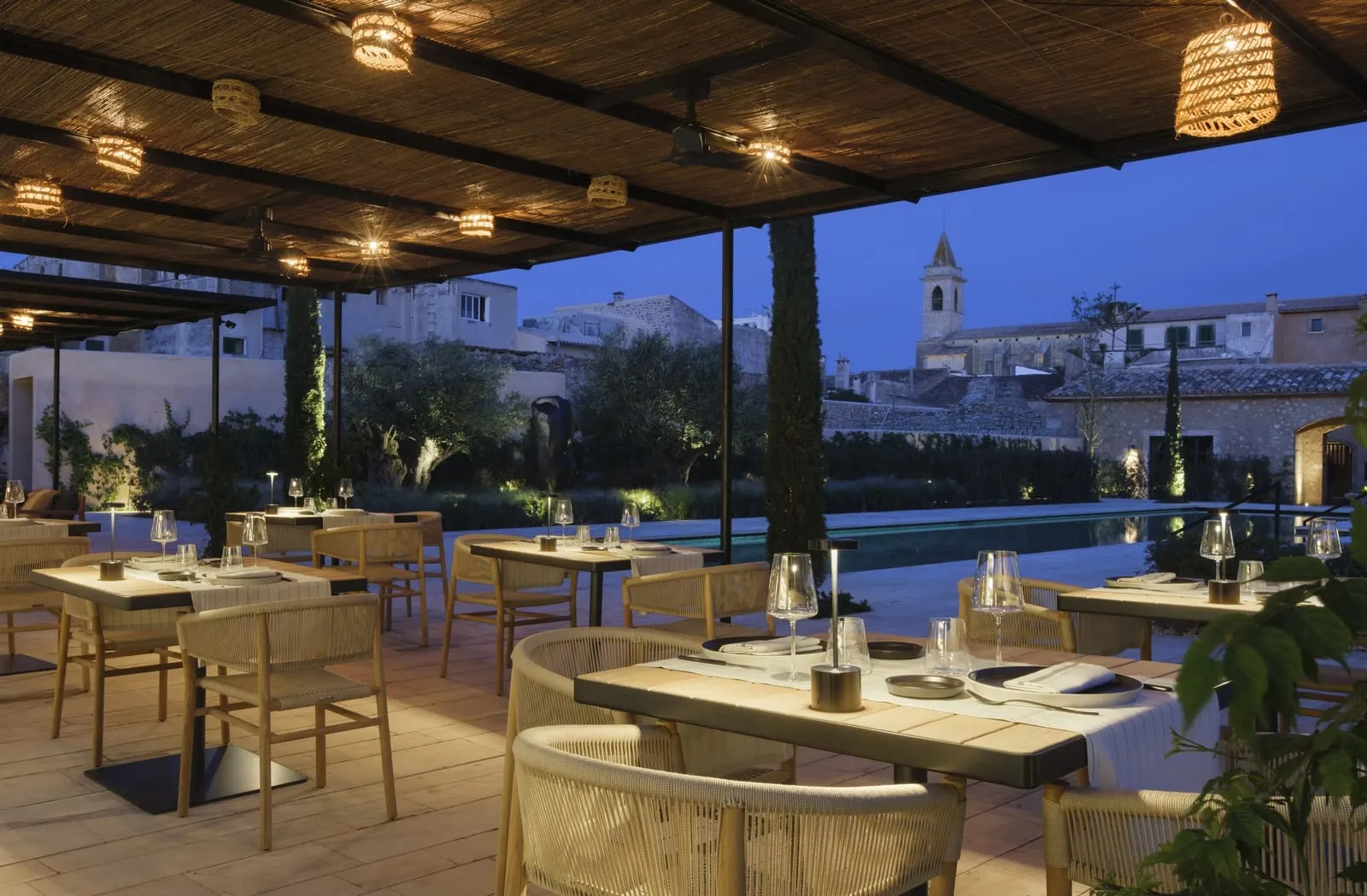
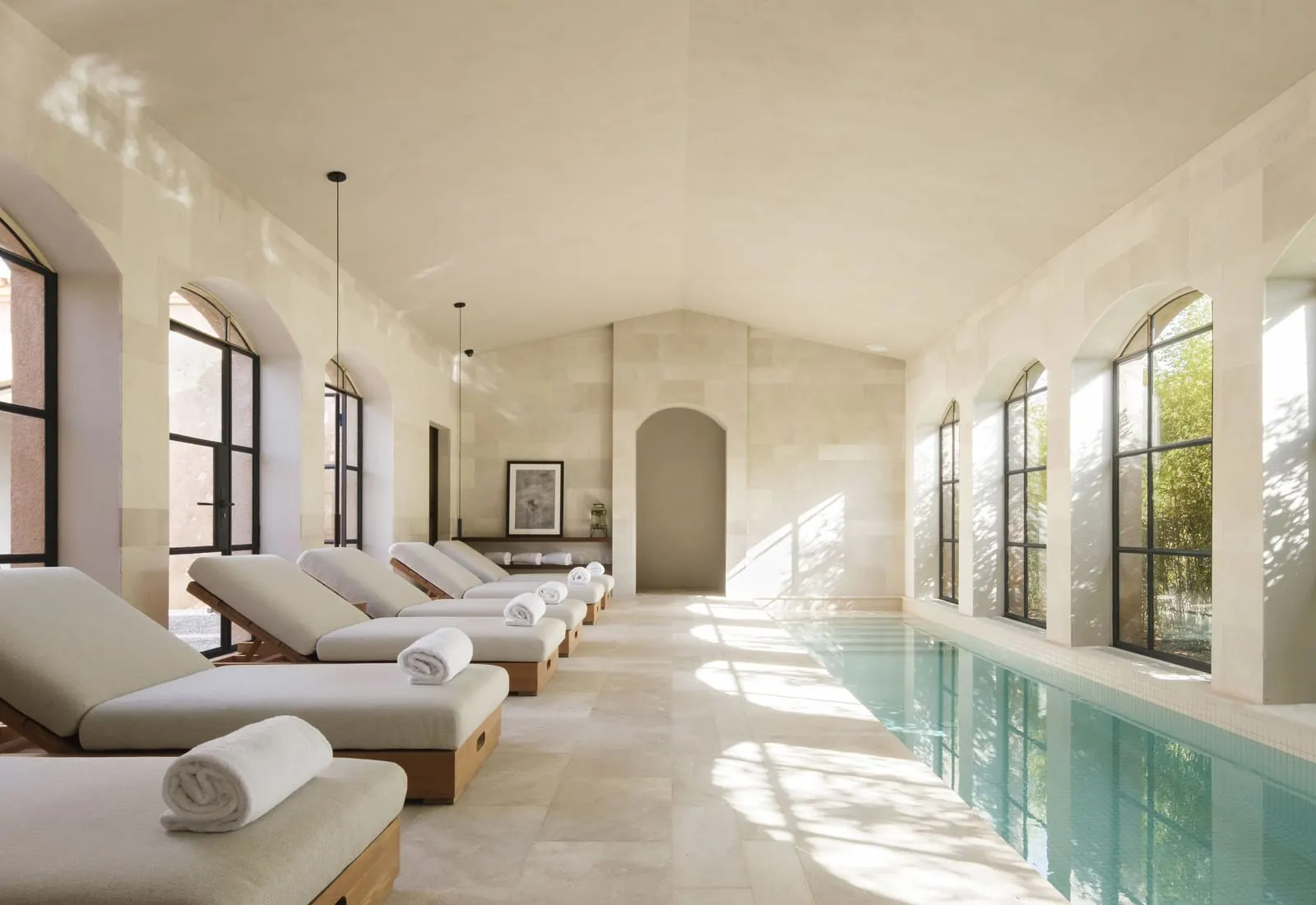
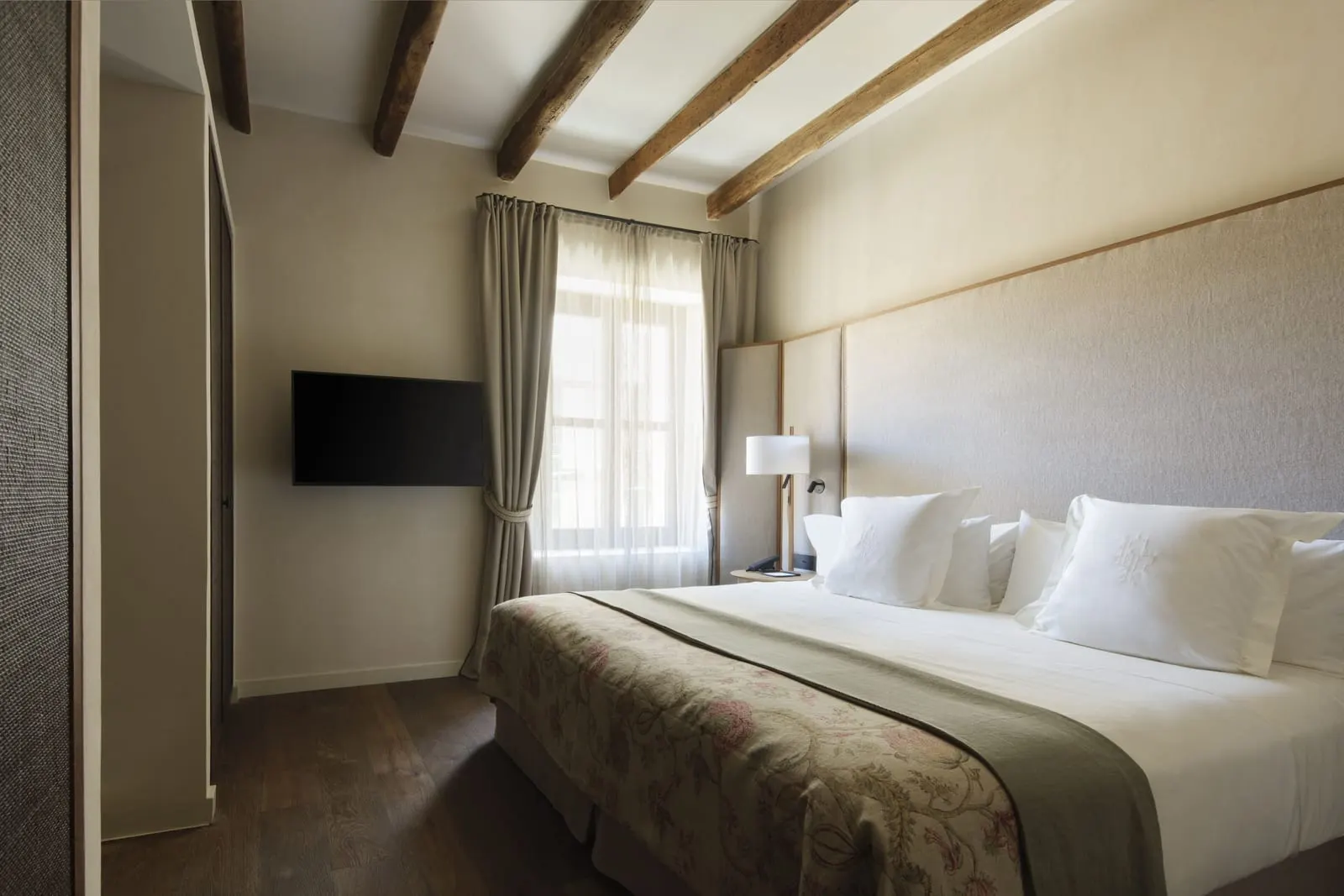
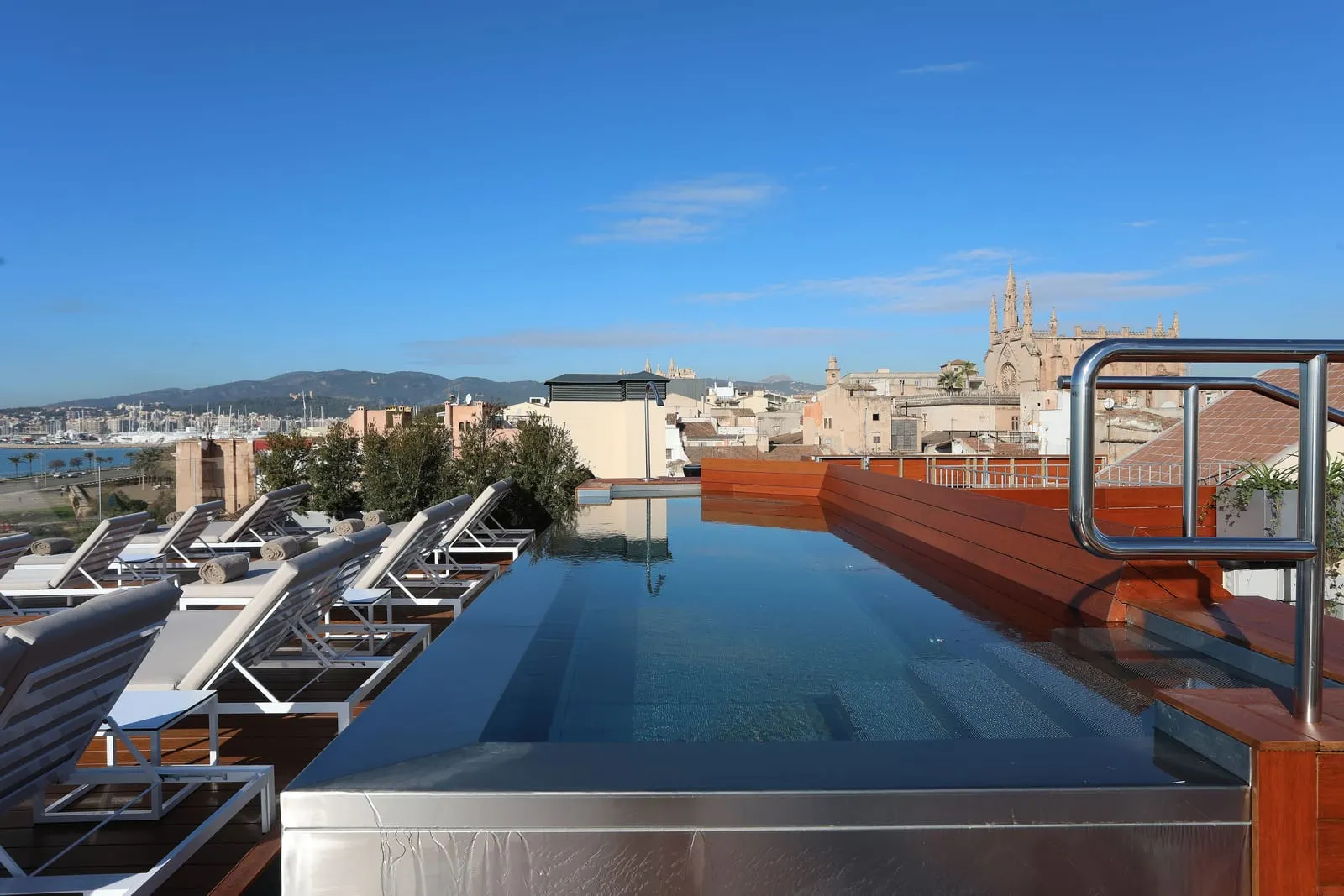
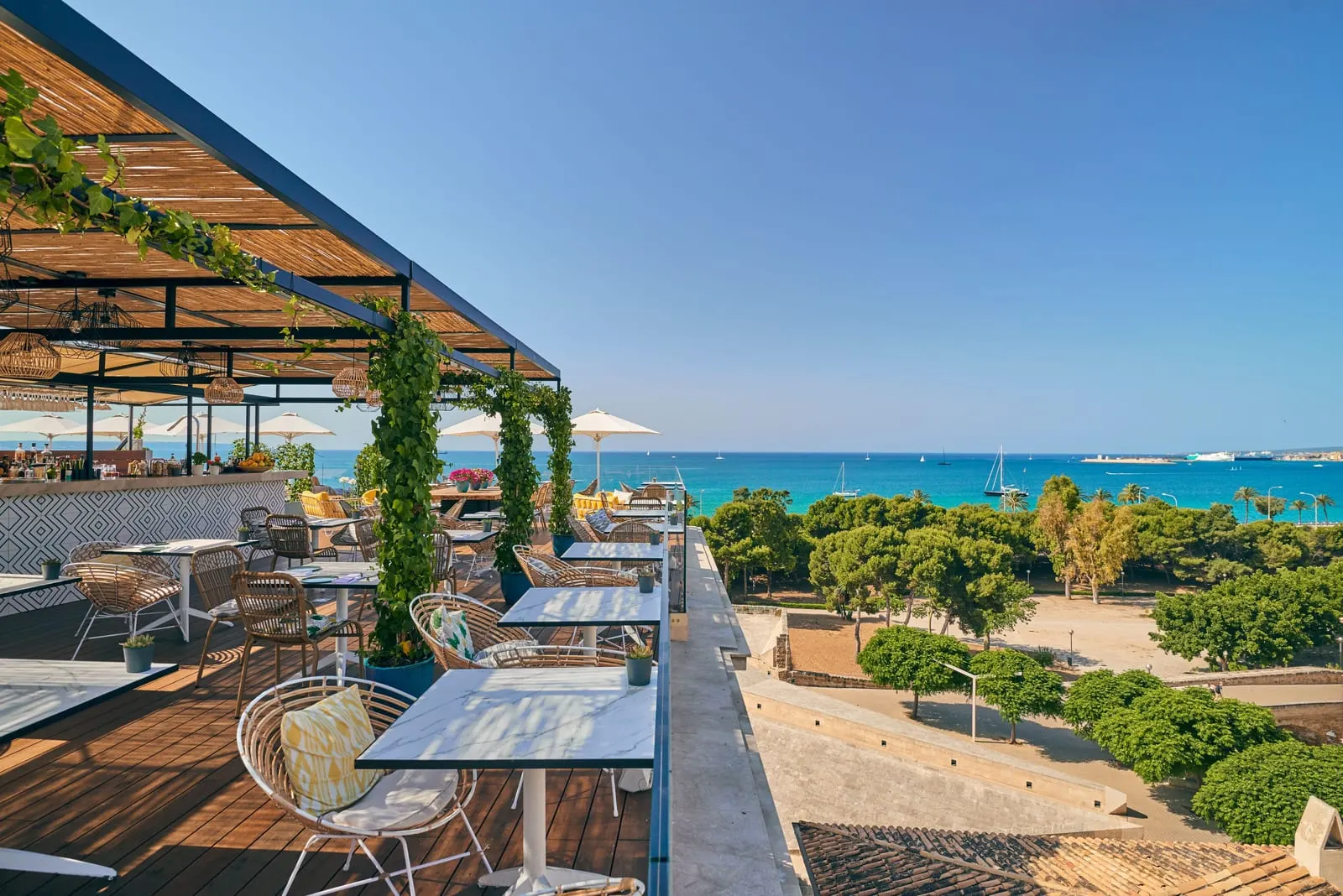
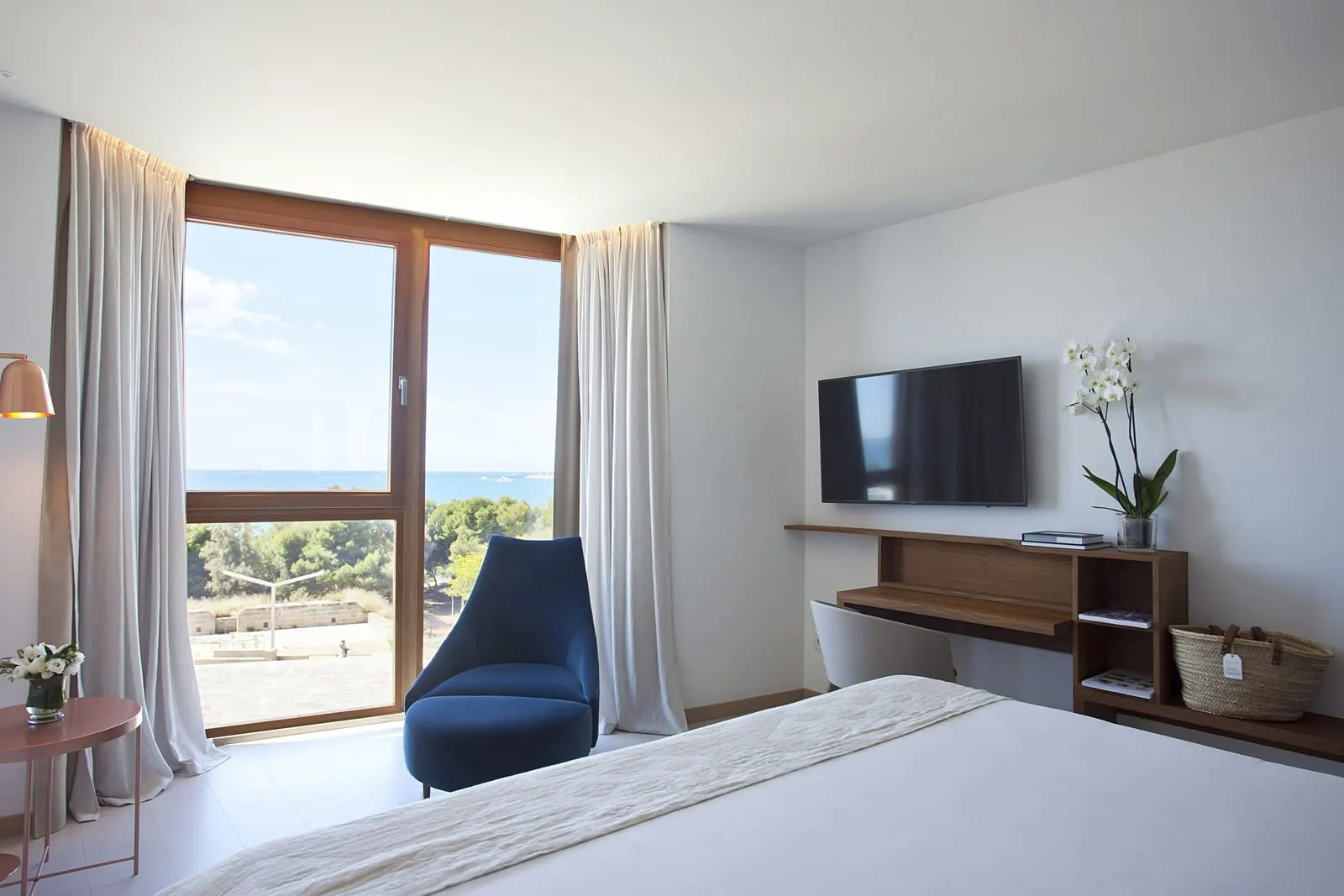
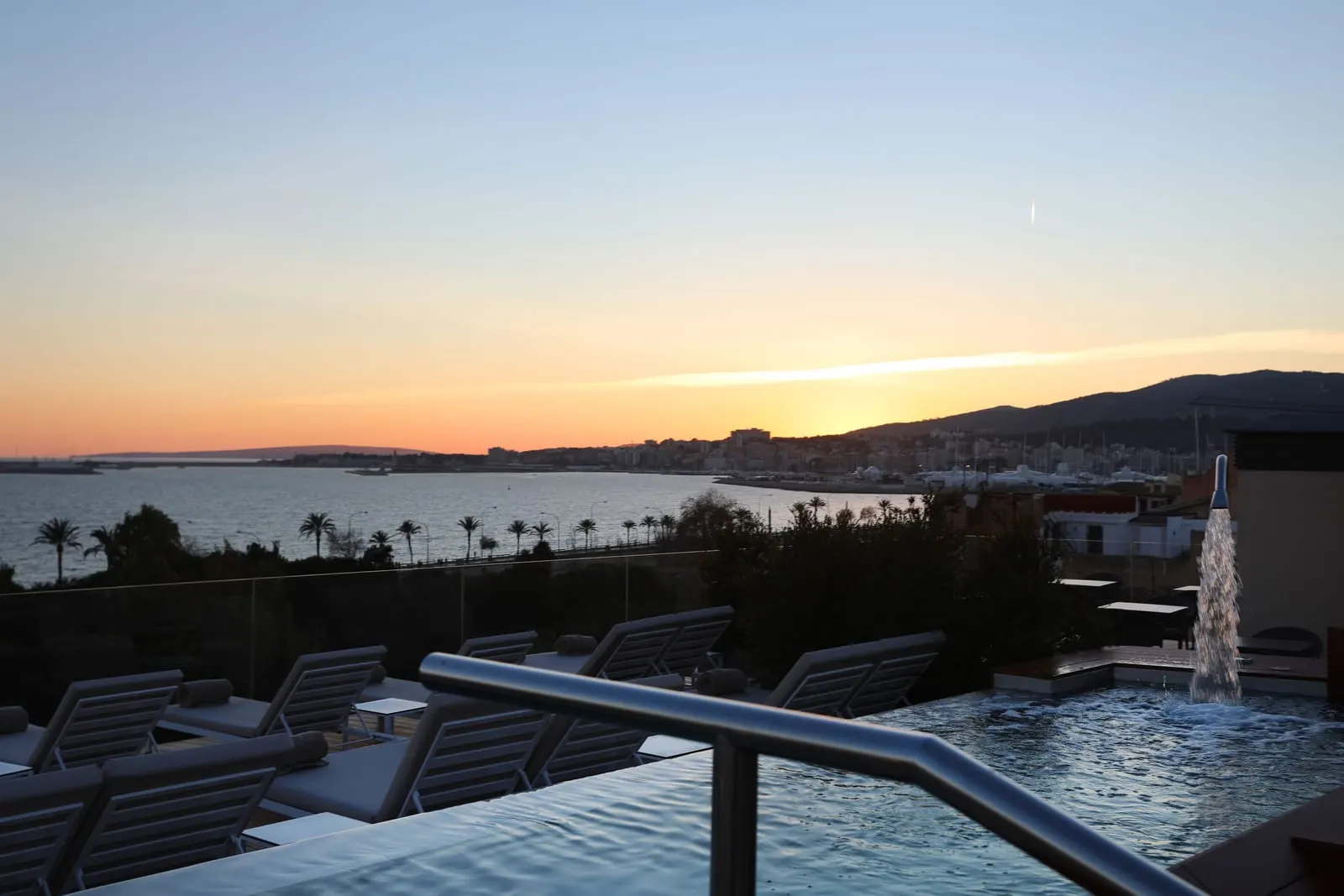
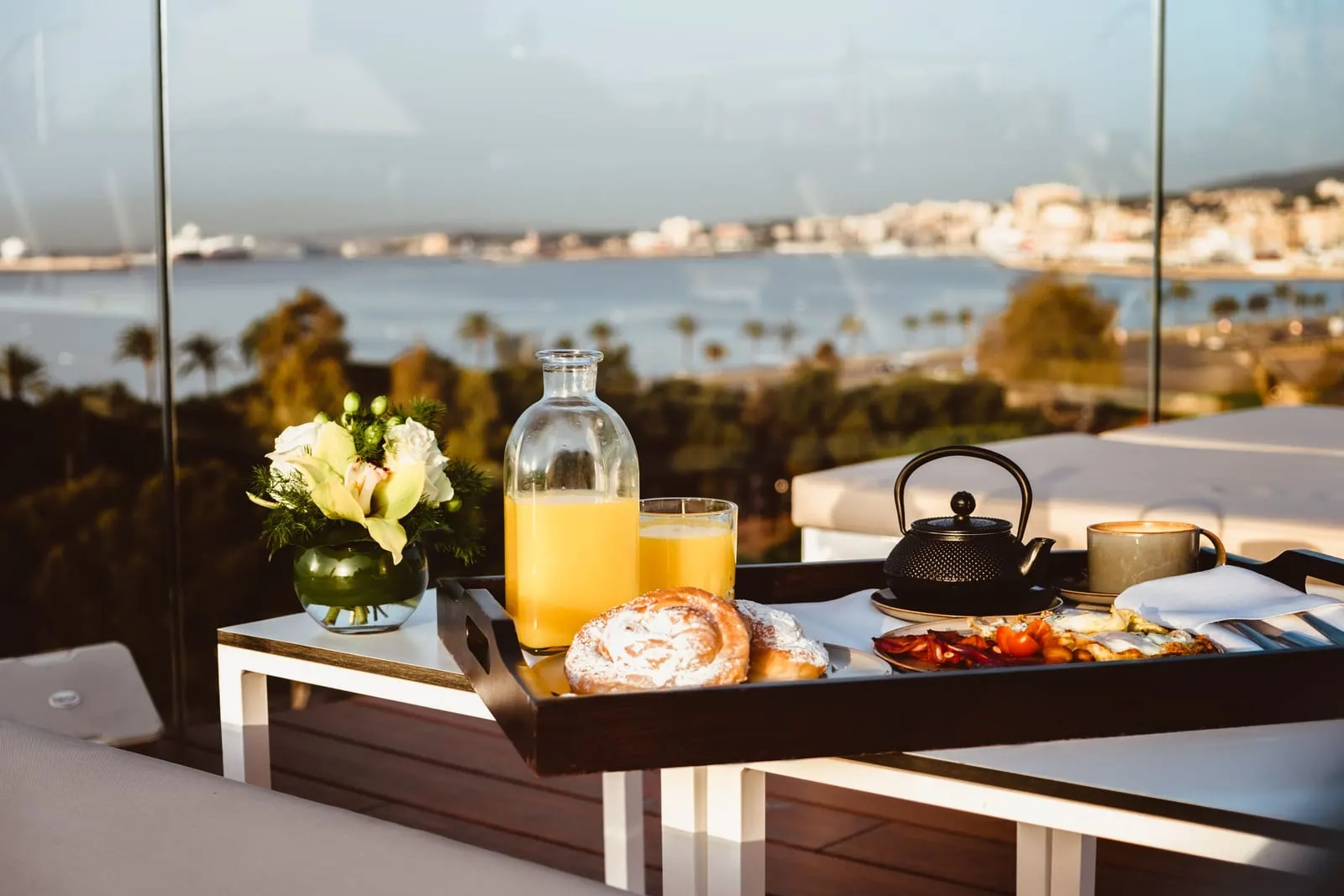
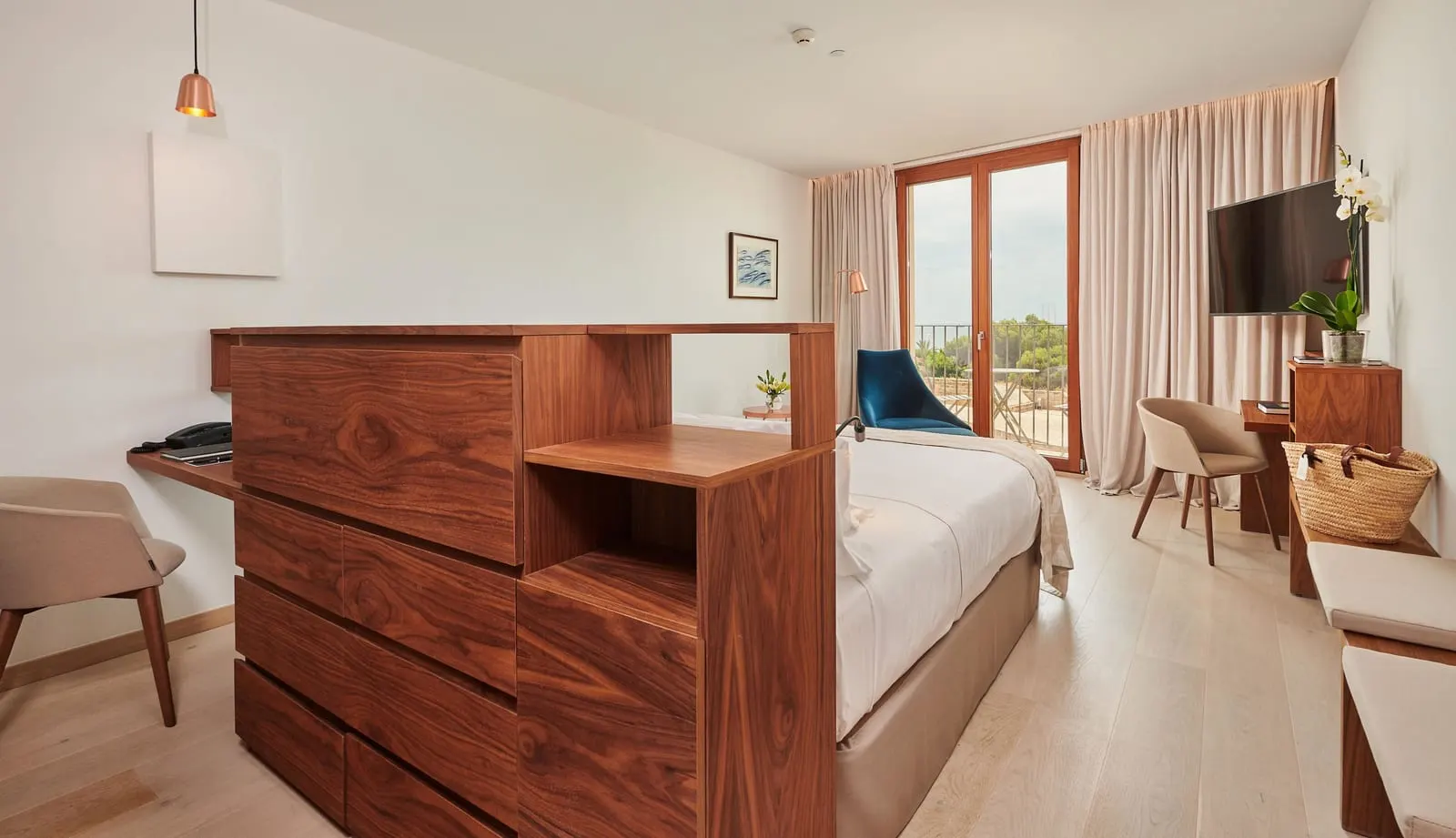
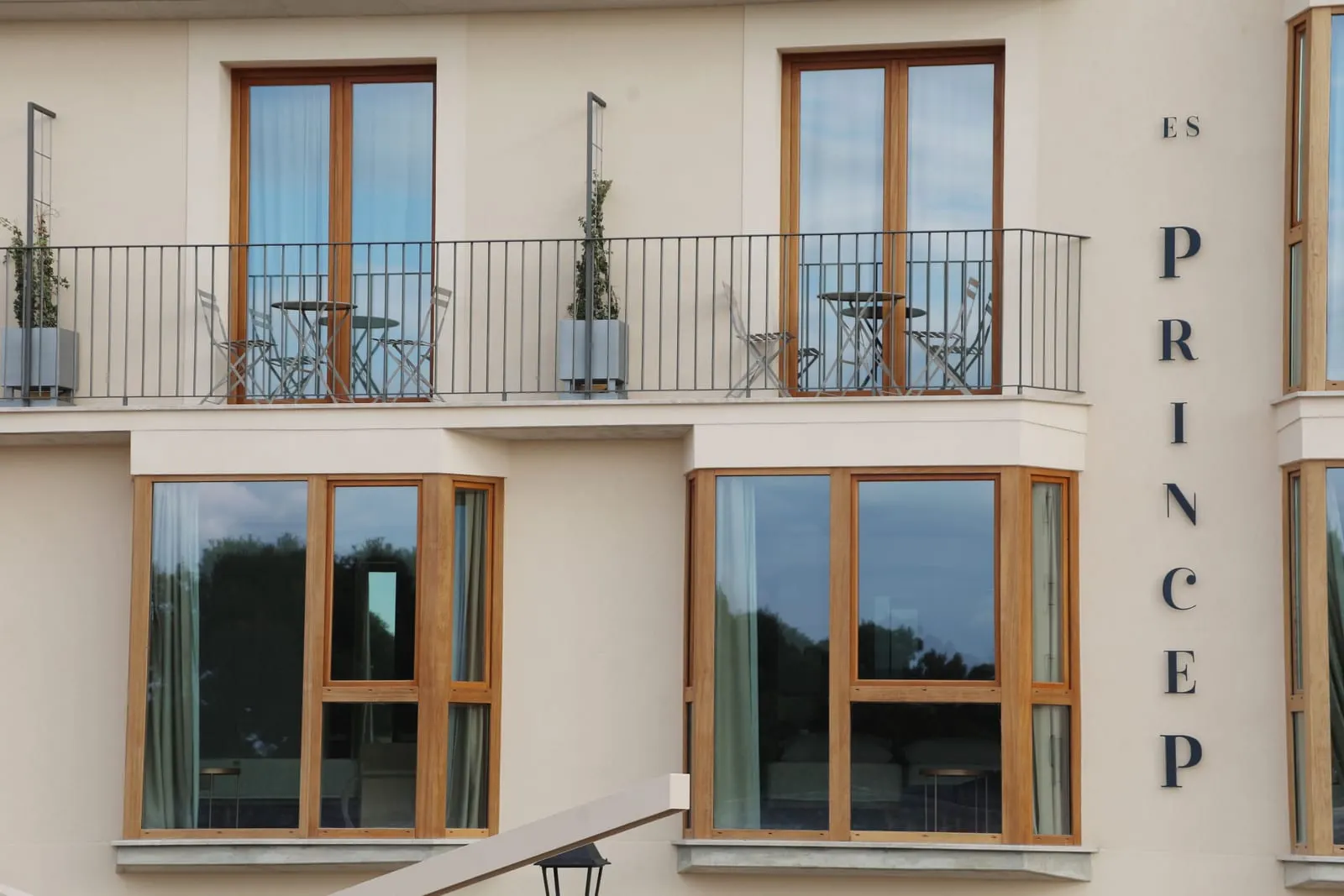
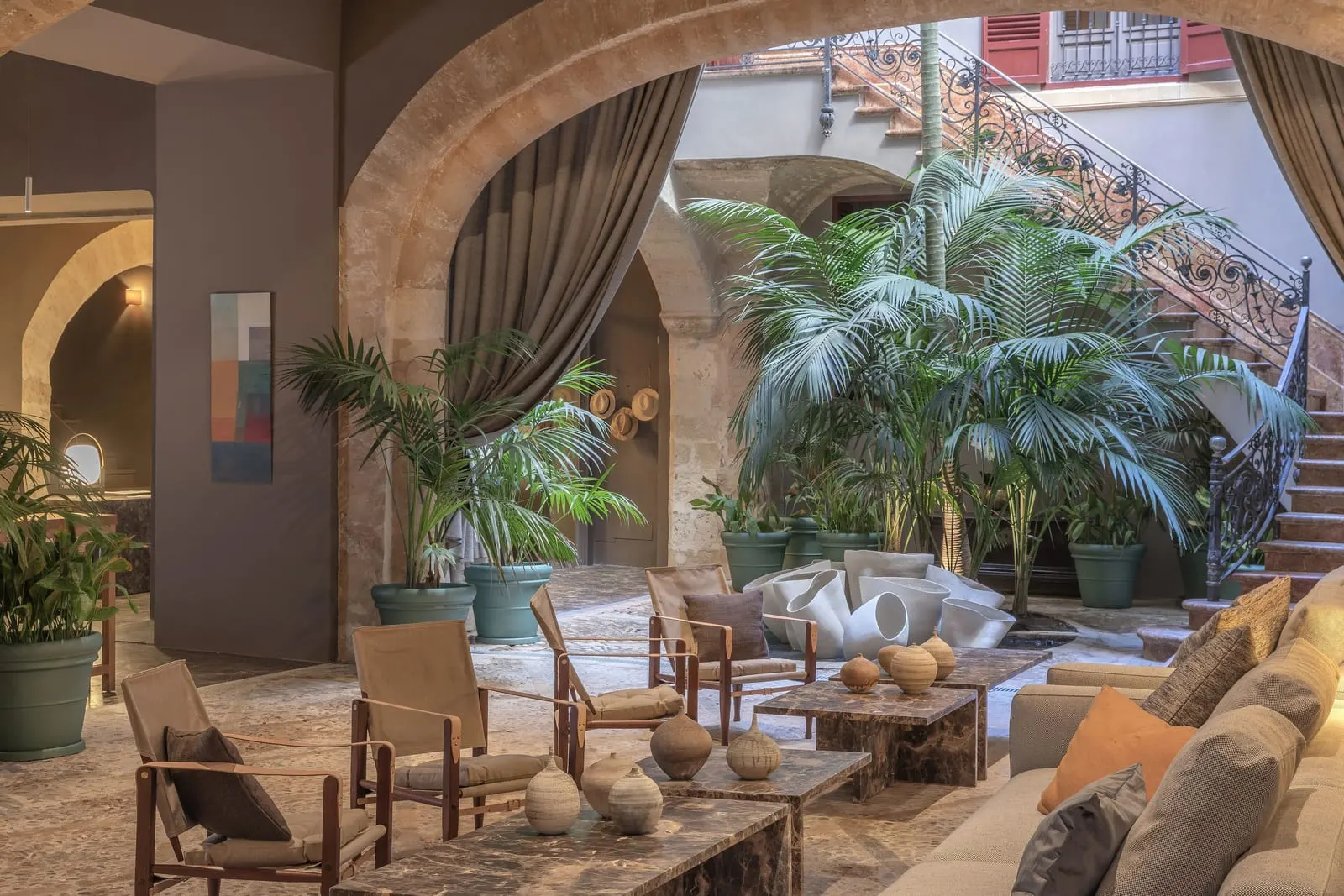
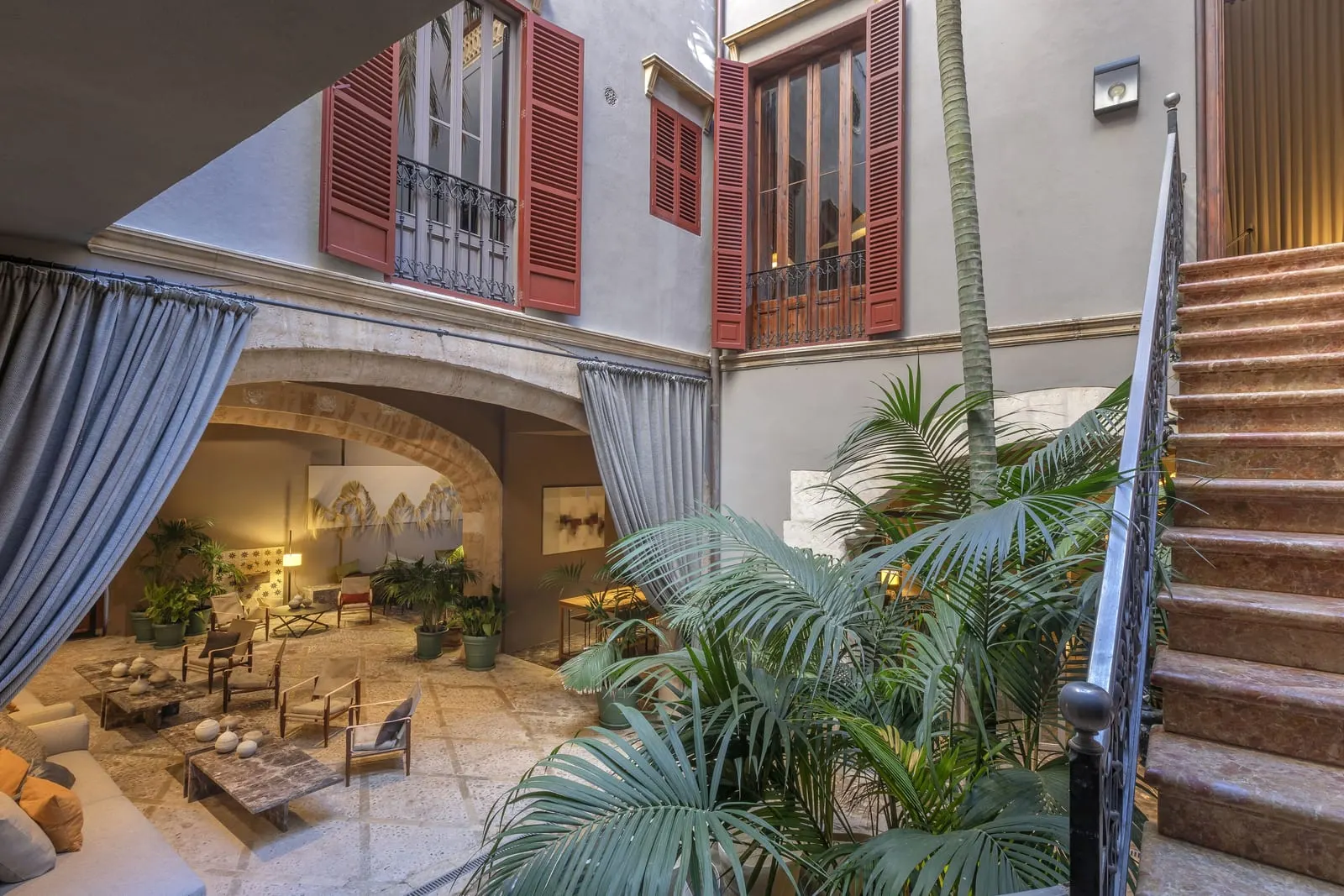
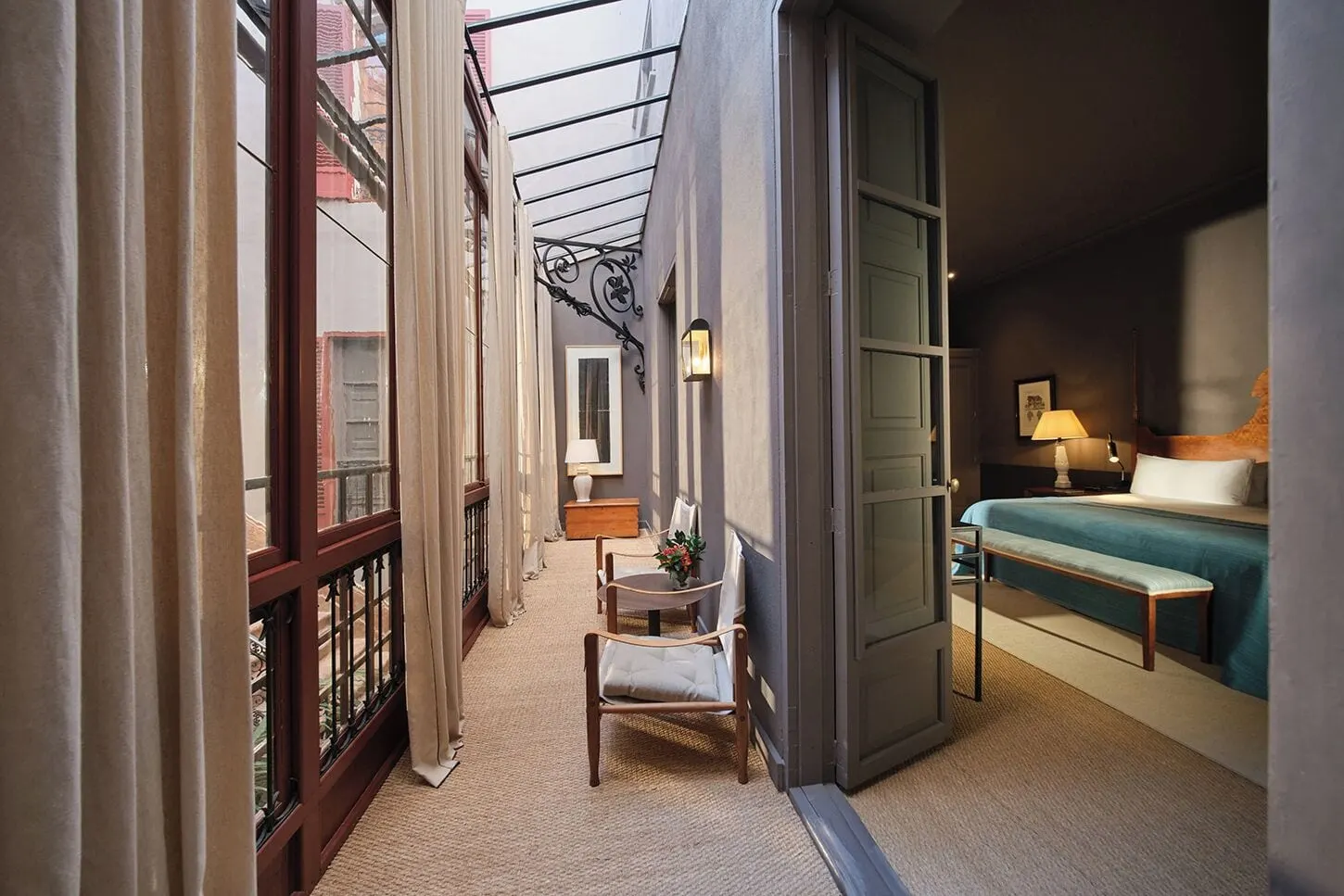
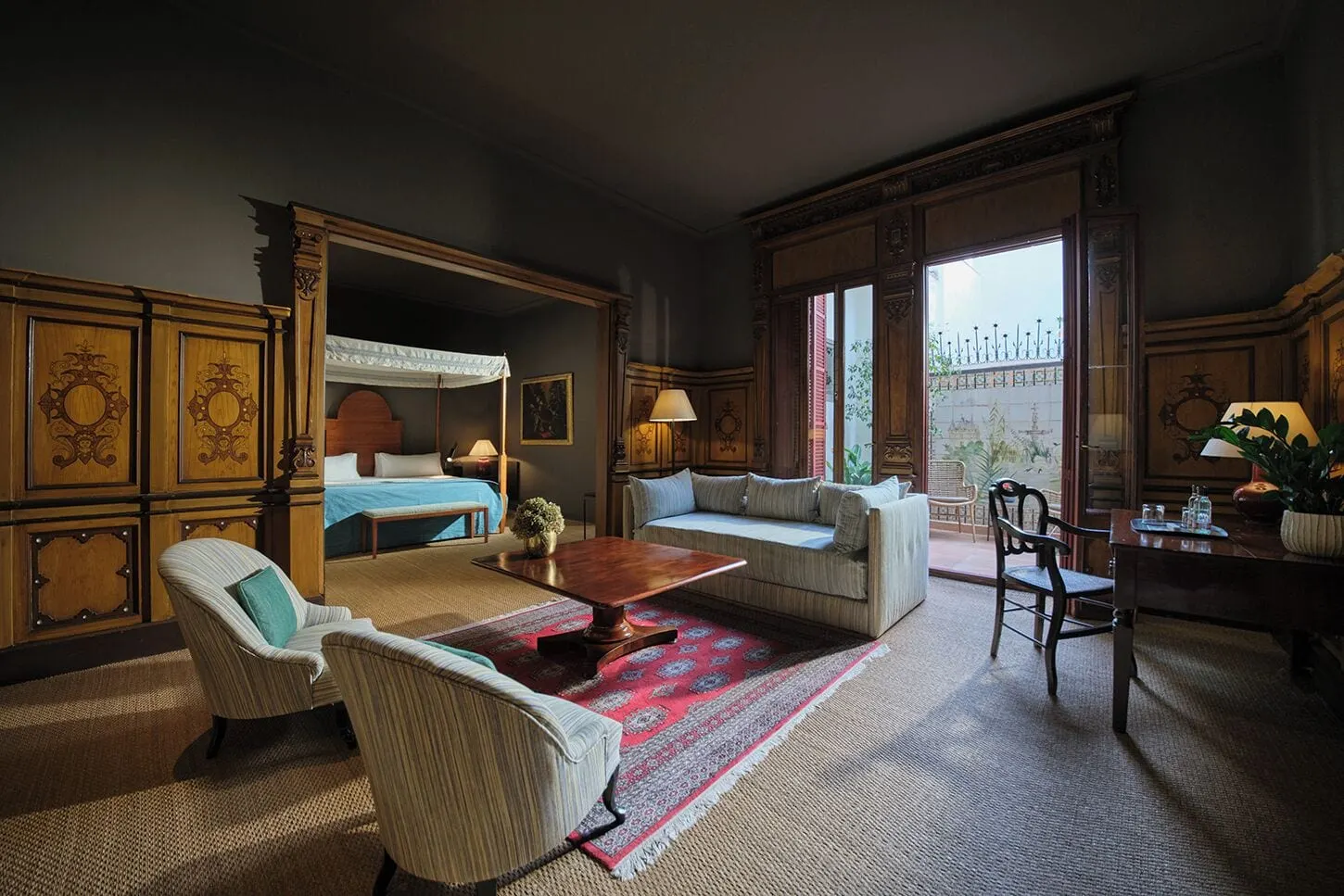
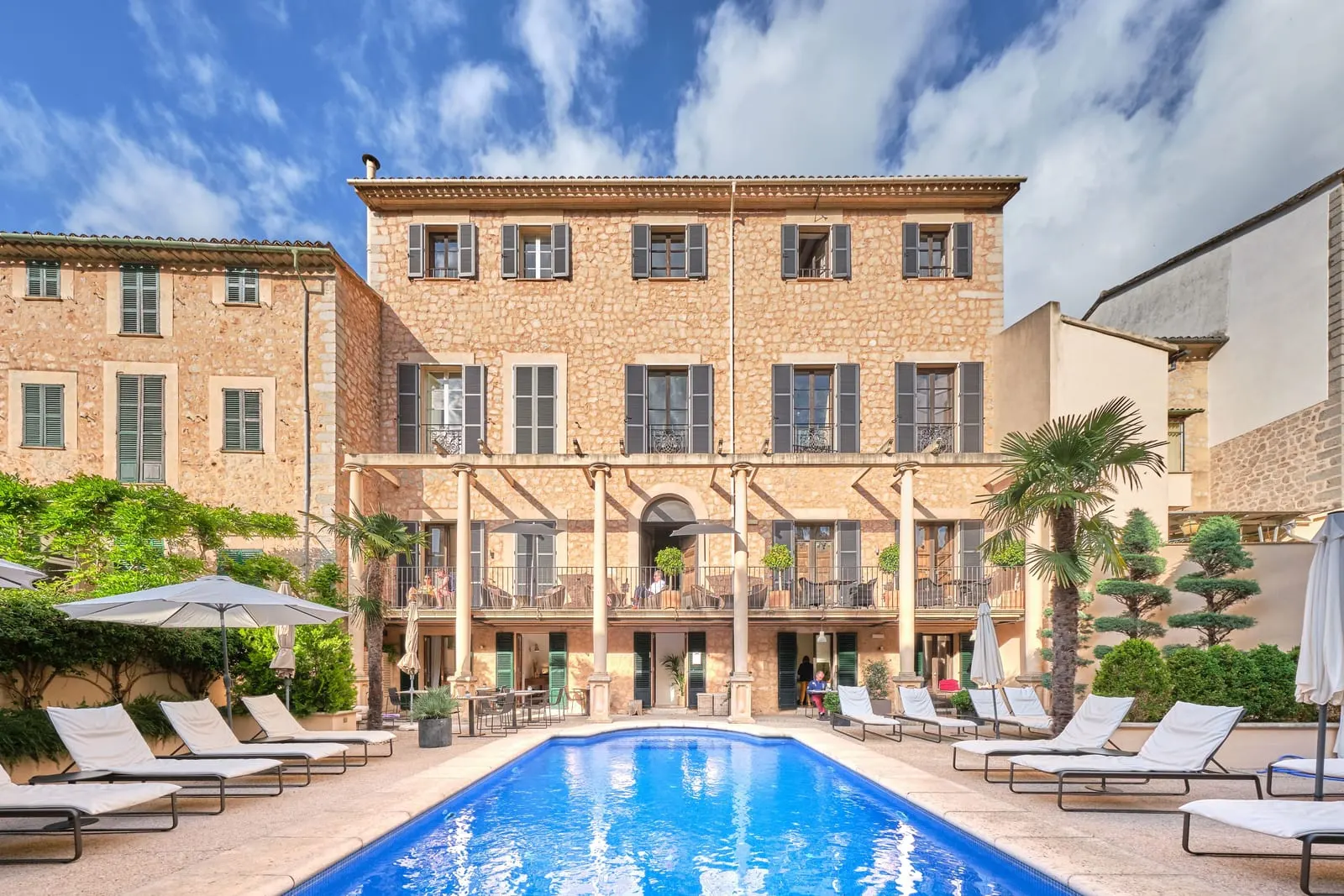
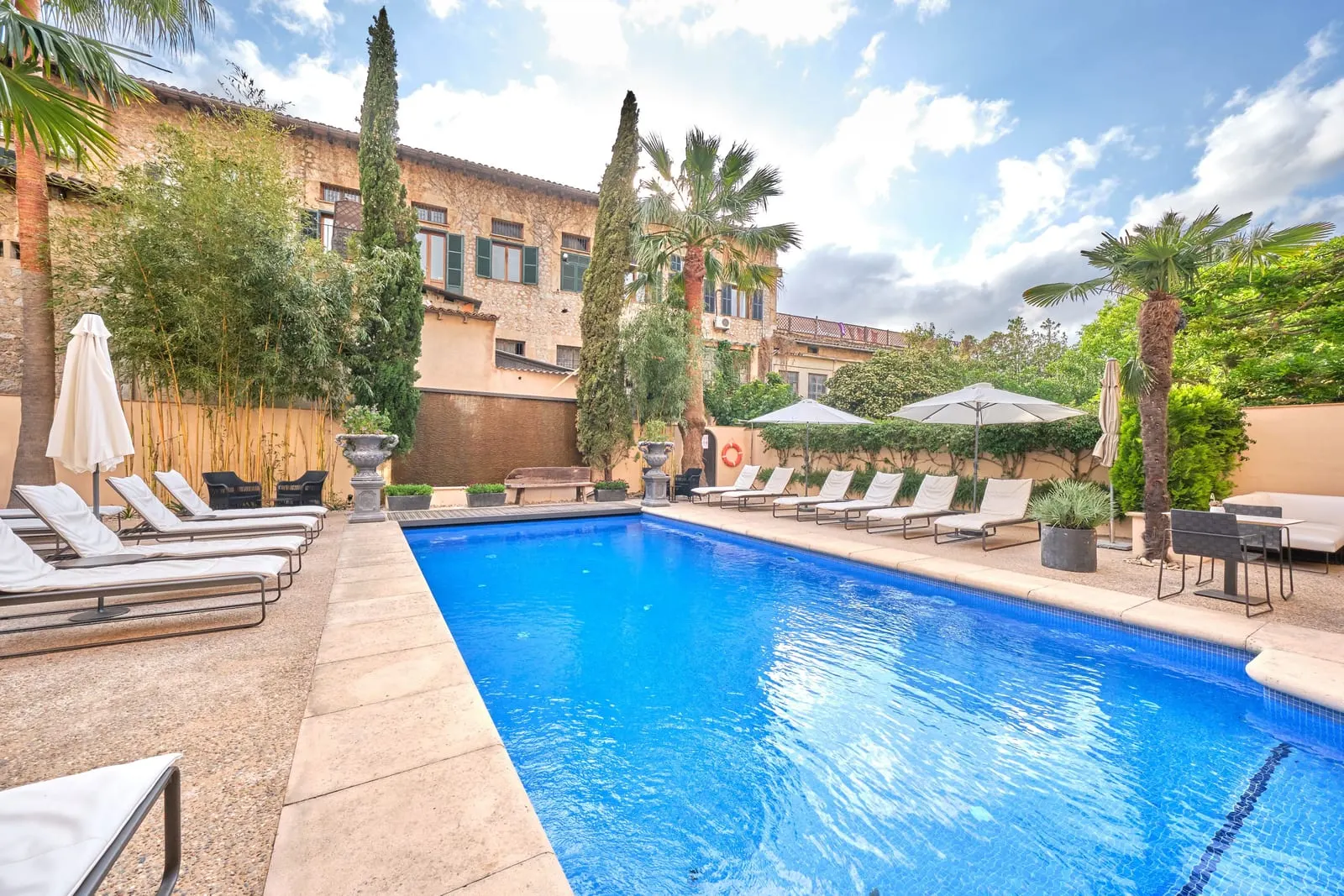
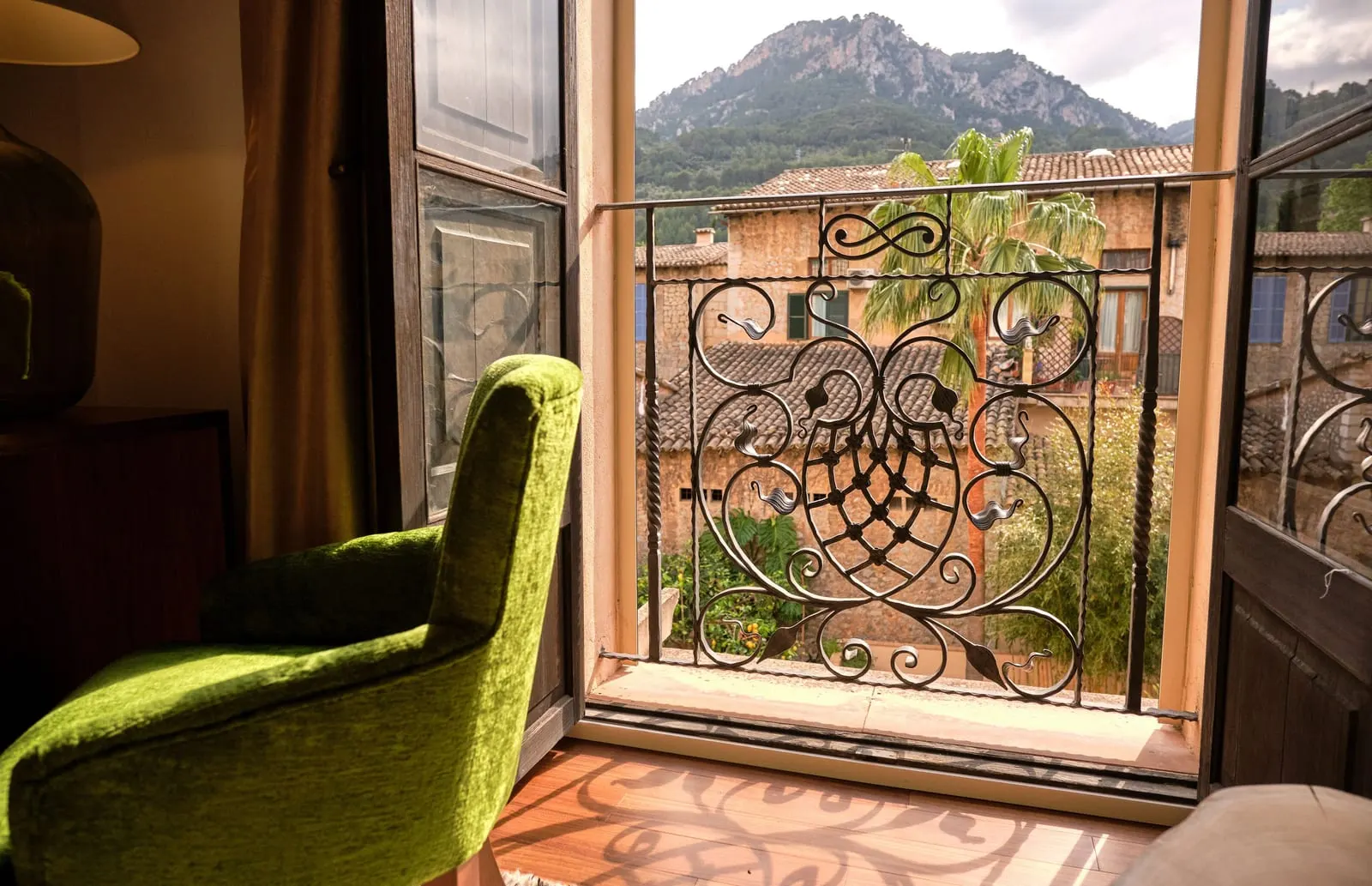
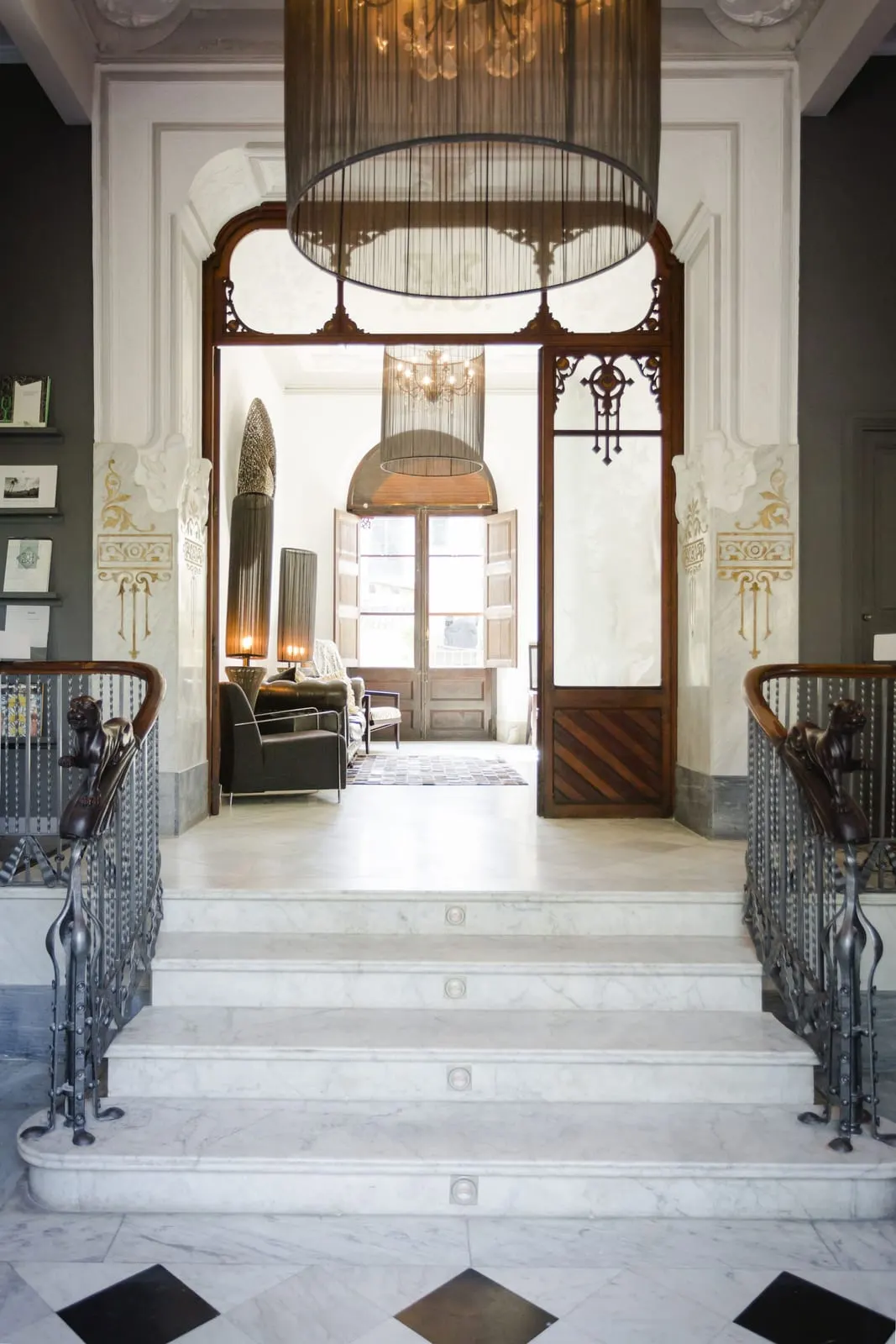
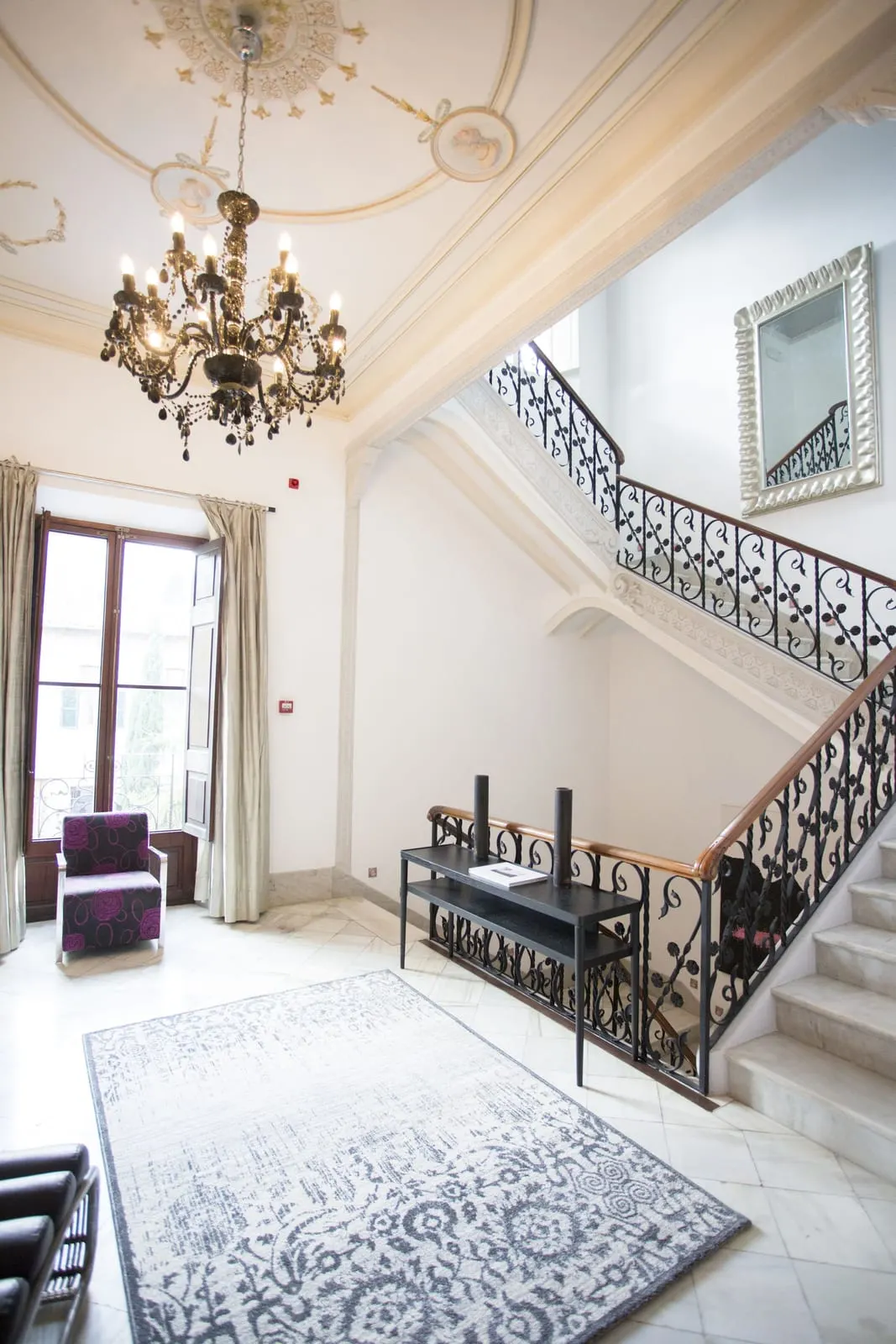
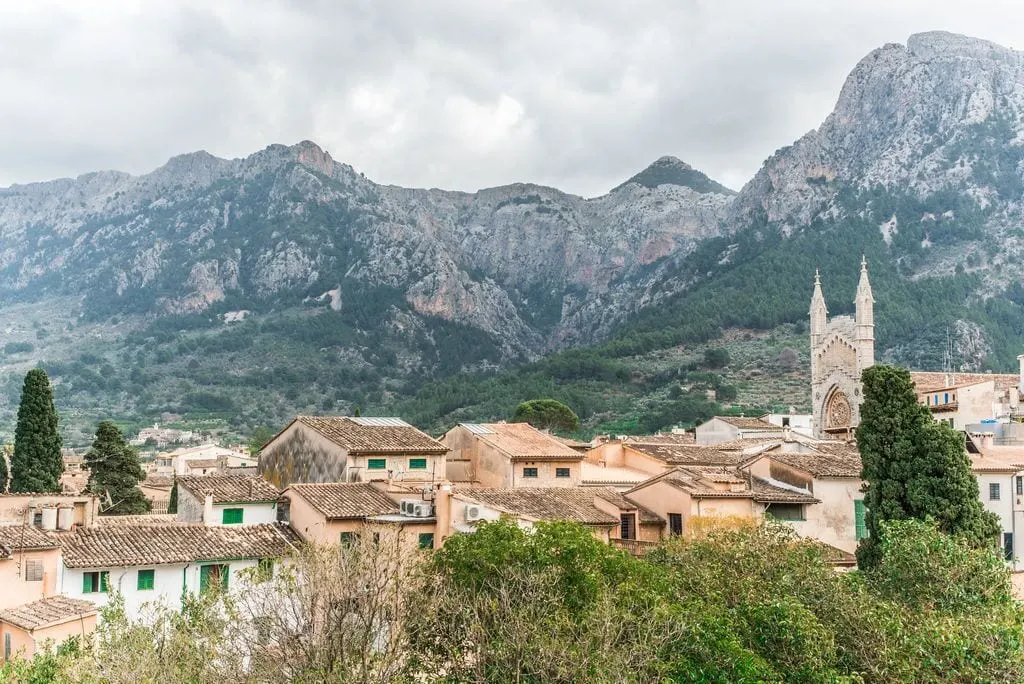
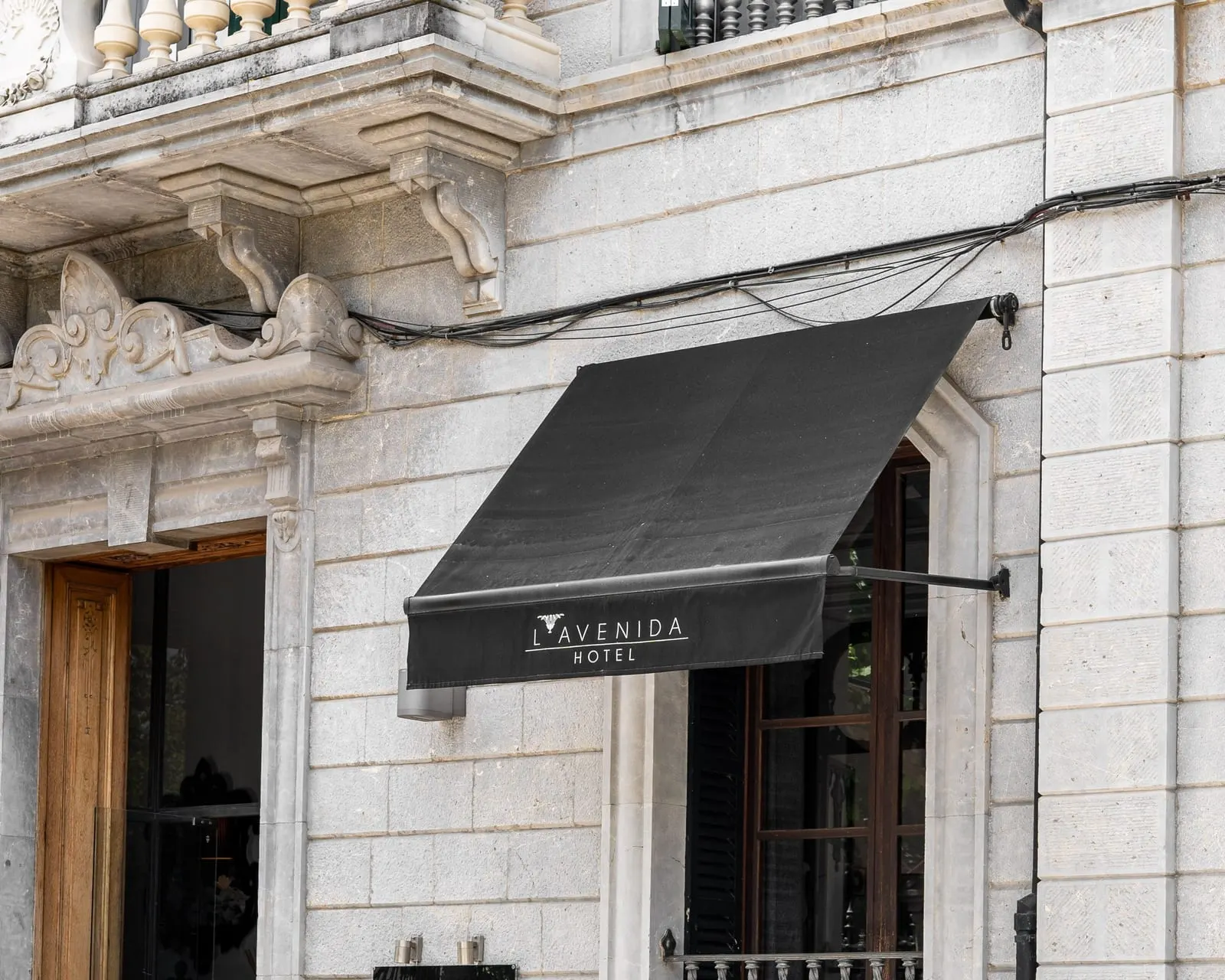
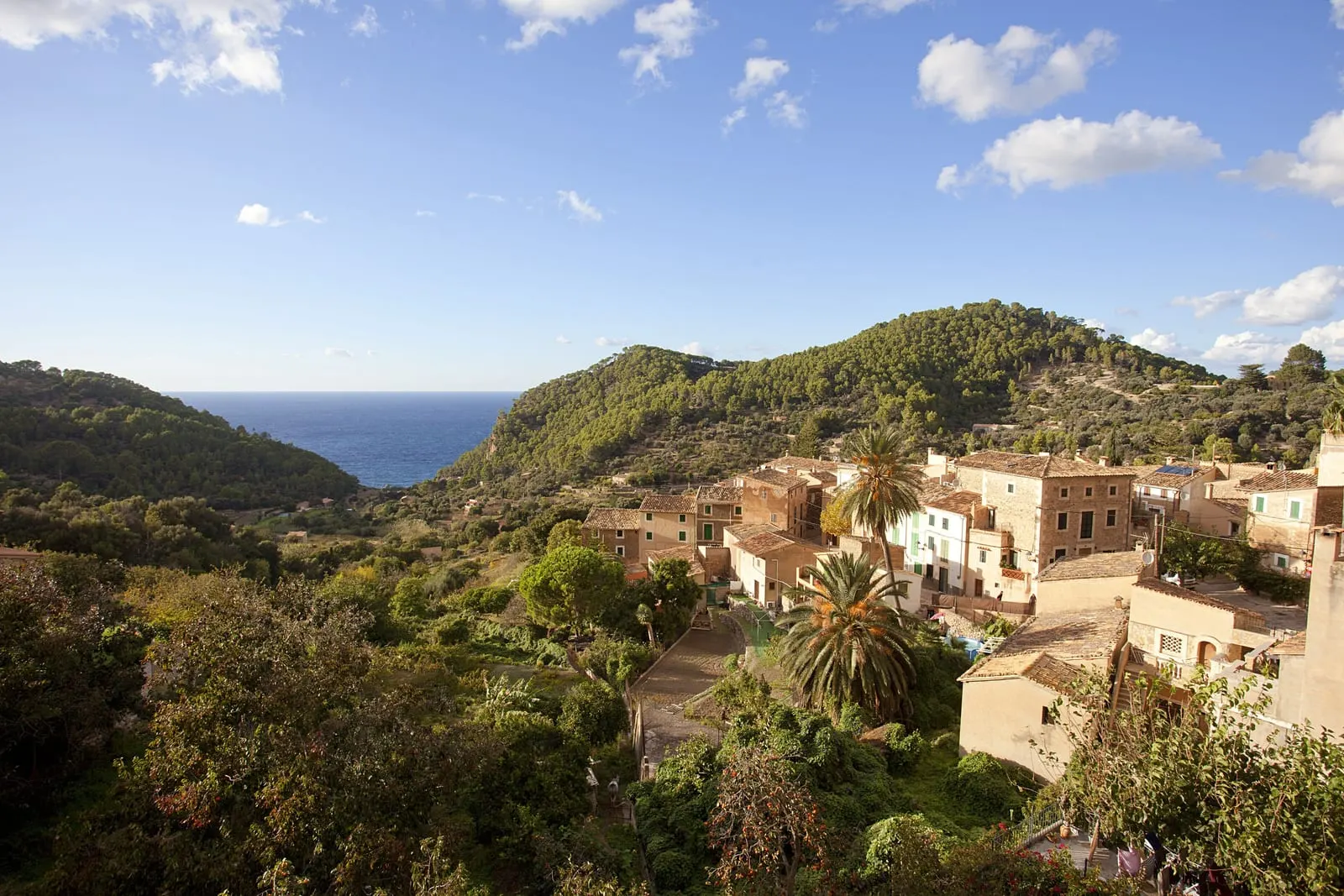
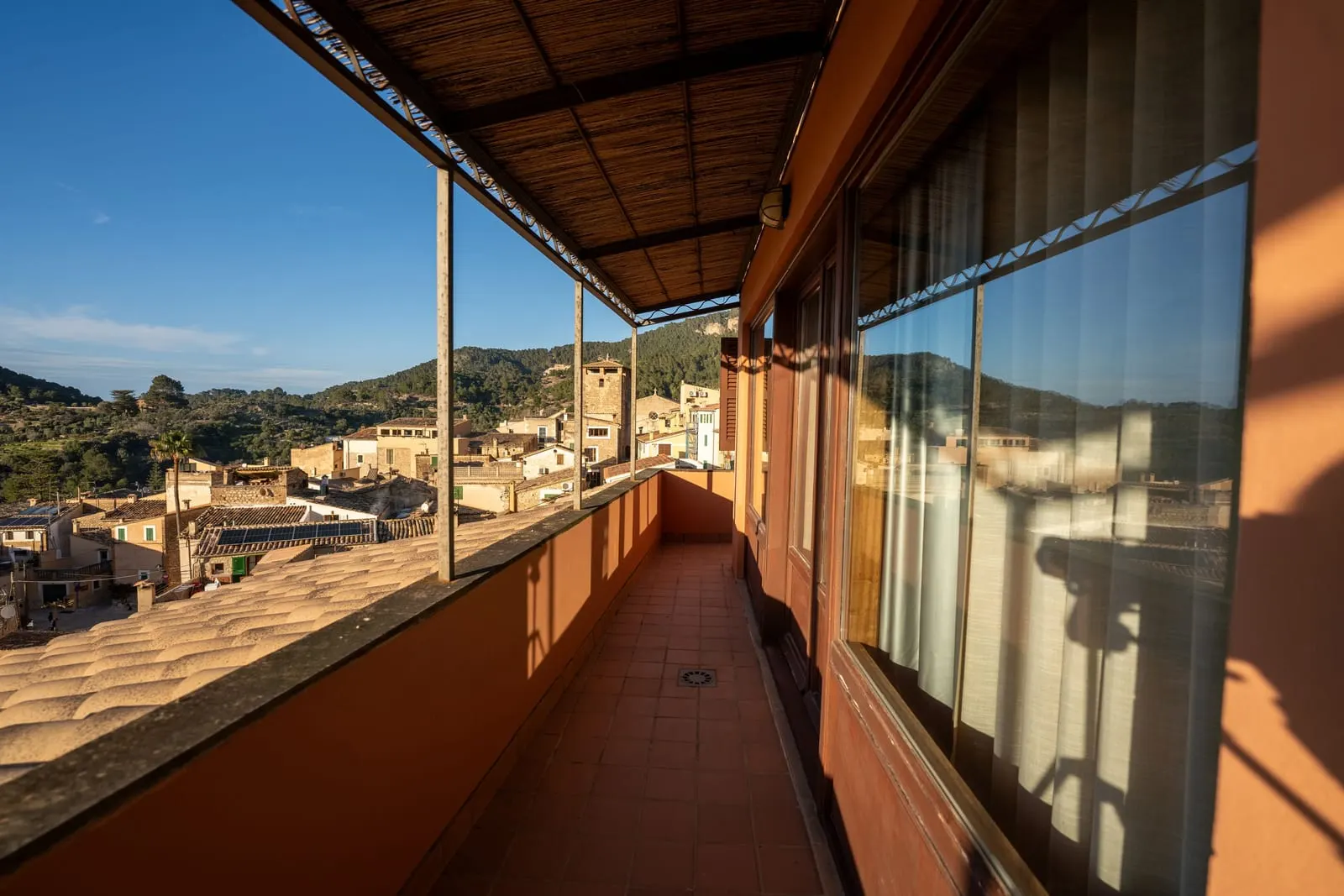
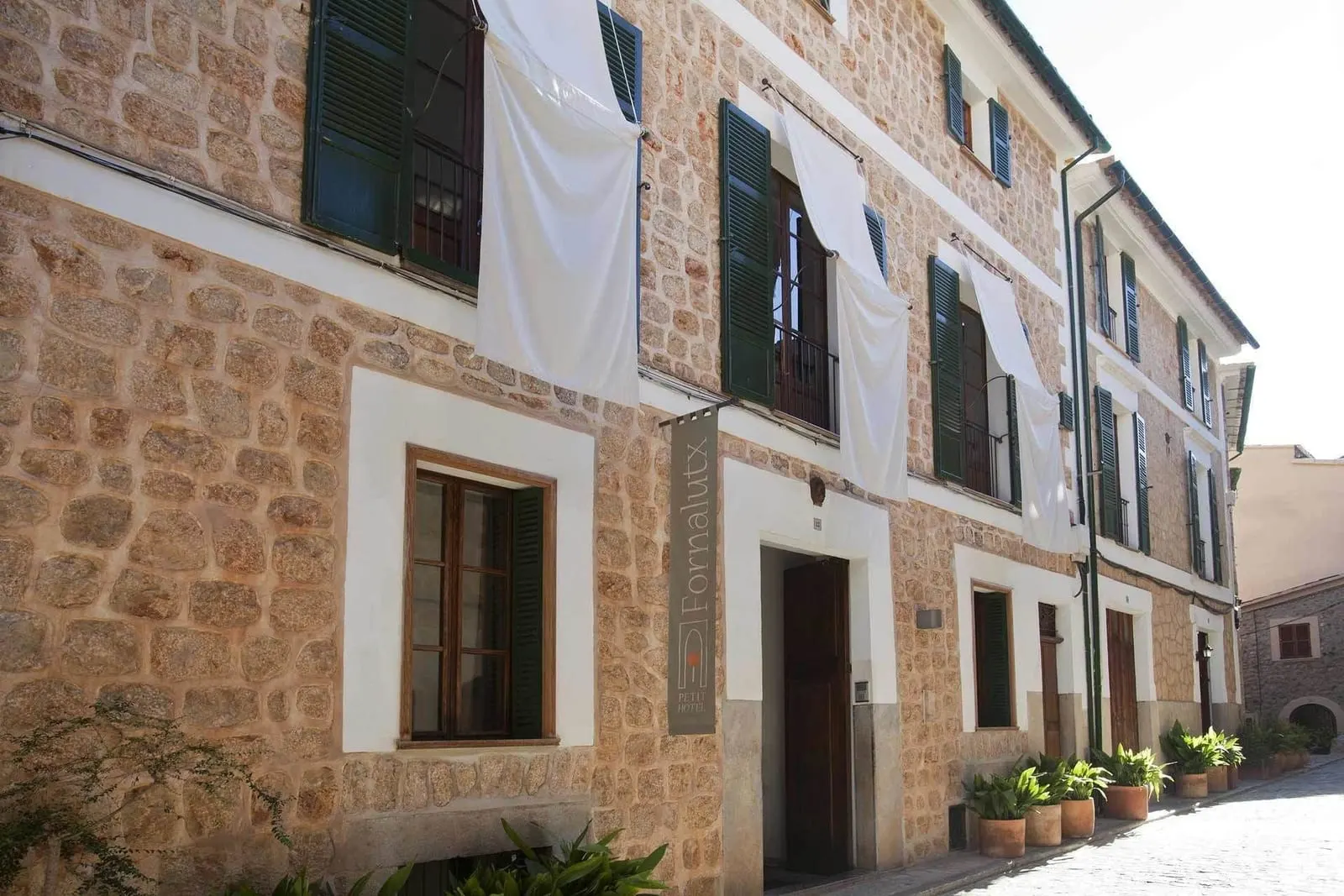
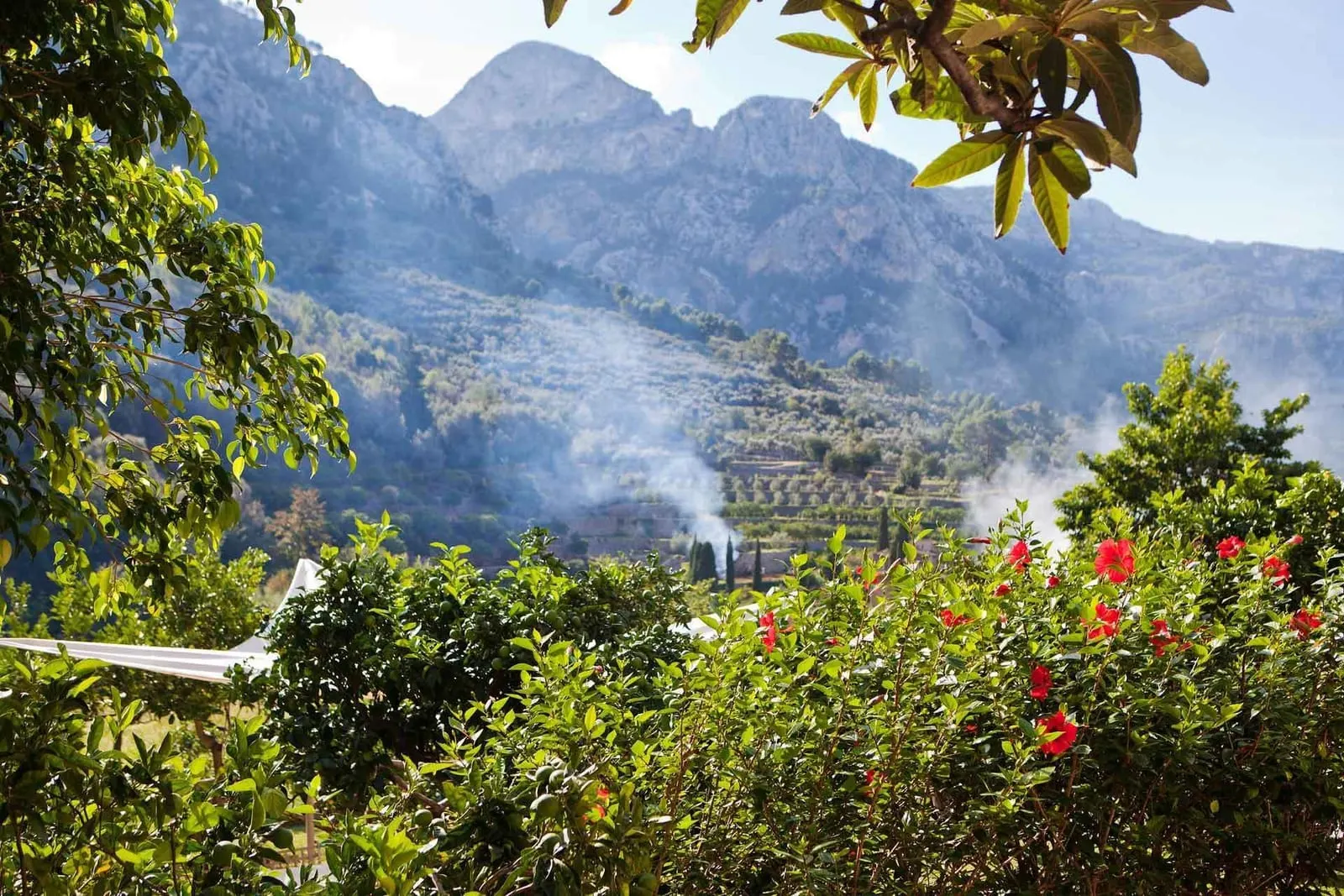
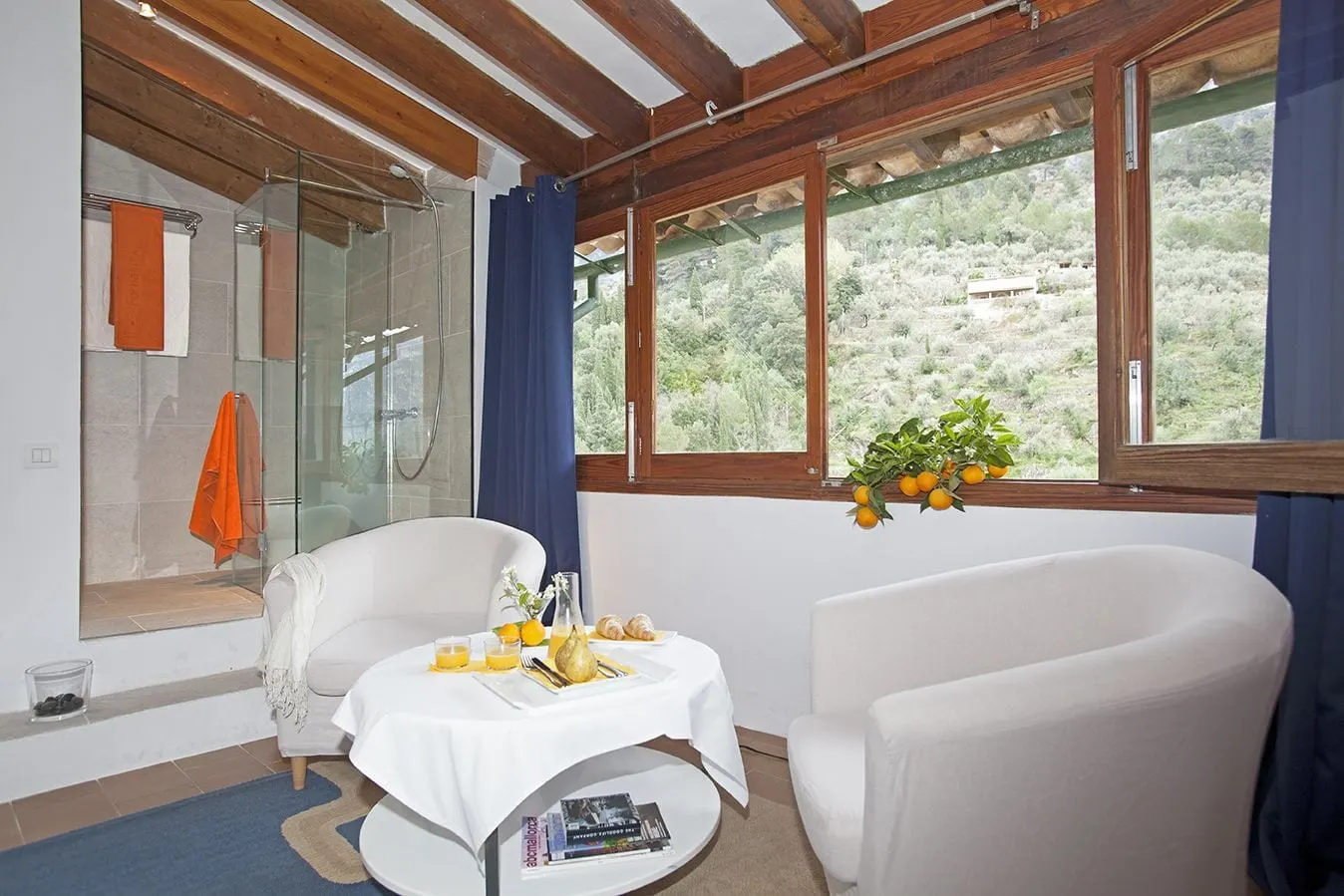
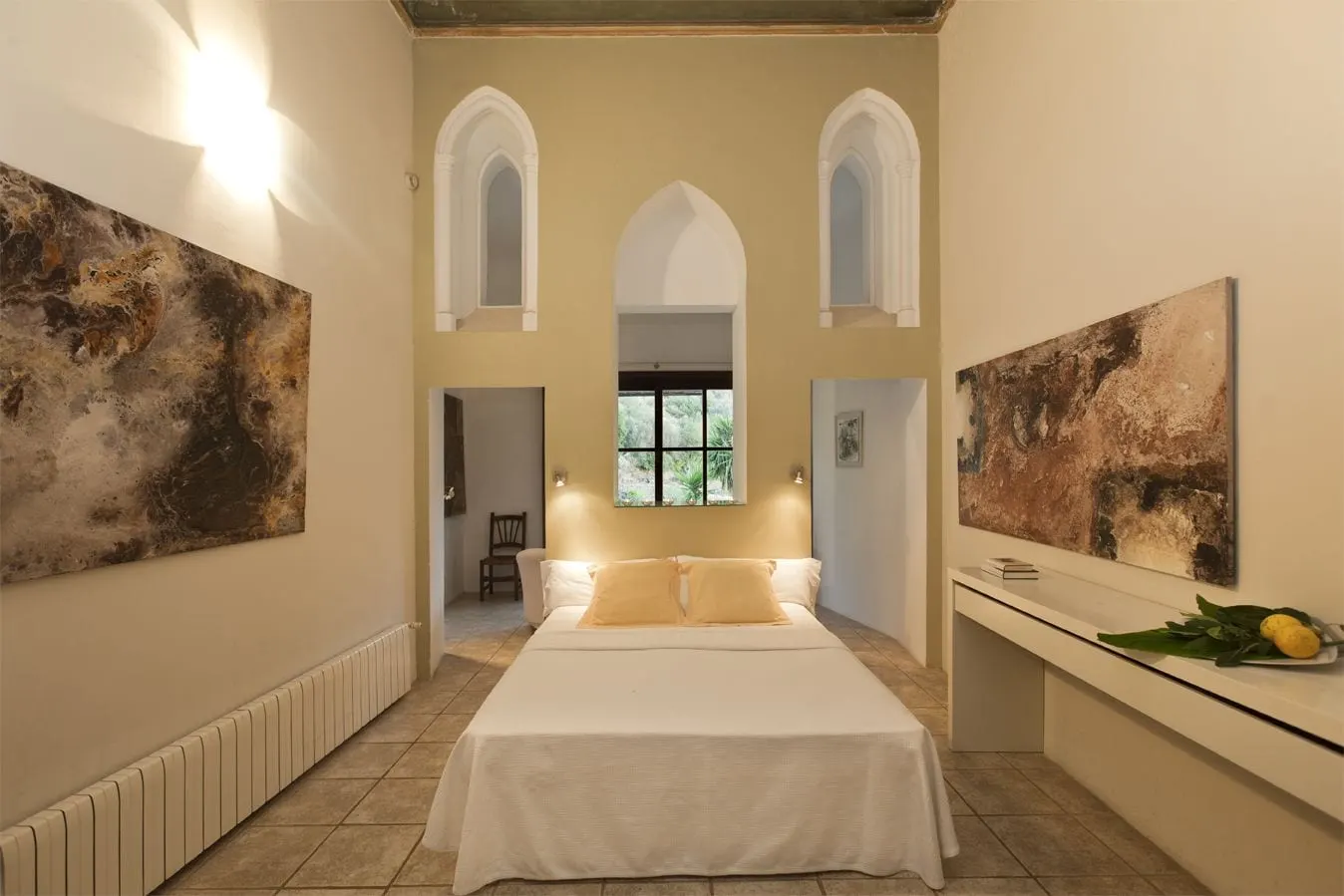
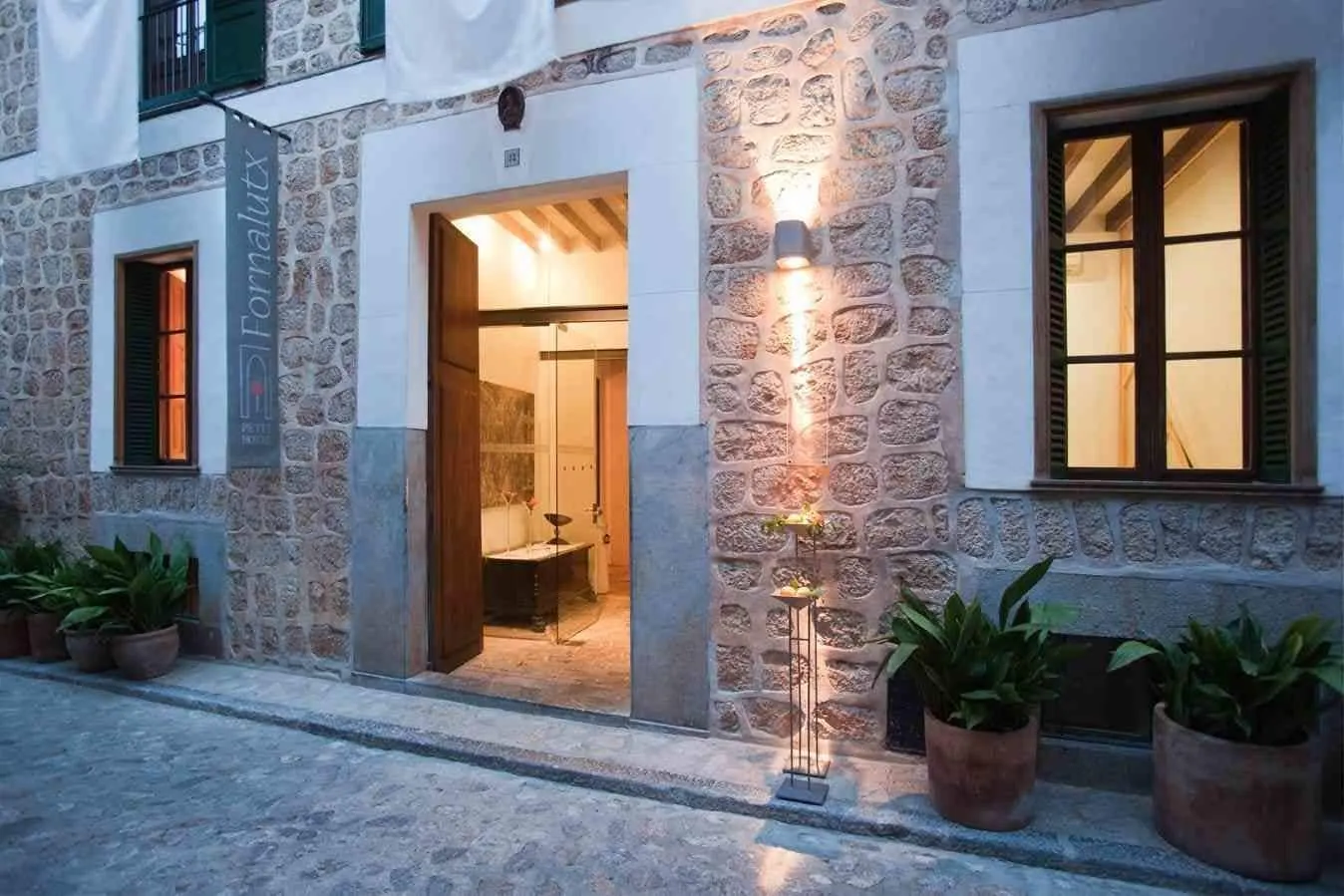
Mallorca is bigger than it looks, and where you sleep decides most of the holiday. Palma has two of the ten, both in the old town and both open all year: Es Princep on the sea walls, its roof looking over the bay and the cathedral, and Can Cera, an 18th-century house in the lanes behind it. Here a car is more burden than help: the cathedral, the markets and the restaurants are on foot, and the city beach at Can Pere Antoni is 9 minutes' walk from Es Princep. Beyond the city, the Serra de Tramuntana, a UNESCO World Heritage landscape since 2011, runs the length of the north-west coast. Belmond La Residencia faces Deià from its hillside, five minutes' walk from the village, and Maristel stands over the open sea in Estellencs, a stone village further along the Ma-10. Over the ridge, the Sóller valley is orange groves ringed by peaks: L'Avenida is a twelve-room townhouse in Sóller, near the wooden tram to the port, and Fornalutx Petit Hotel is a former convent in Fornalutx, seven minutes' drive up the valley, where the lanes are steep, stepped and cobbled.
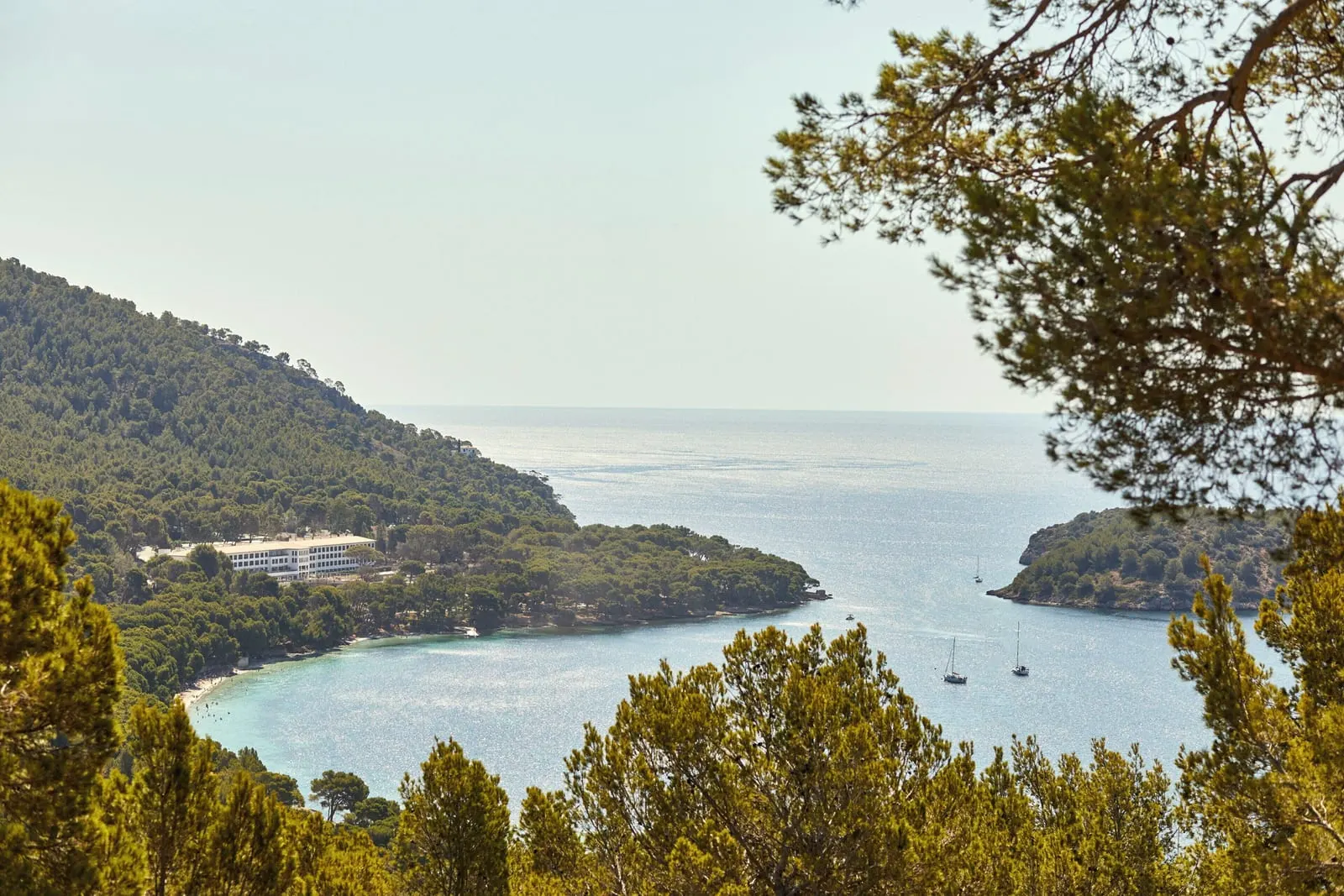
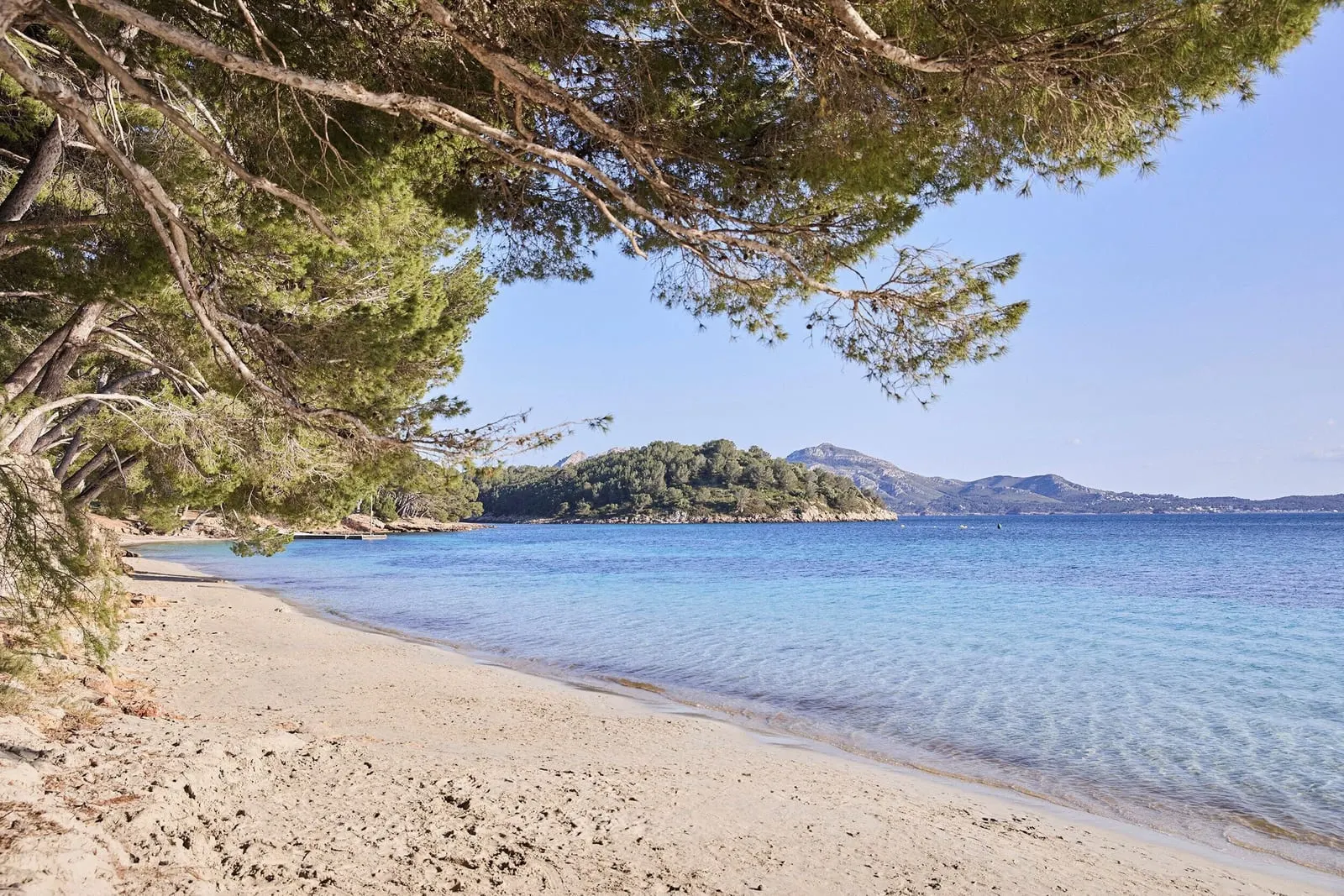
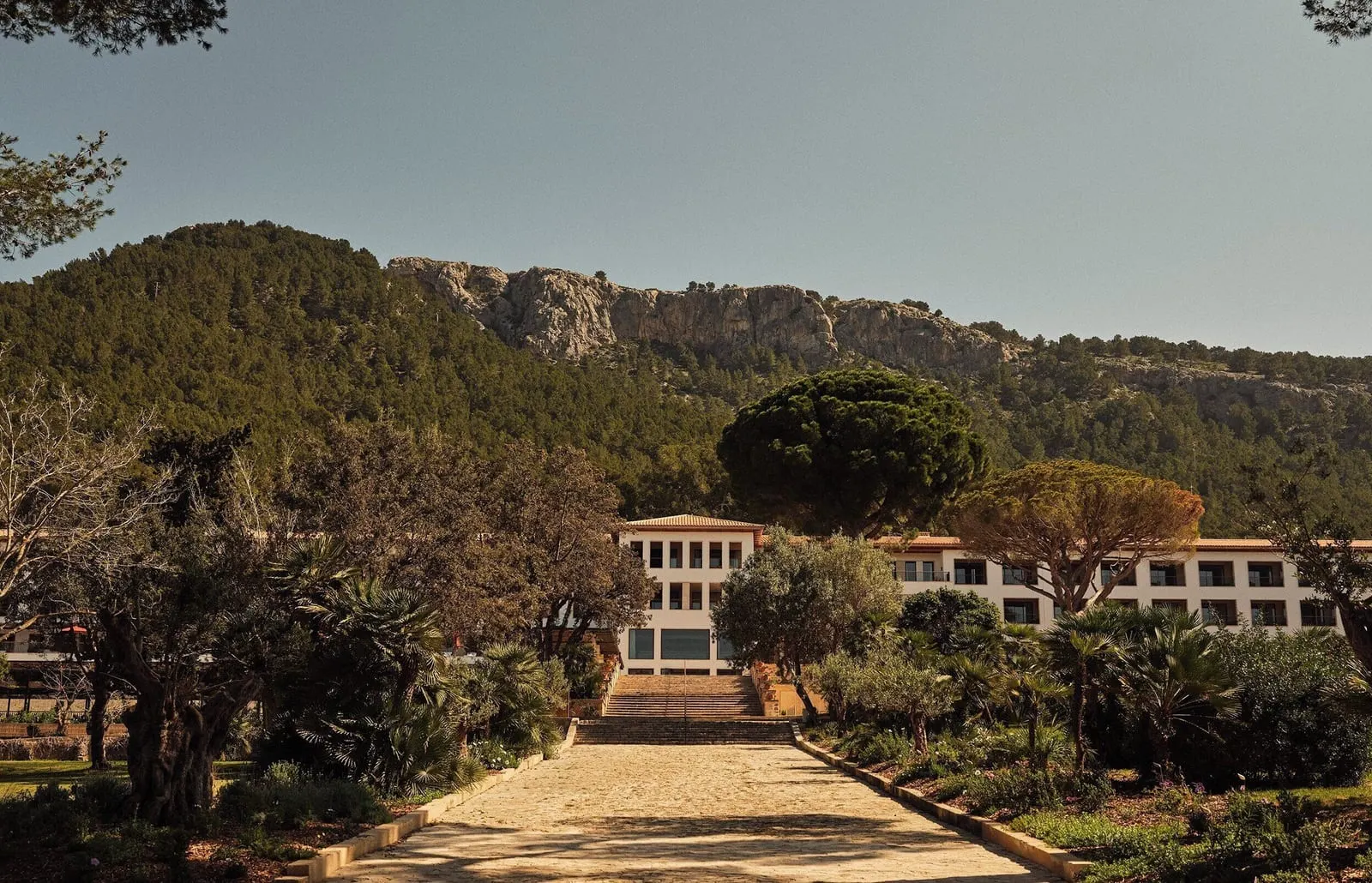
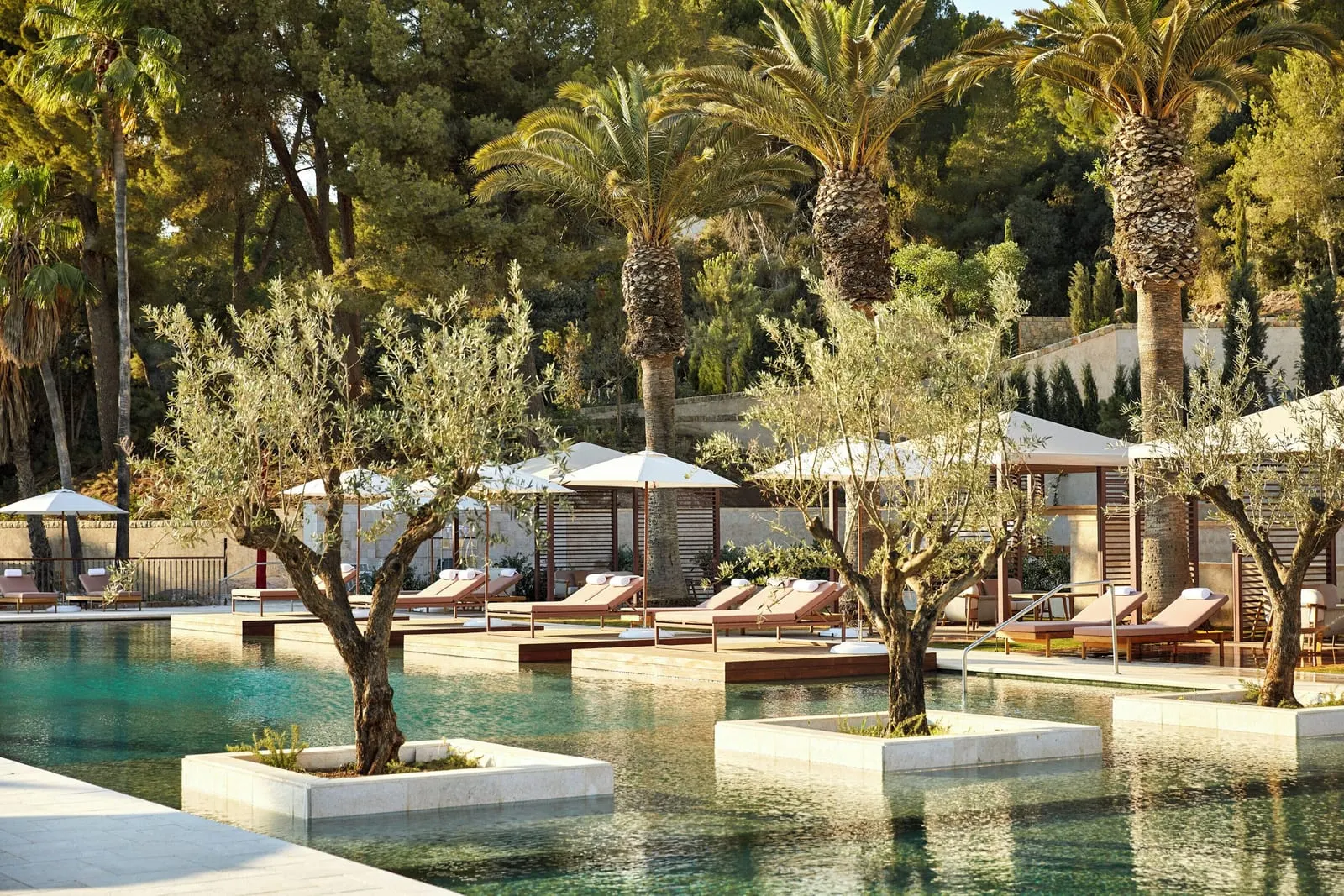
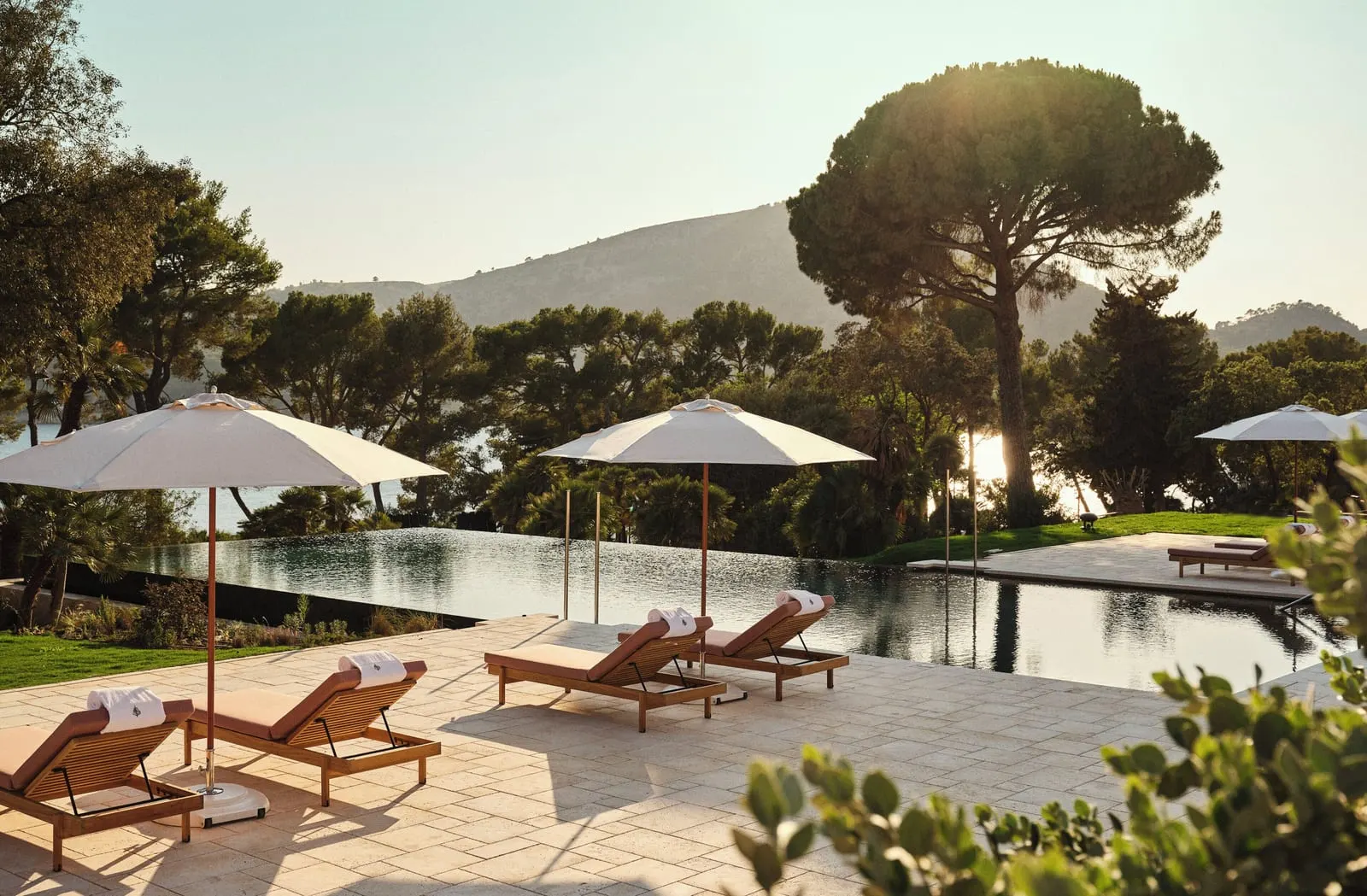
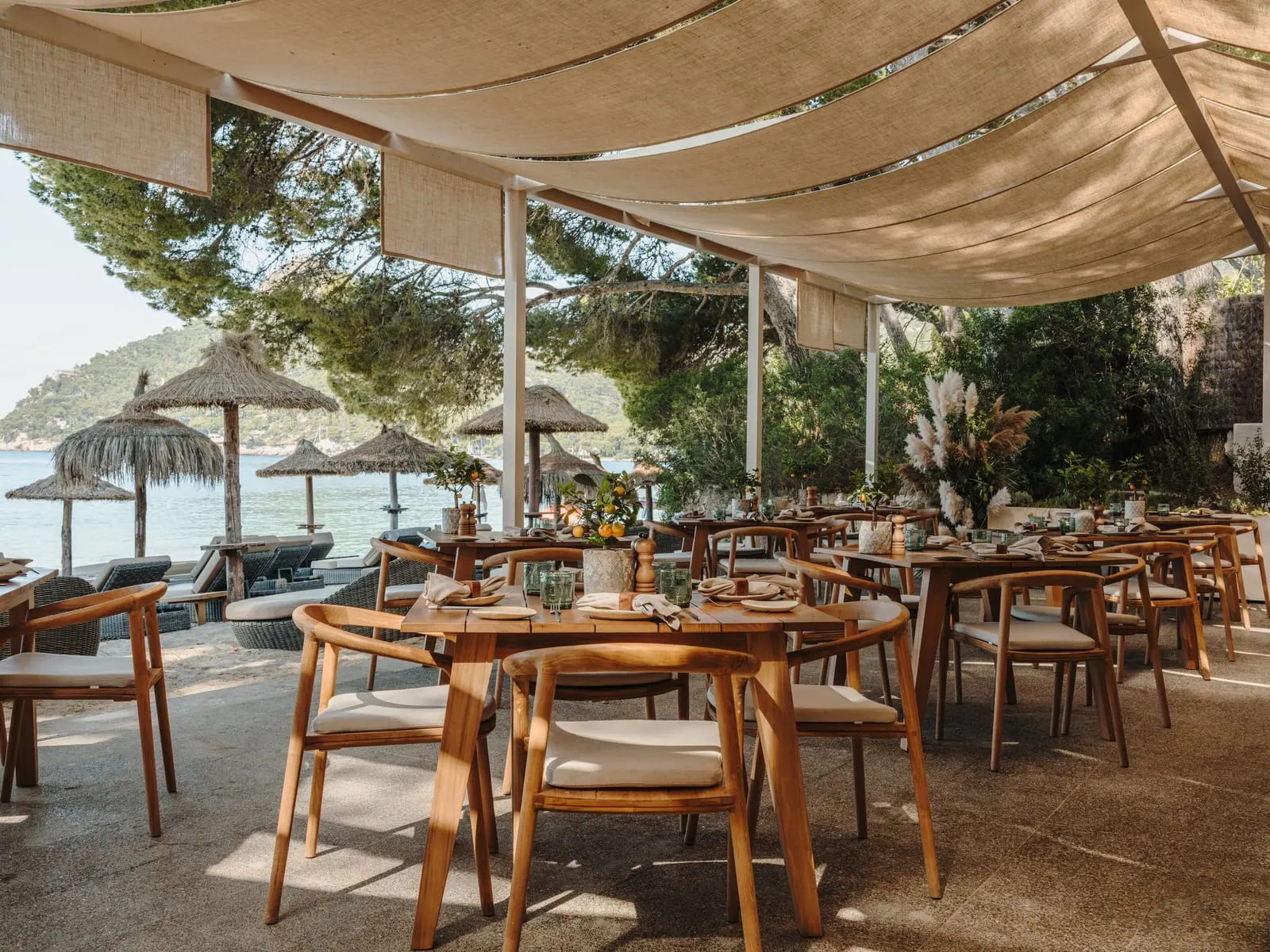
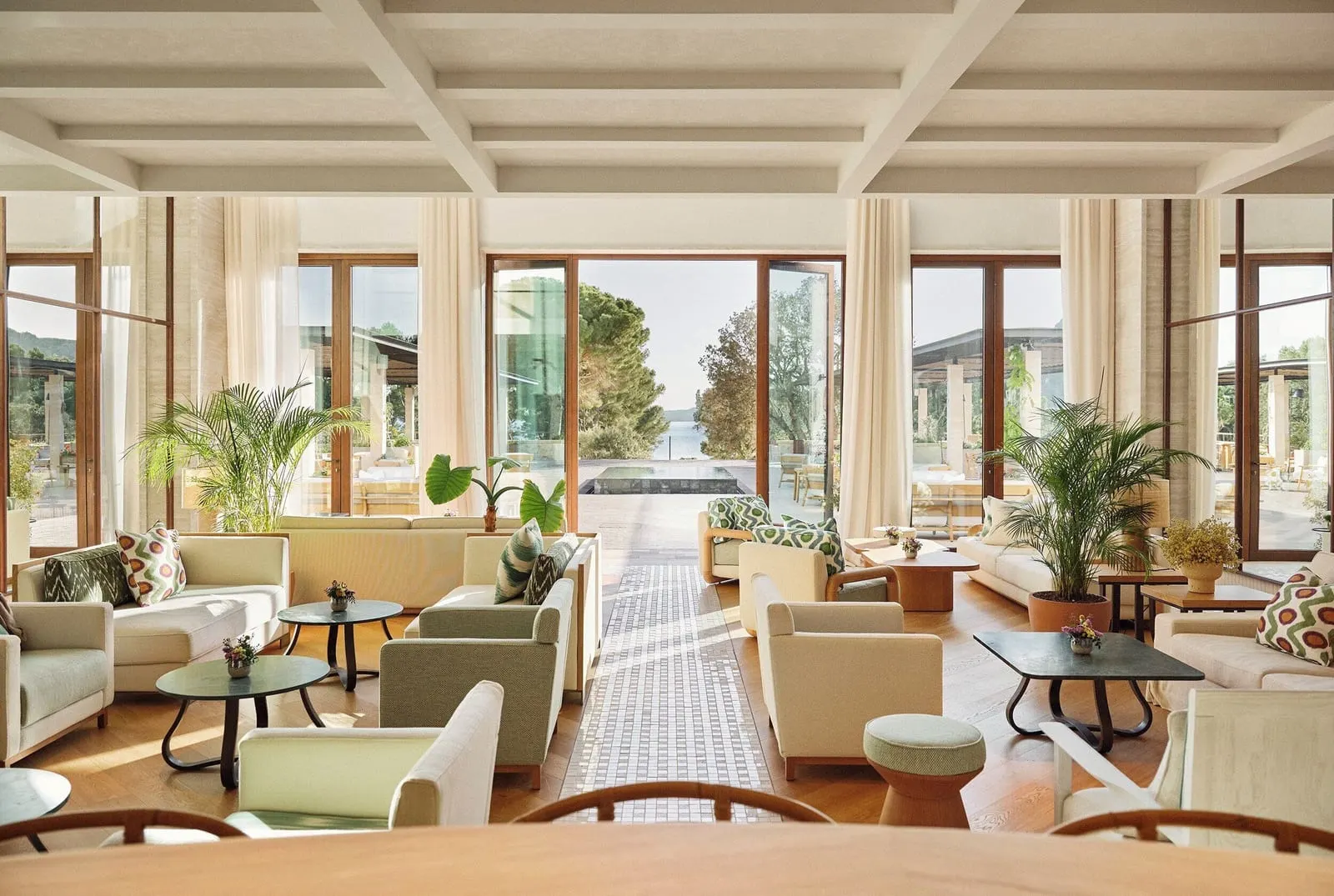
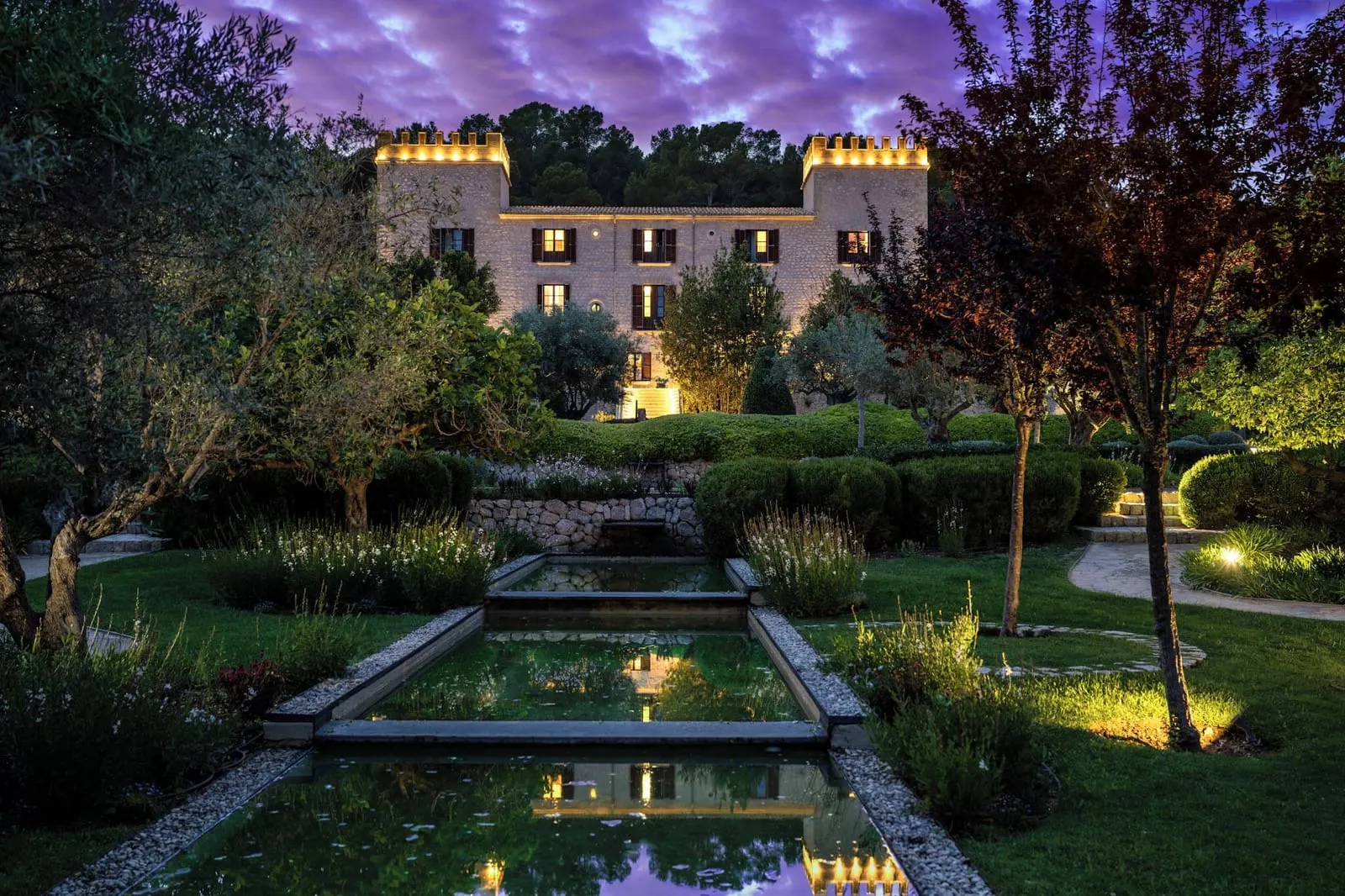
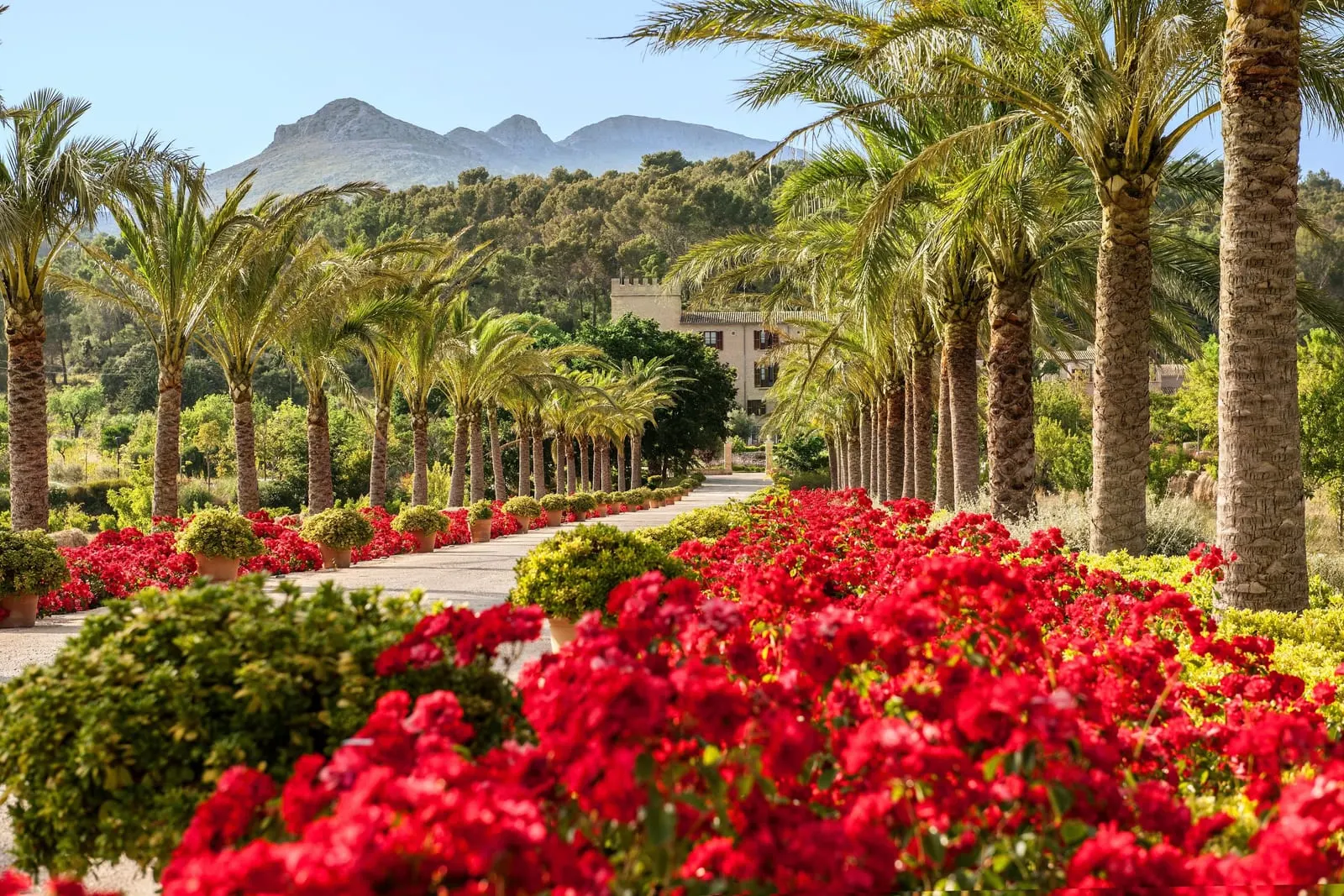
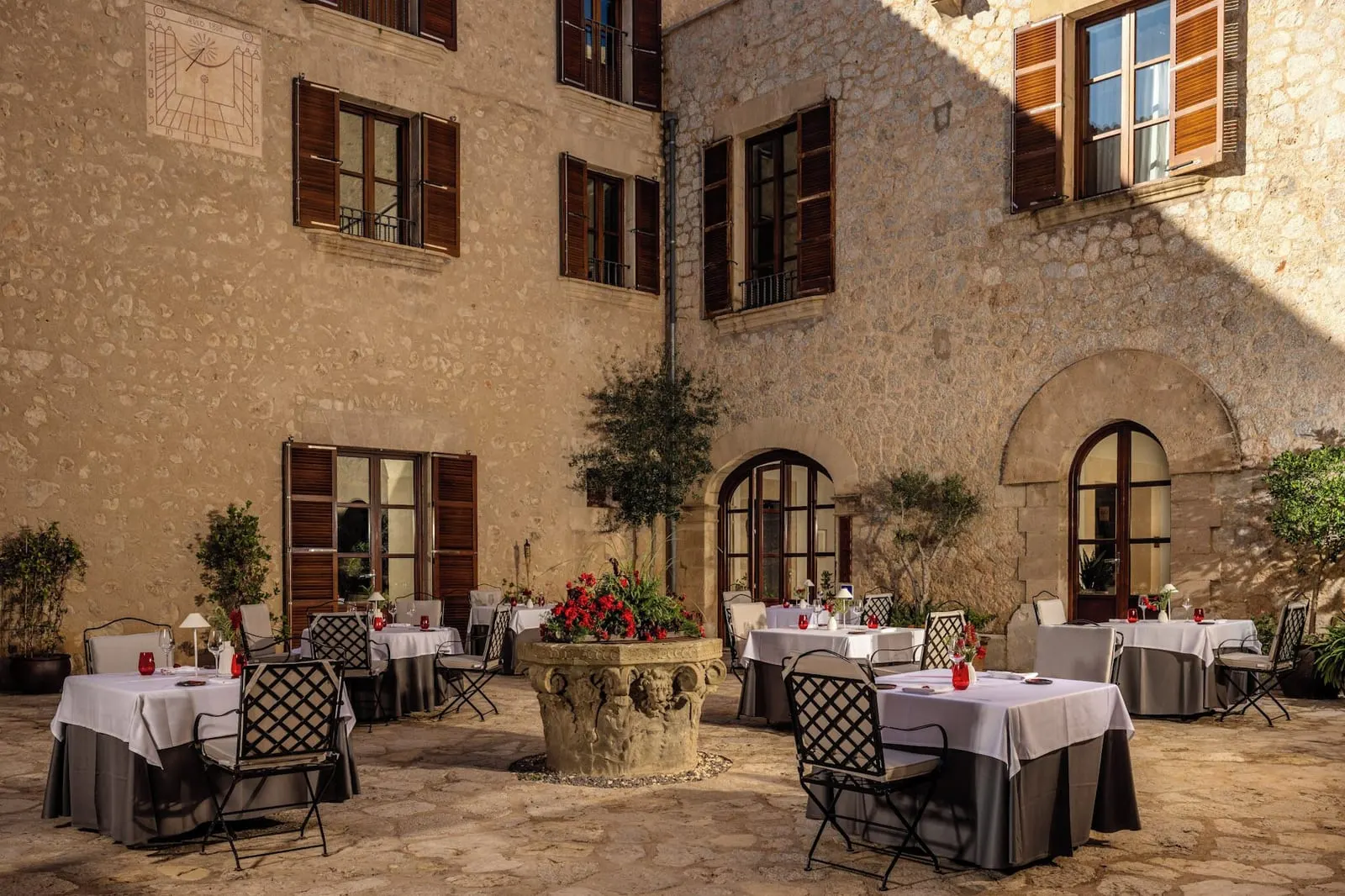
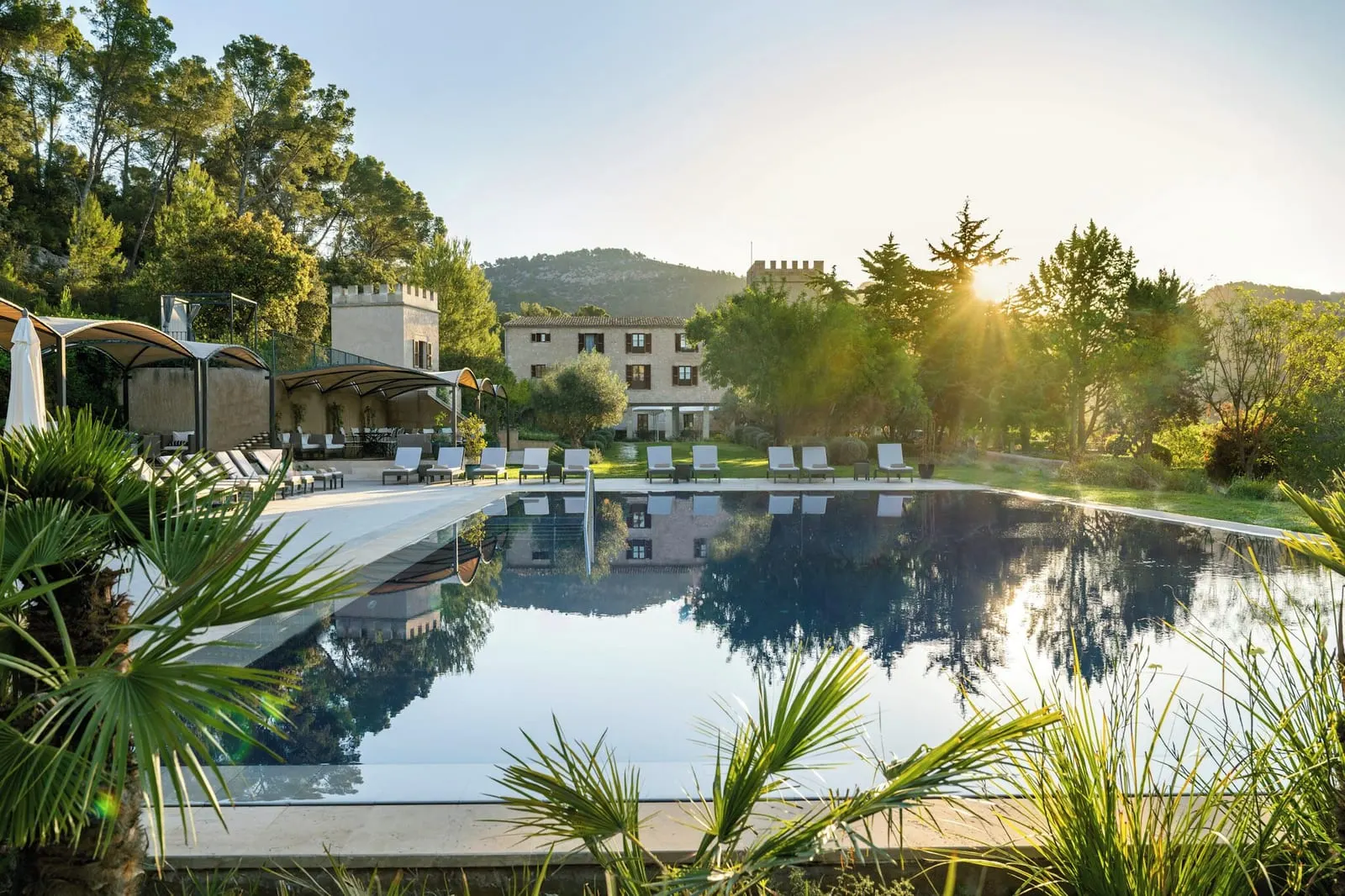
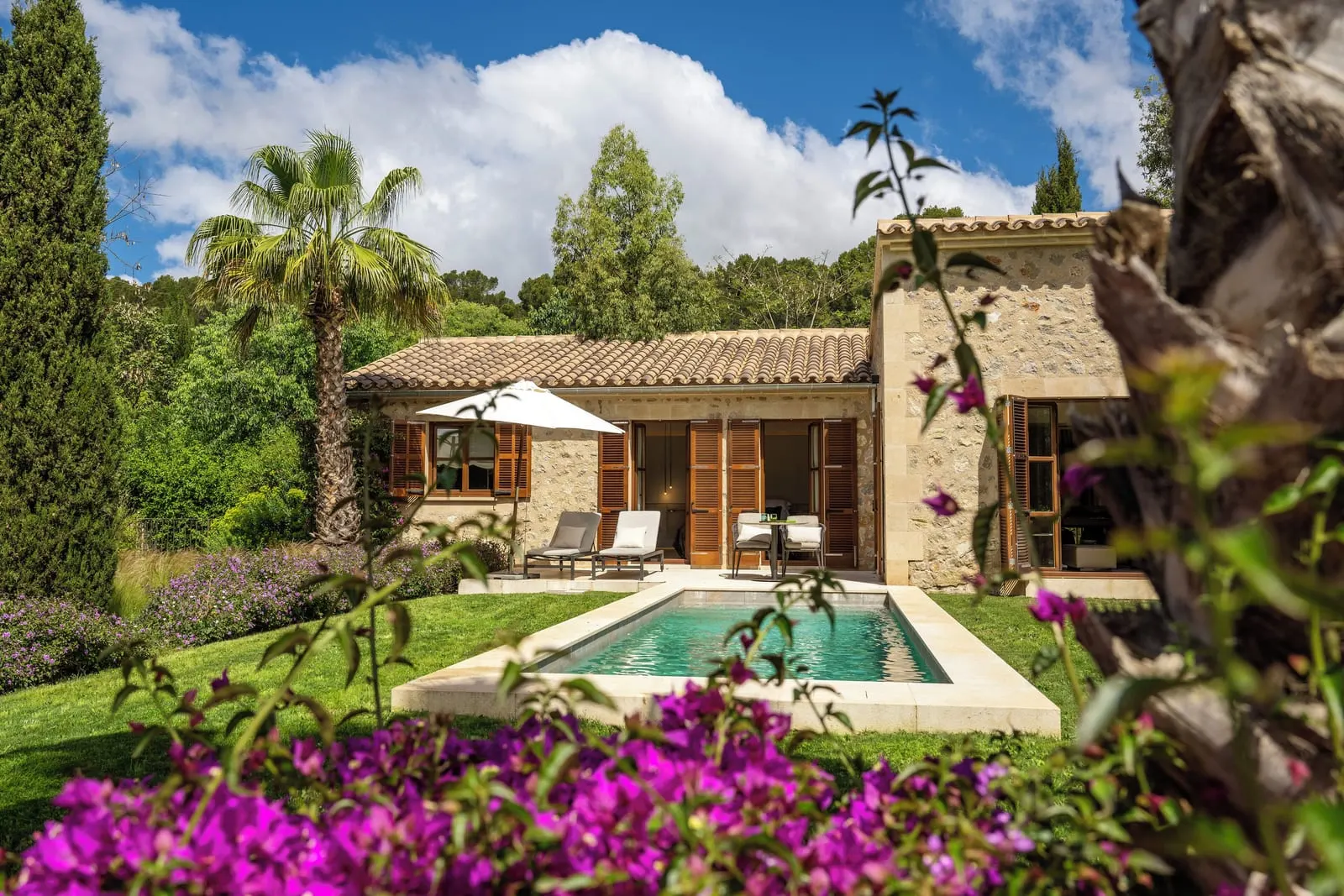
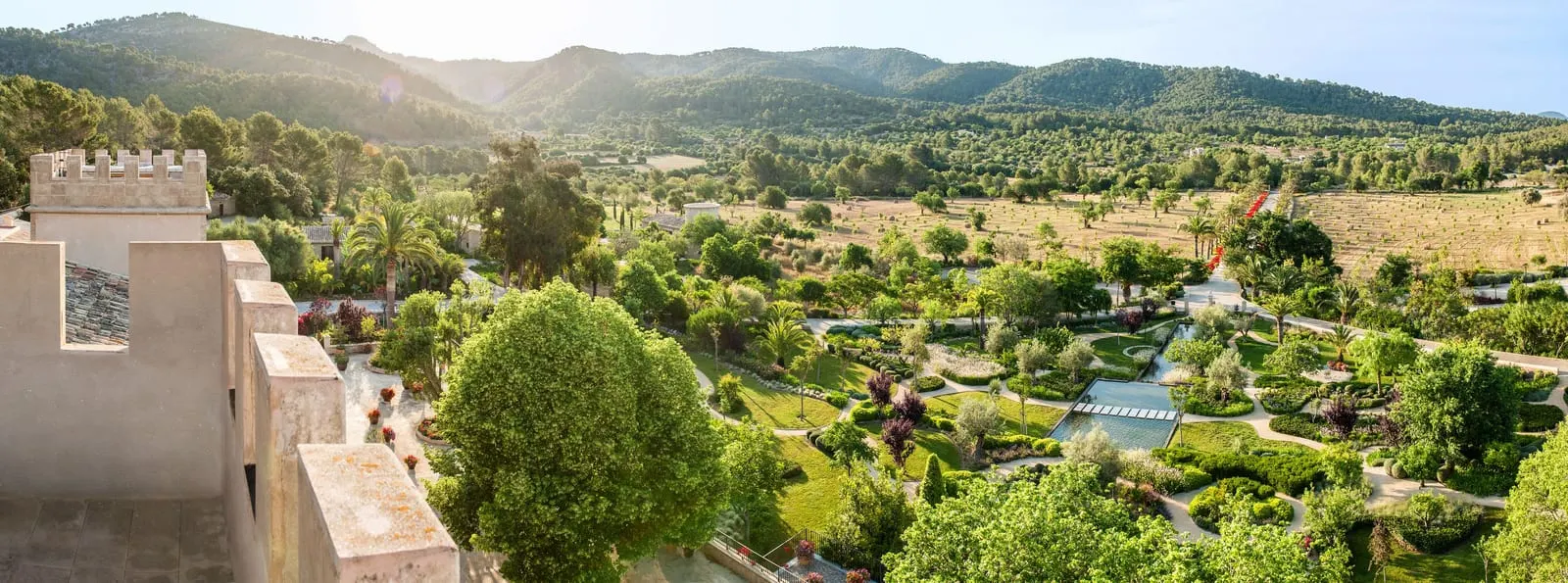
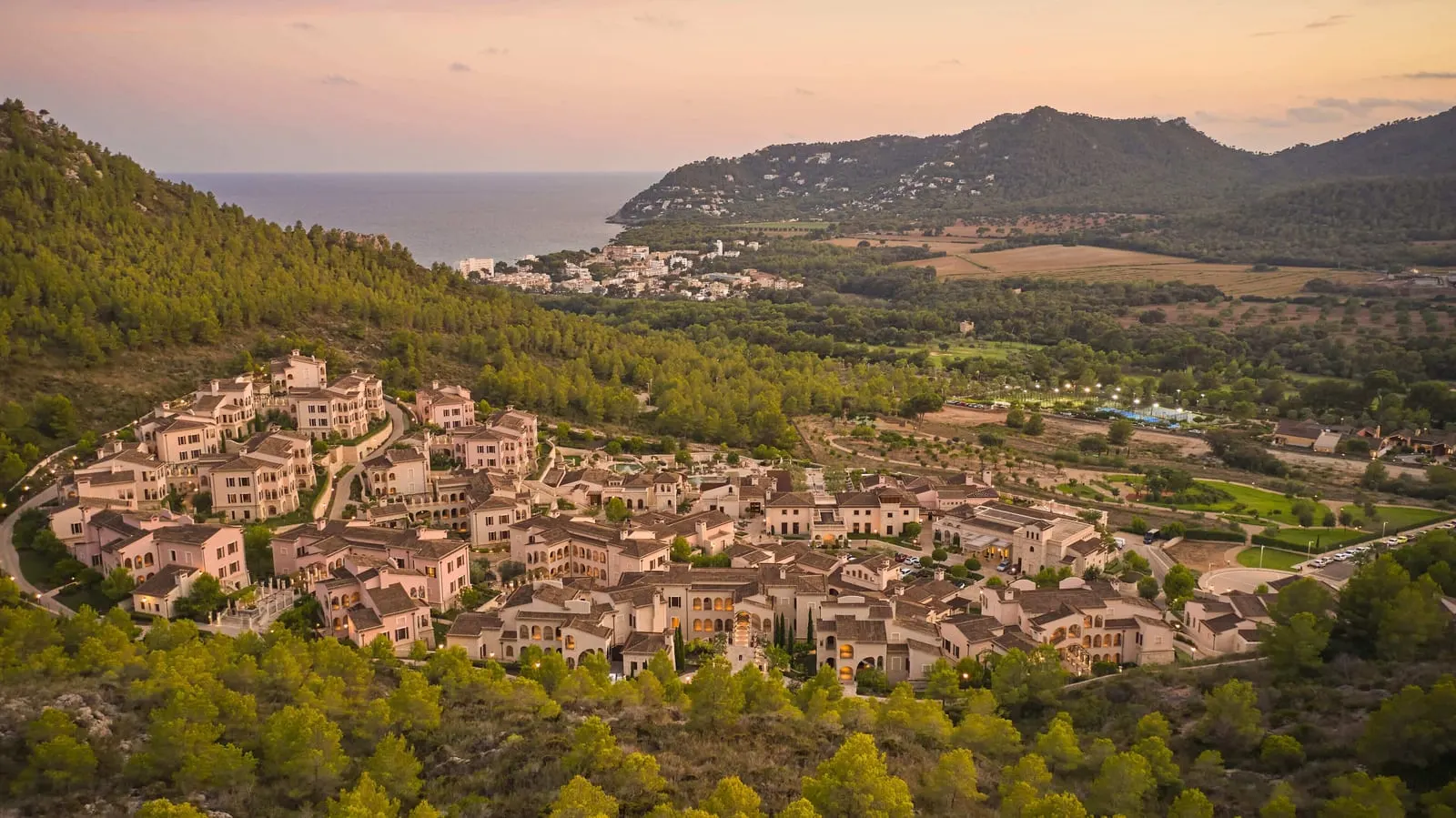
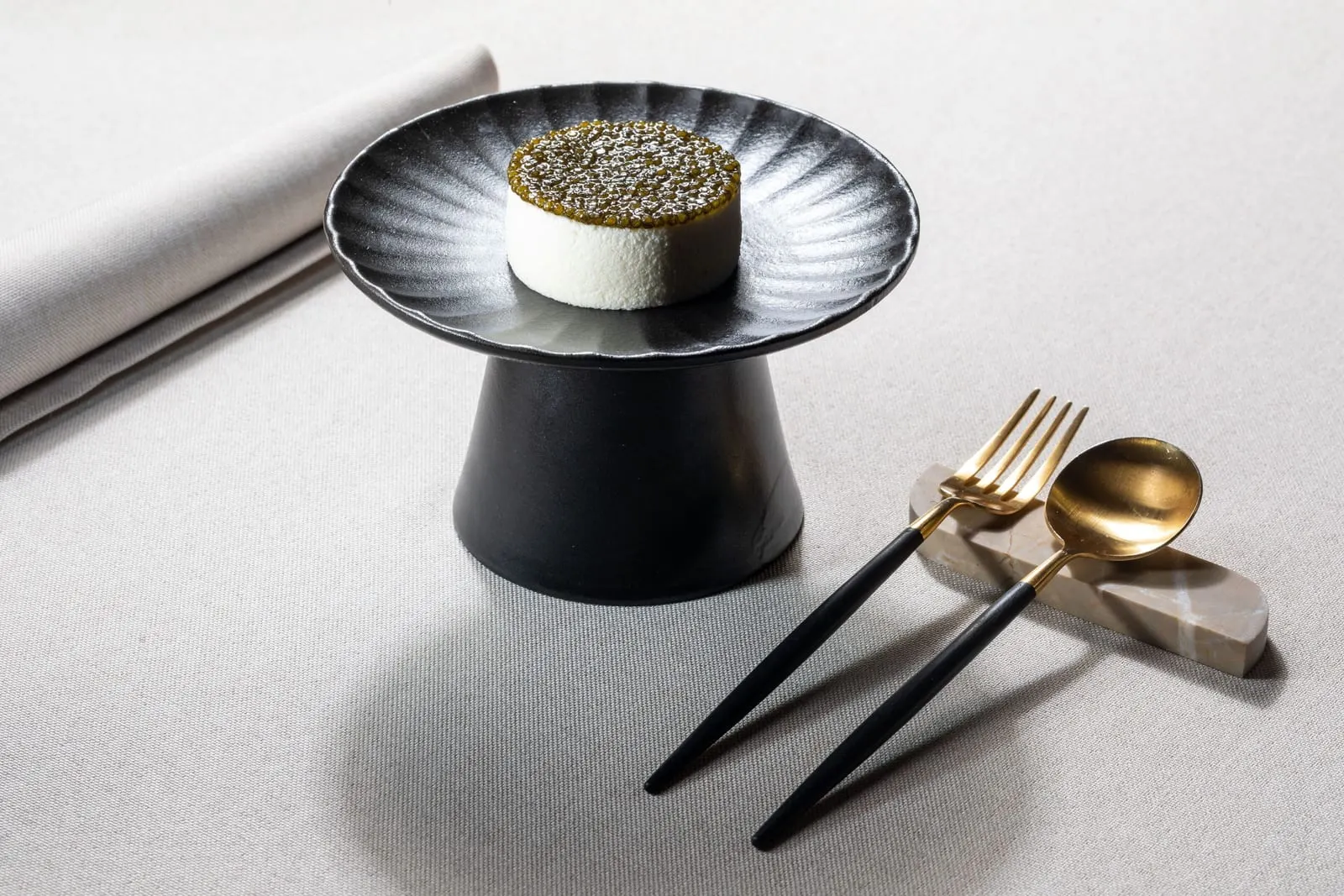
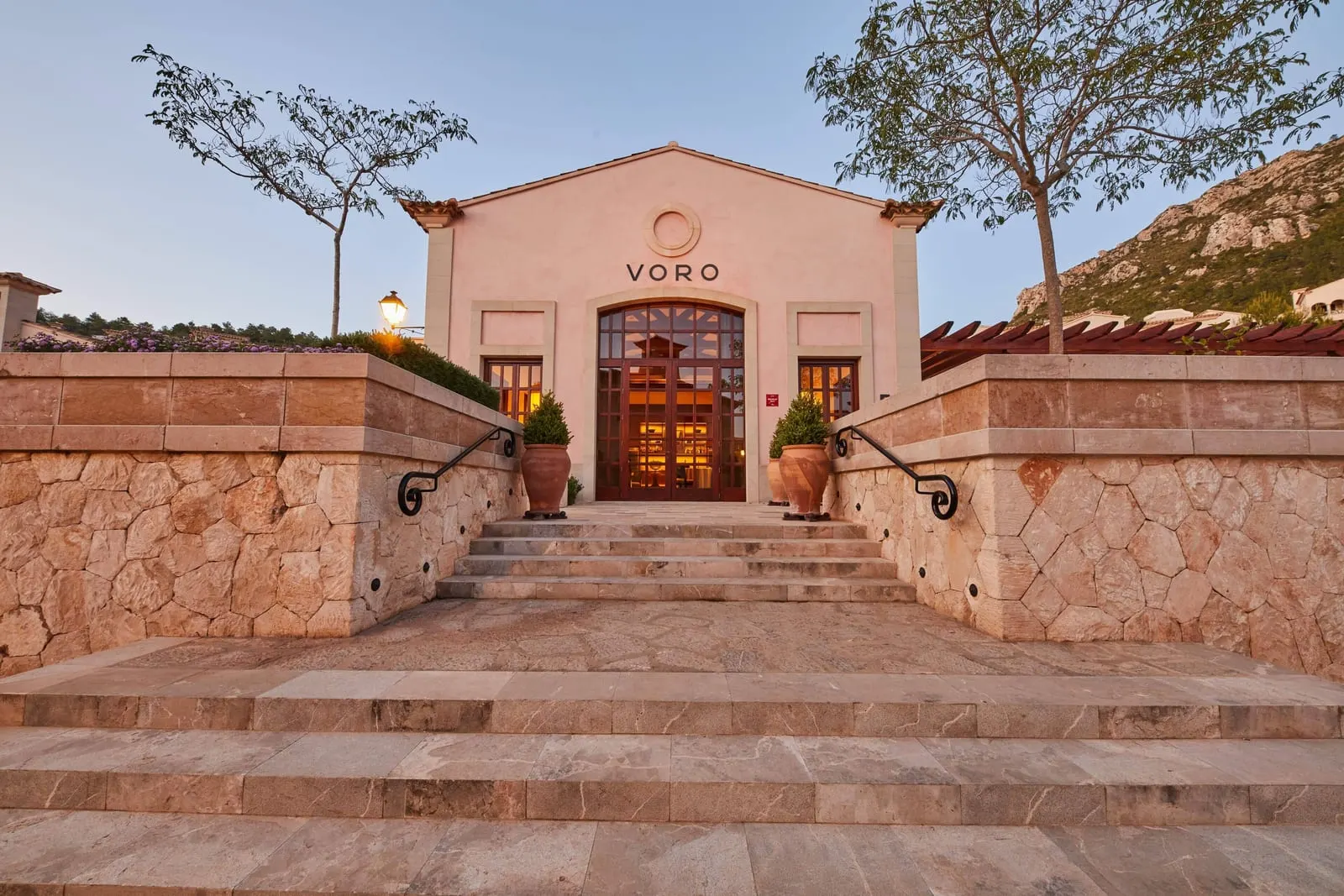
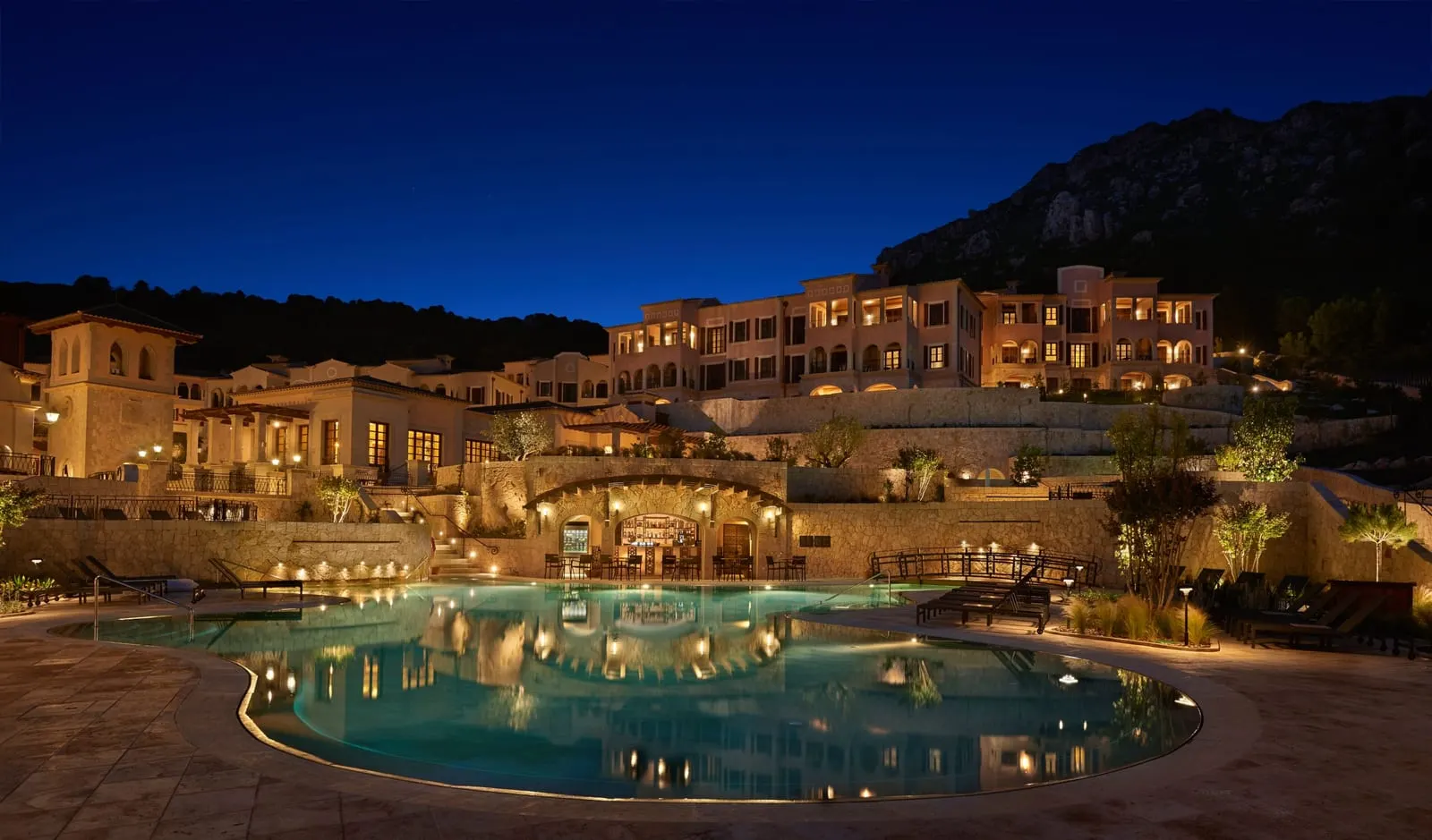
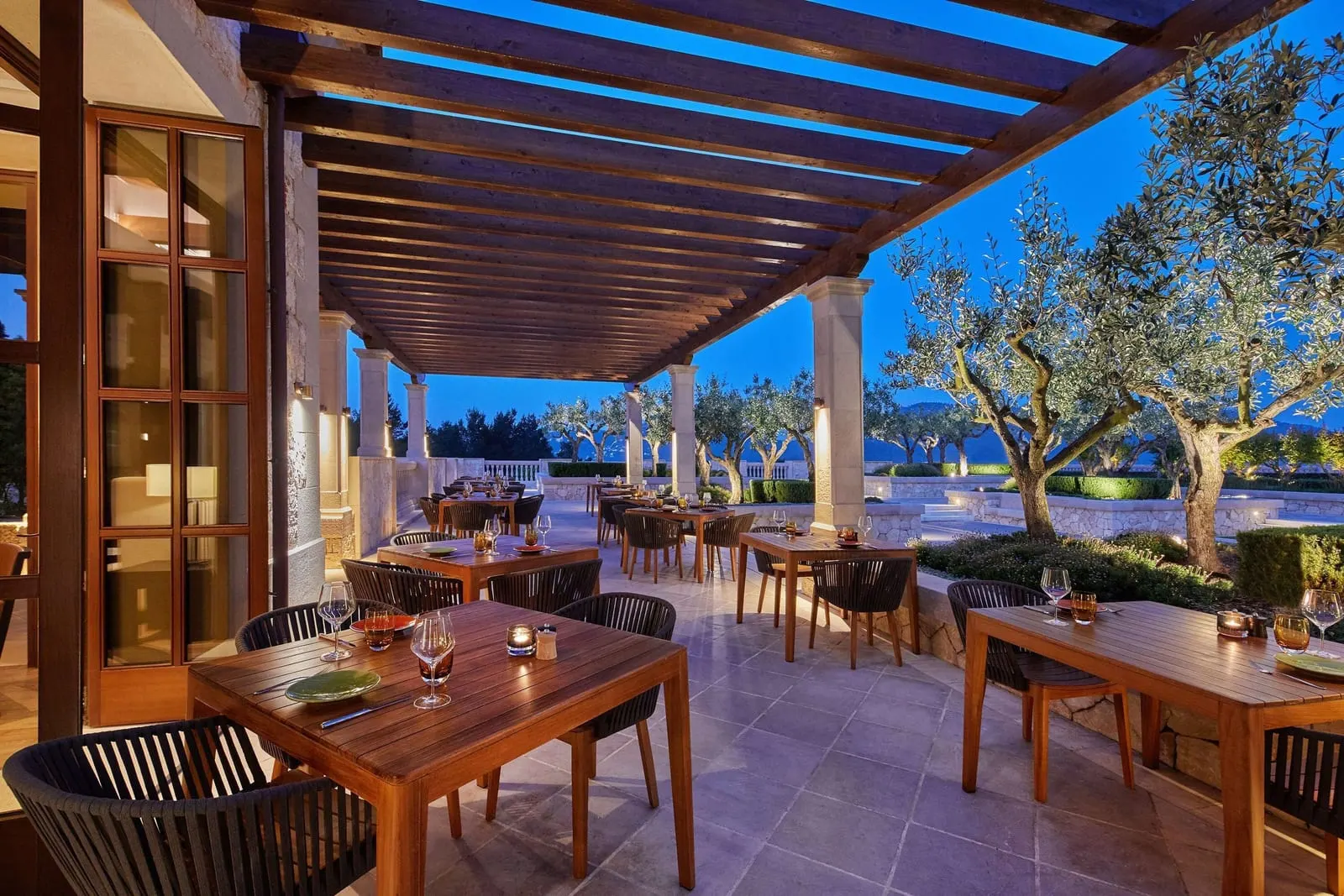
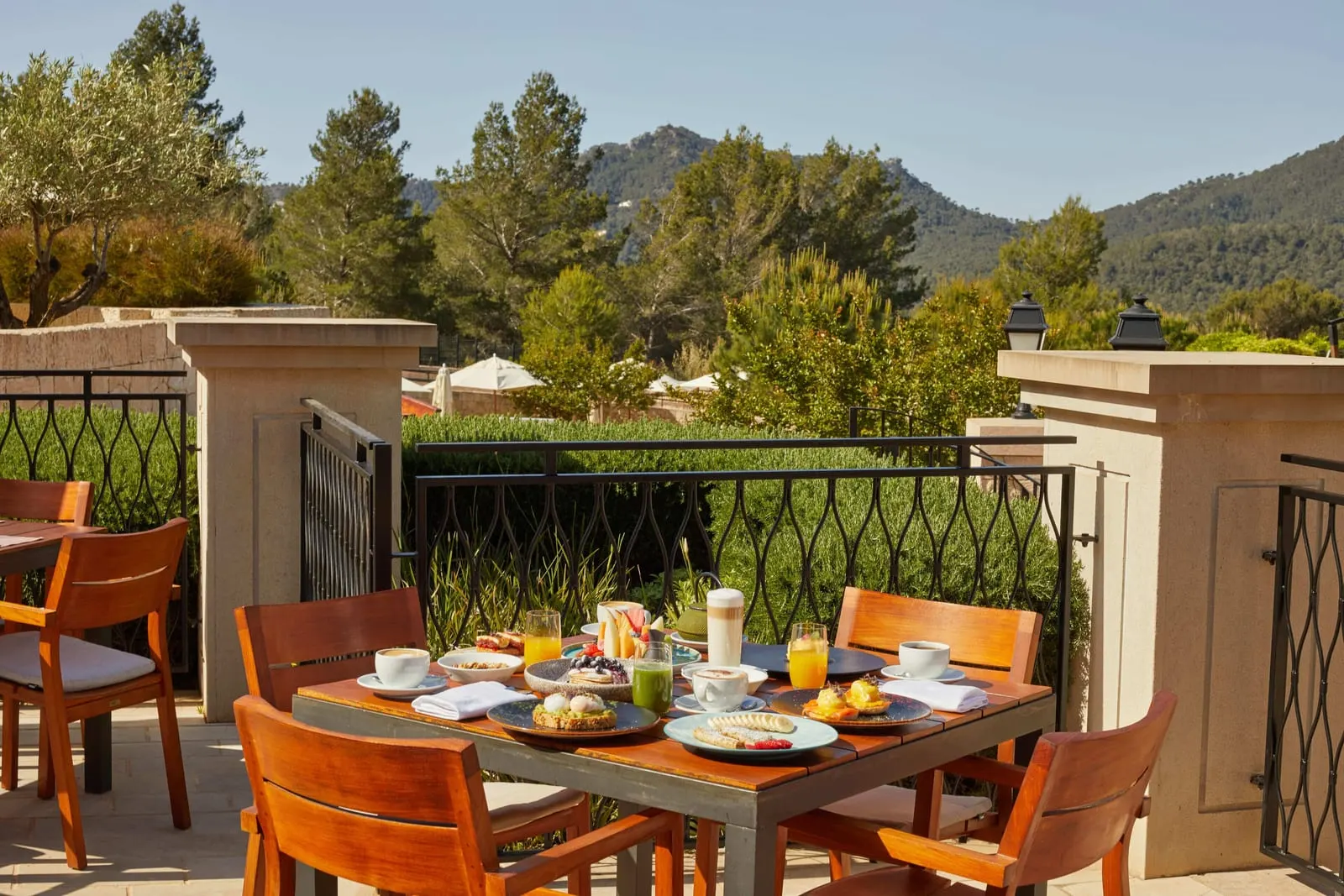
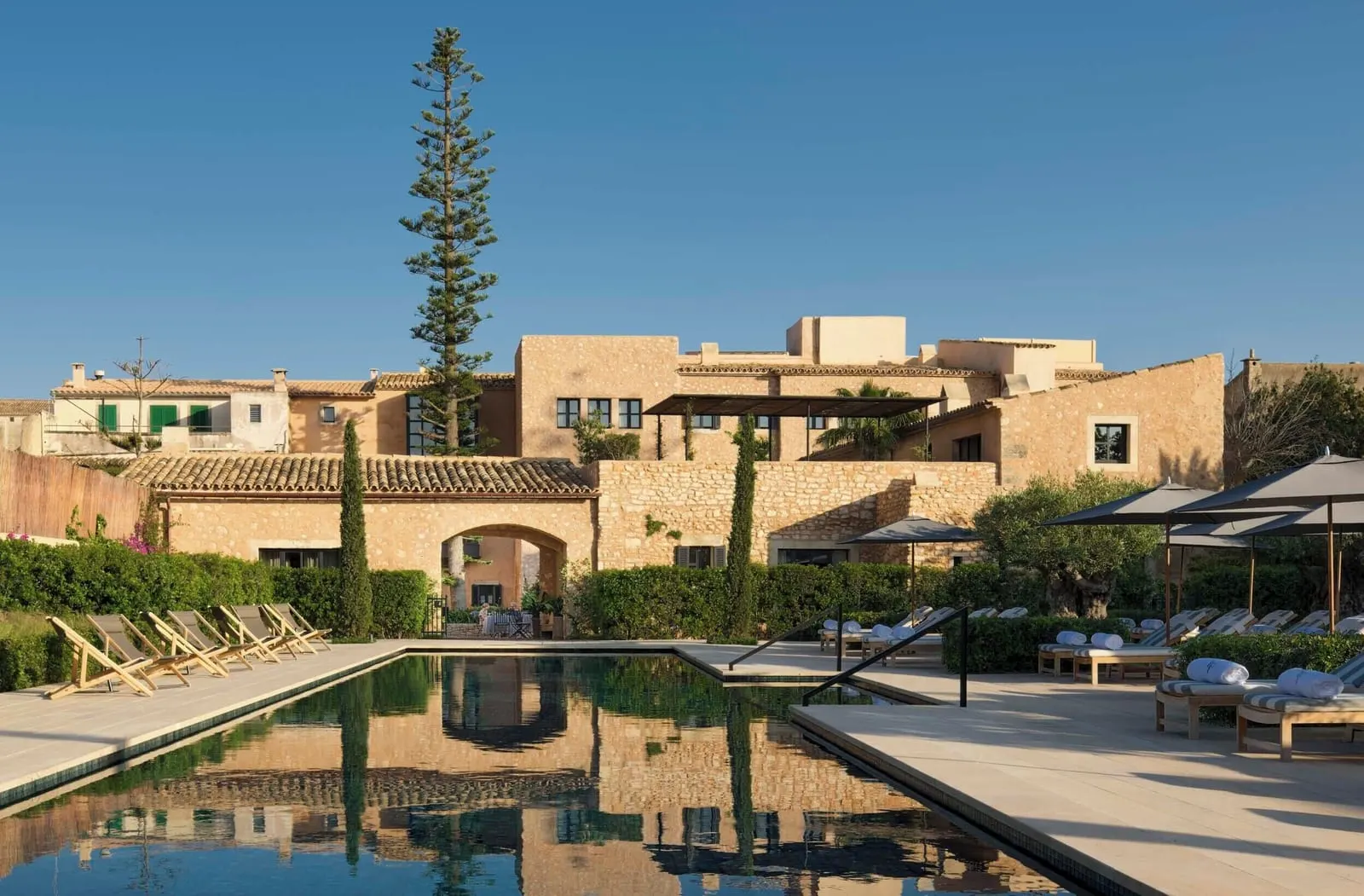
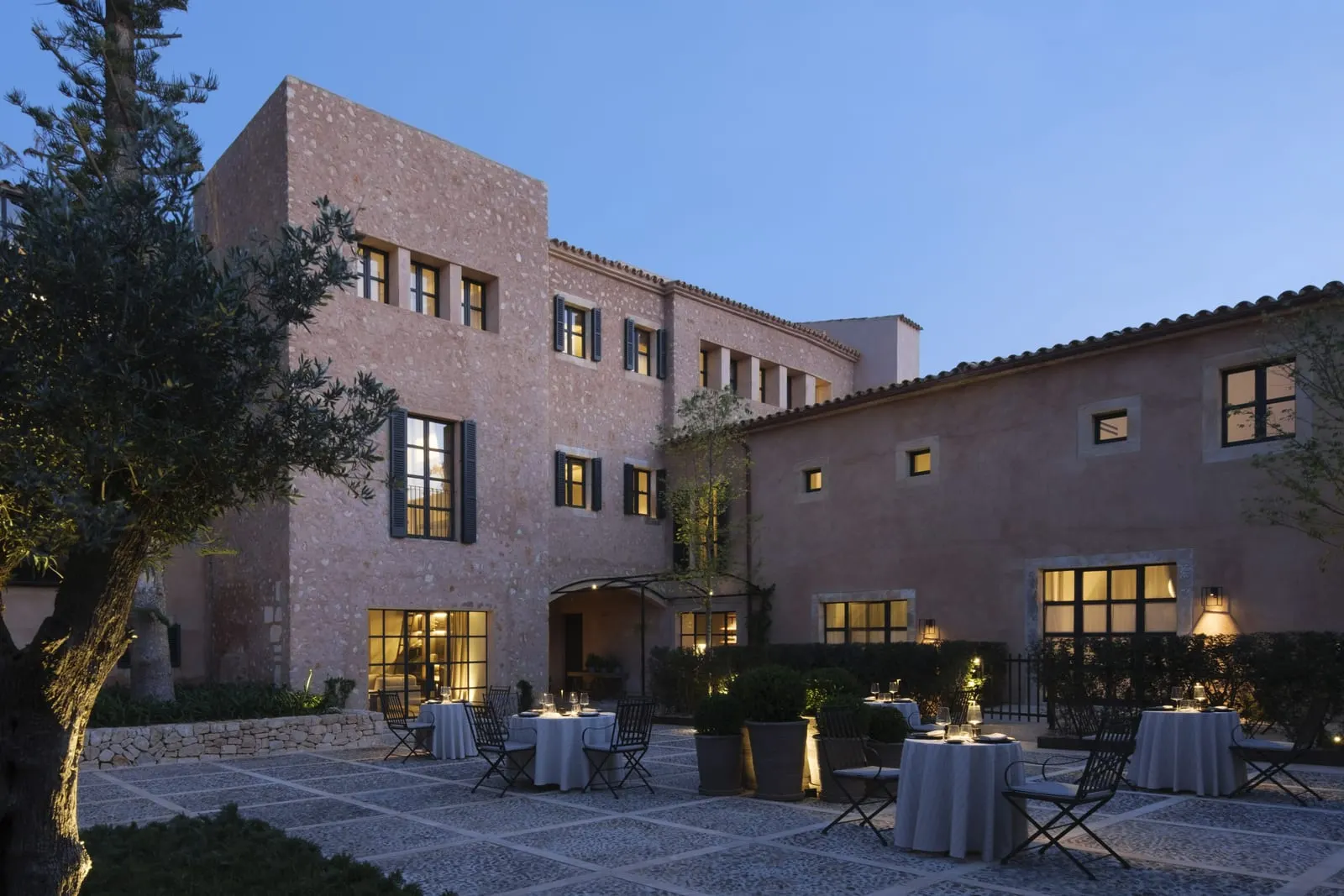
The other four are a drive from anywhere, and suit staying put. In the south-west foothills, Castell Son Claret is a castle on its own estate near Es Capdellà, 15 minutes by car from the beaches at Peguera. In the north, Four Seasons Resort Mallorca at Formentor stands on the site of the 1929 Hotel Formentor, rebuilt much as it was and run by Four Seasons since 2024, at the head of a kilometre of sand under the pines, 19 minutes by car from Port de Pollença. On the east coast, Cap Vermell Grand Hotel, home to Voro, the only two-star restaurant in the Balearics, is a low resort in the Canyamel valley, a 25-minute walk down to Canyamel beach. In the south-east, Can Ferrereta is an 18th-century manor in the middle of Santanyí, a stone market town seven minutes by car from Cala Santanyí. Formentor to Canyamel is 76 minutes by road: pick one corner, not two.
Everyone flies into Palma airport (PMI), on the city's eastern edge. By road from the terminal, Es Princep is about 12 minutes away and Can Cera 18; L'Avenida 34, Castell Son Claret 38, Fornalutx Petit Hotel 41, Can Ferrereta 42, Belmond La Residencia 45 and Maristel 49; Four Seasons and Cap Vermell are 71 minutes each. Only Palma has a direct airport bus, EMT's A1, at 5 euros. Everywhere else, most guests hire a car at the airport, and a car turns Valldemossa, Sa Calobra or the south-east coves into a morning out. TIB buses link Palma with Sóller, Deià and Estellencs, 2.70 euros to Sóller by contactless card, and the wooden Sóller train takes an hour from Palma. Parking is the daily question: Palma's old town is a camera-controlled restricted-traffic area, so arrange access with the hotel, and Sóller, Fornalutx and Deià all charge for parking.
July and August are the island at full stretch: an average high of 31 degrees at Palma airport, a sea of about 26 to 28 degrees in the Bay of Palma, and the highest rates of the year. May, June, September and October suit most of this list better, warm enough for the pool, with the sea at about 19 degrees in May and still about 24 in October. Then the island closes. Seven of the ten shut for the winter, from late October or November to March. Es Princep and Can Cera stay open all year and Fornalutx Petit Hotel sells winter nights, so a winter trip is a Palma and Sóller valley trip.
The honest version: summer Mallorca is busy and dear, and its loveliest corners are at the end of slow roads. The Ma-10 is a mountain road of bends shared with cyclists; from 15 May to 18 October the Formentor road is barrier-controlled from 10:00 to 22:00, with the lighthouse closed to private cars; and the old village lanes are steep and tight, Fornalutx's stepped. Every night carries the Balearic tourist tax, 4 euros a person plus VAT at the five-star hotels here from May to October, paid at the hotel. Two bases are plenty for a week.