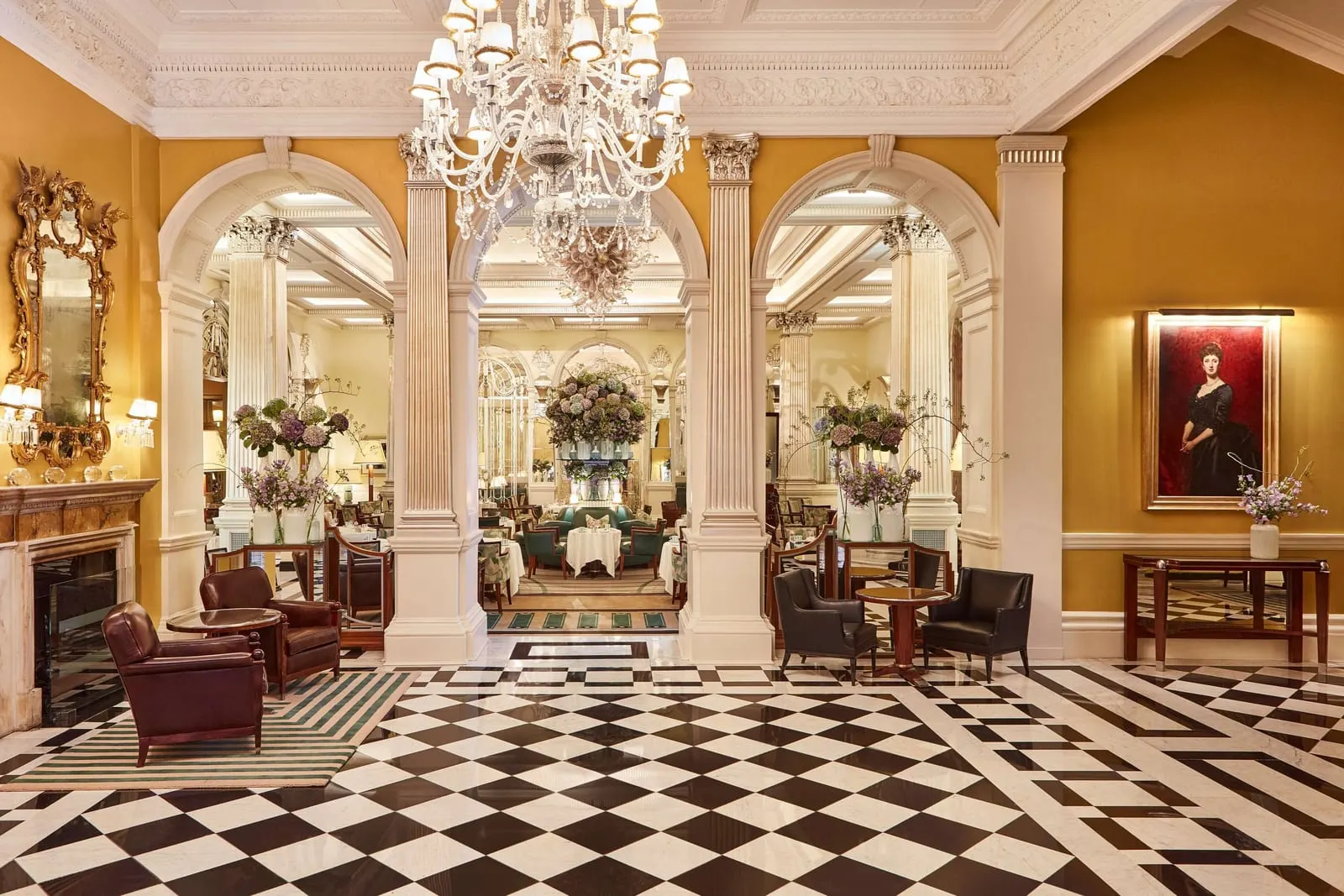
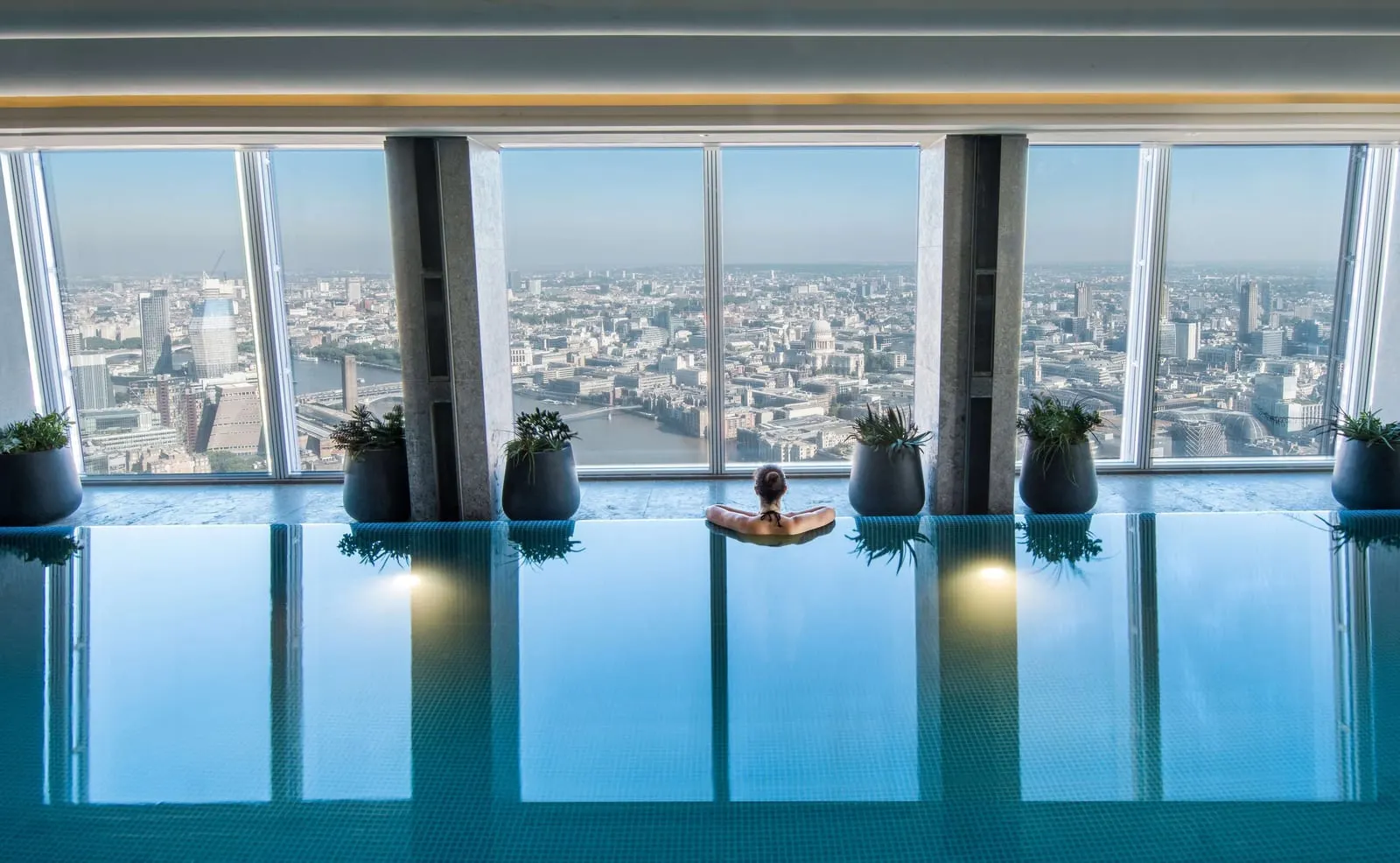
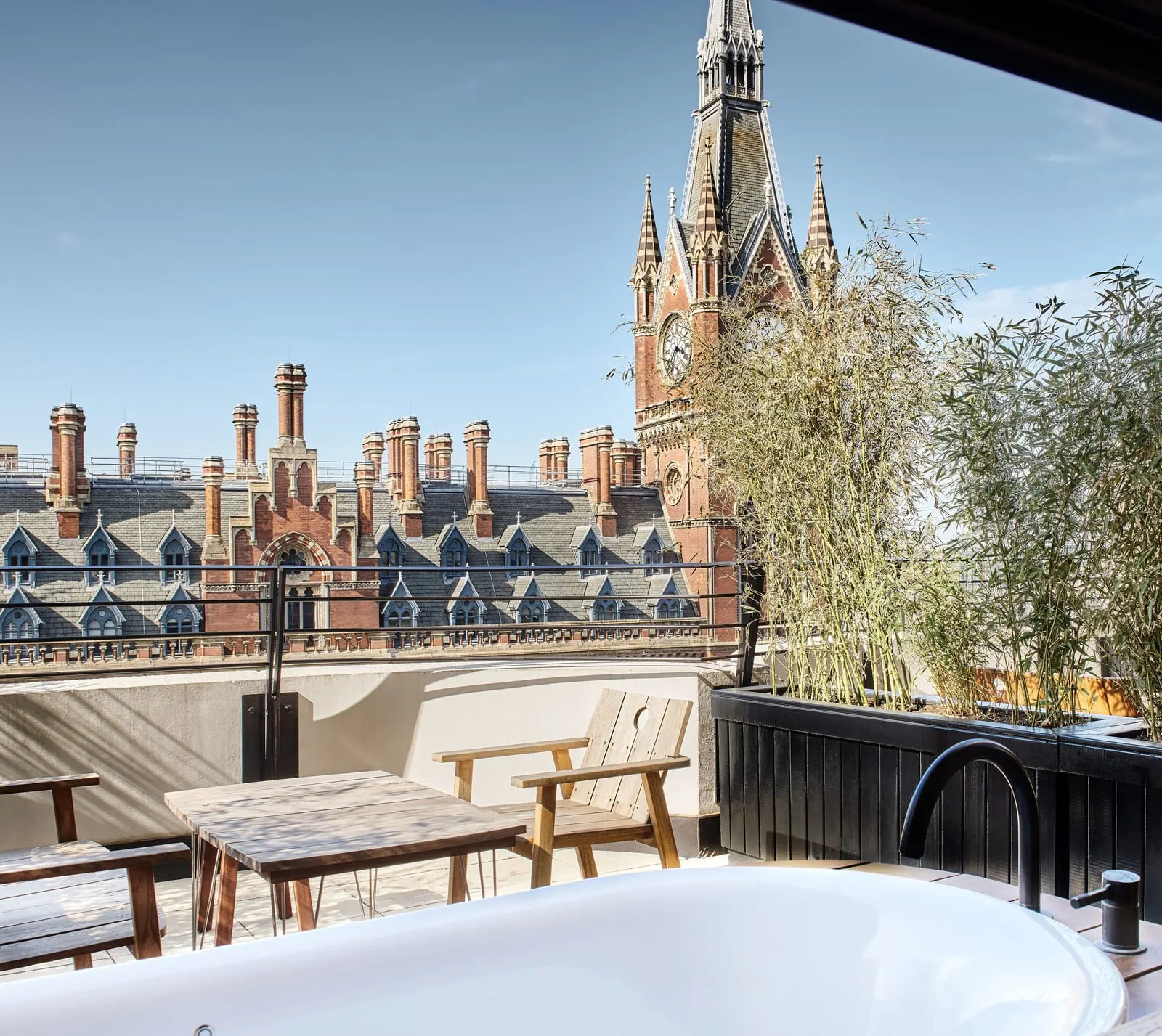
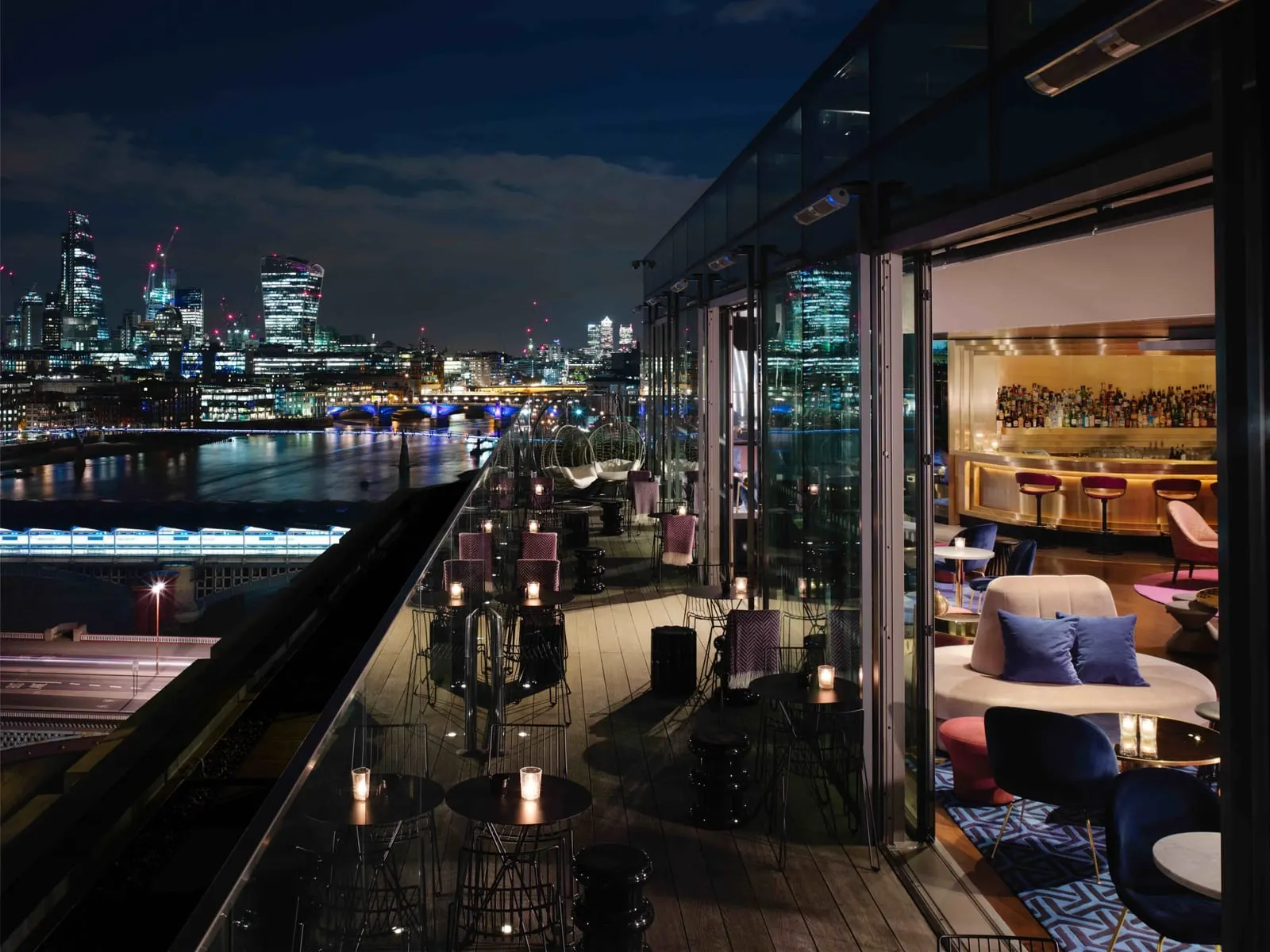
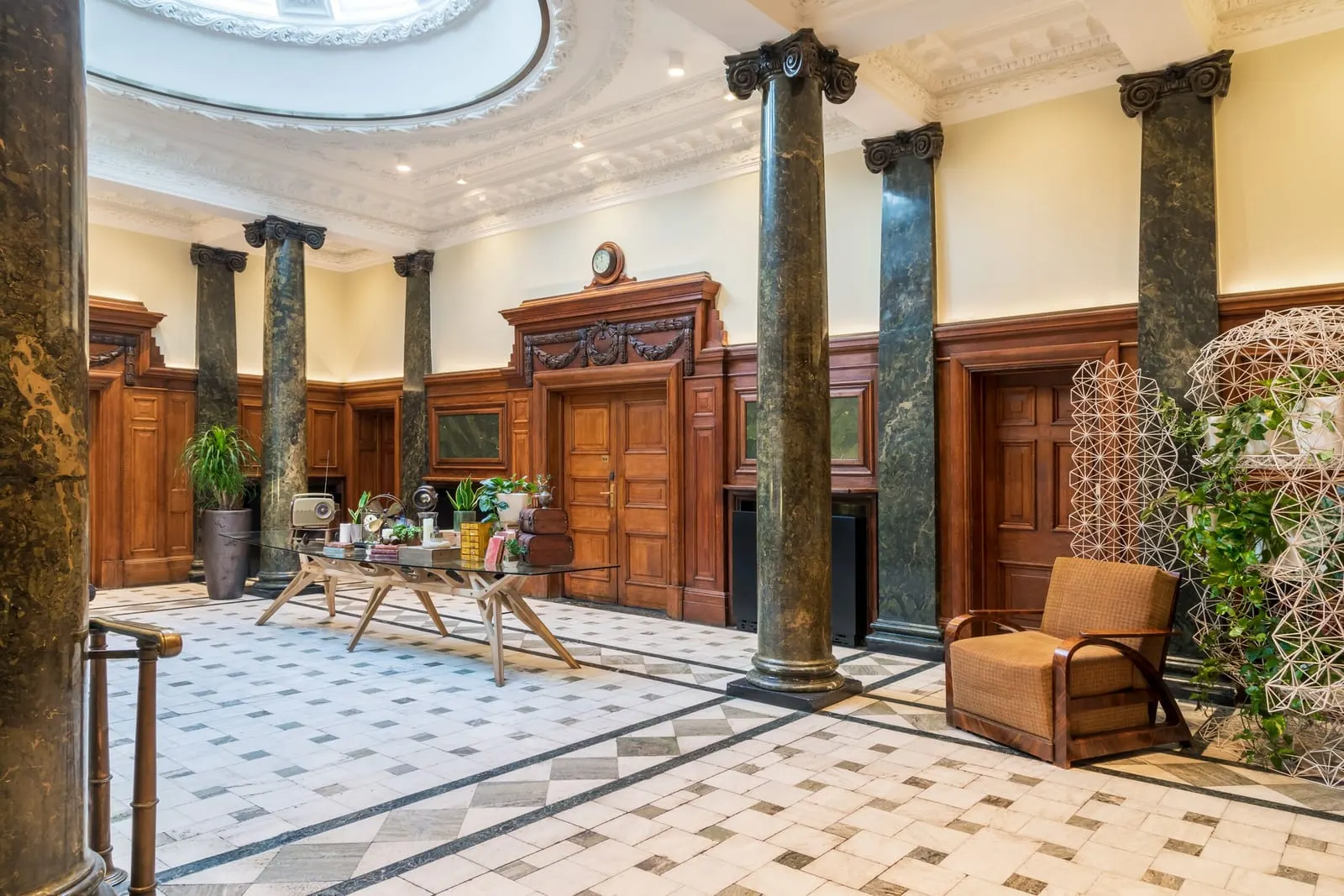
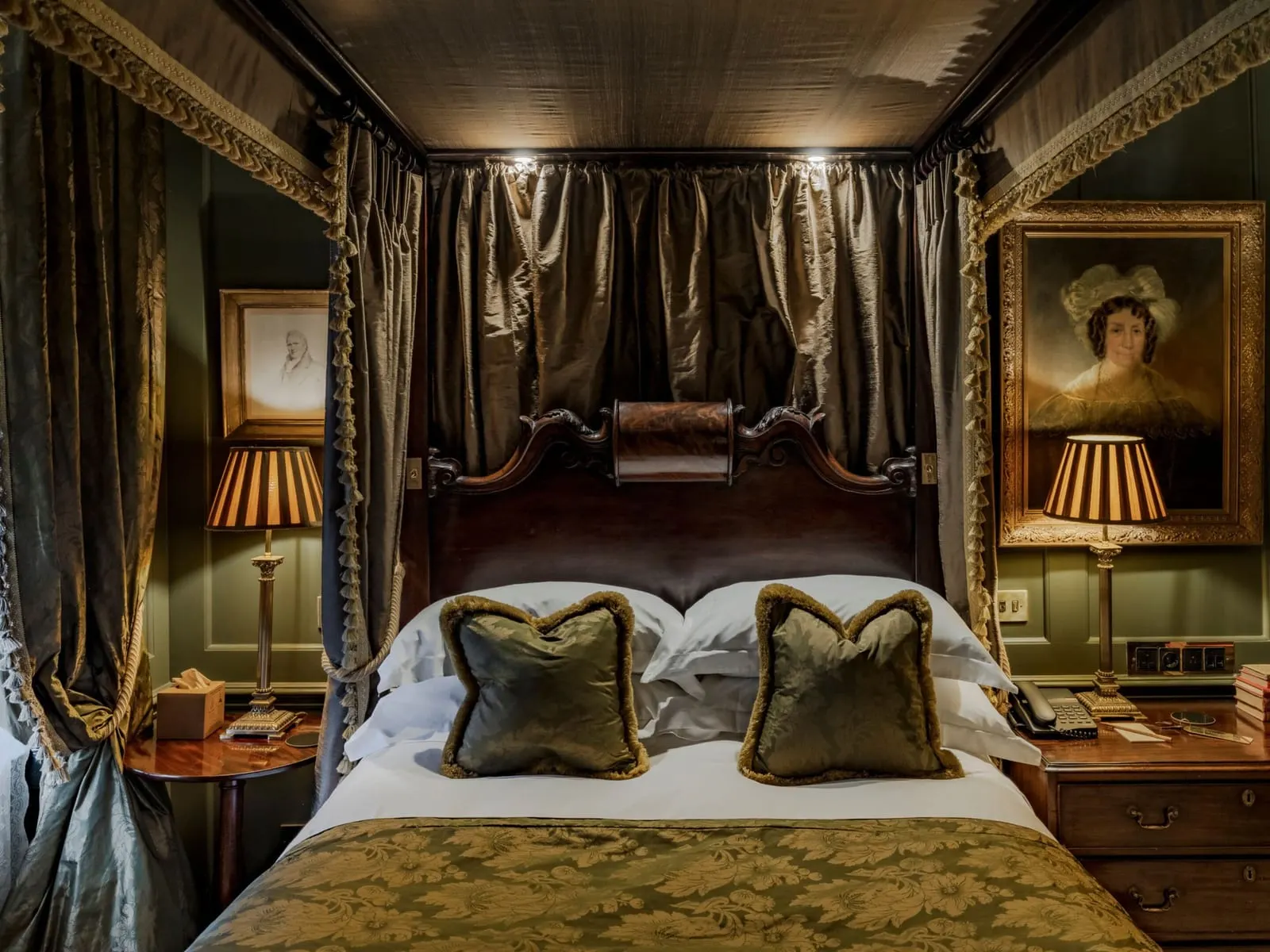
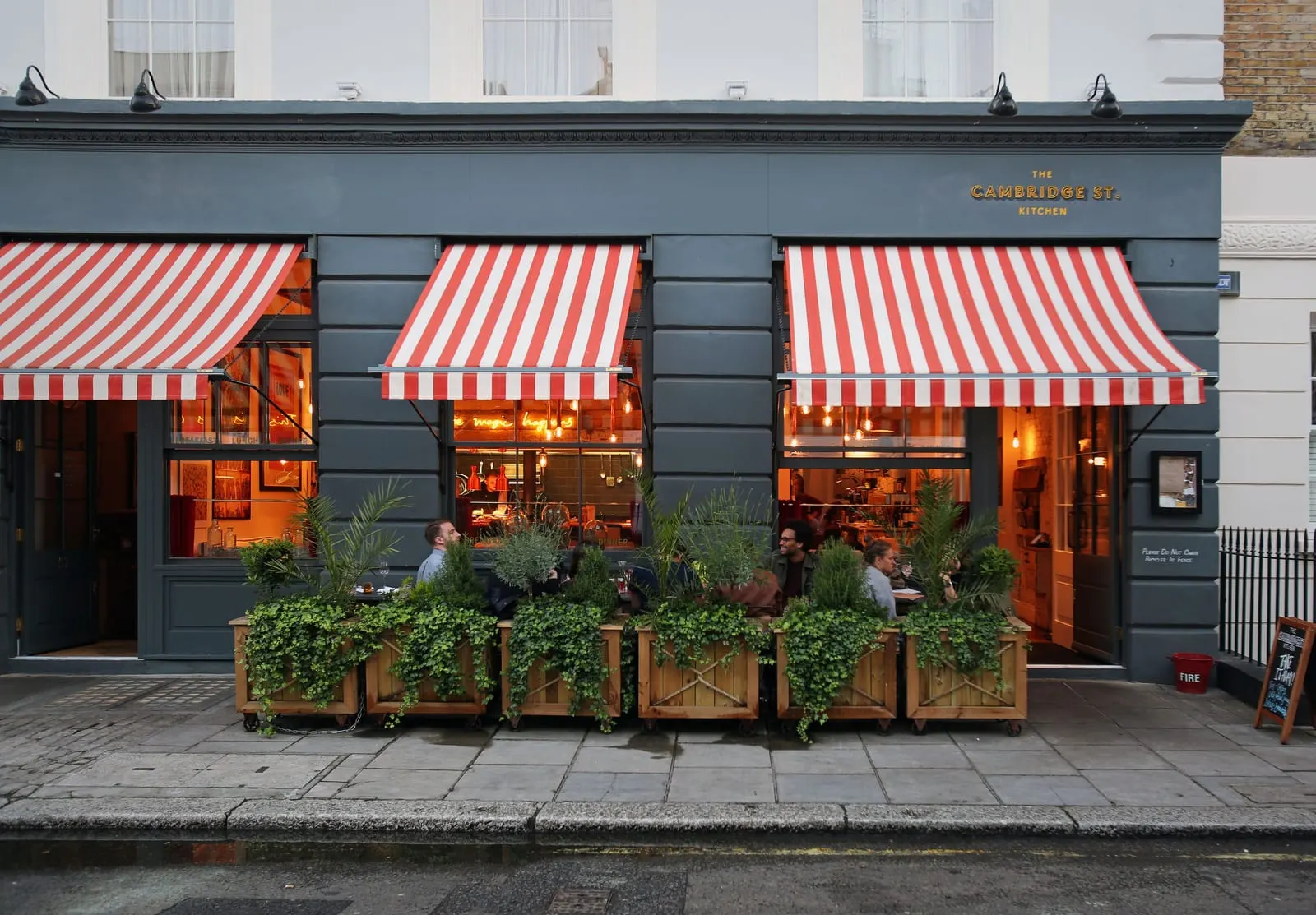
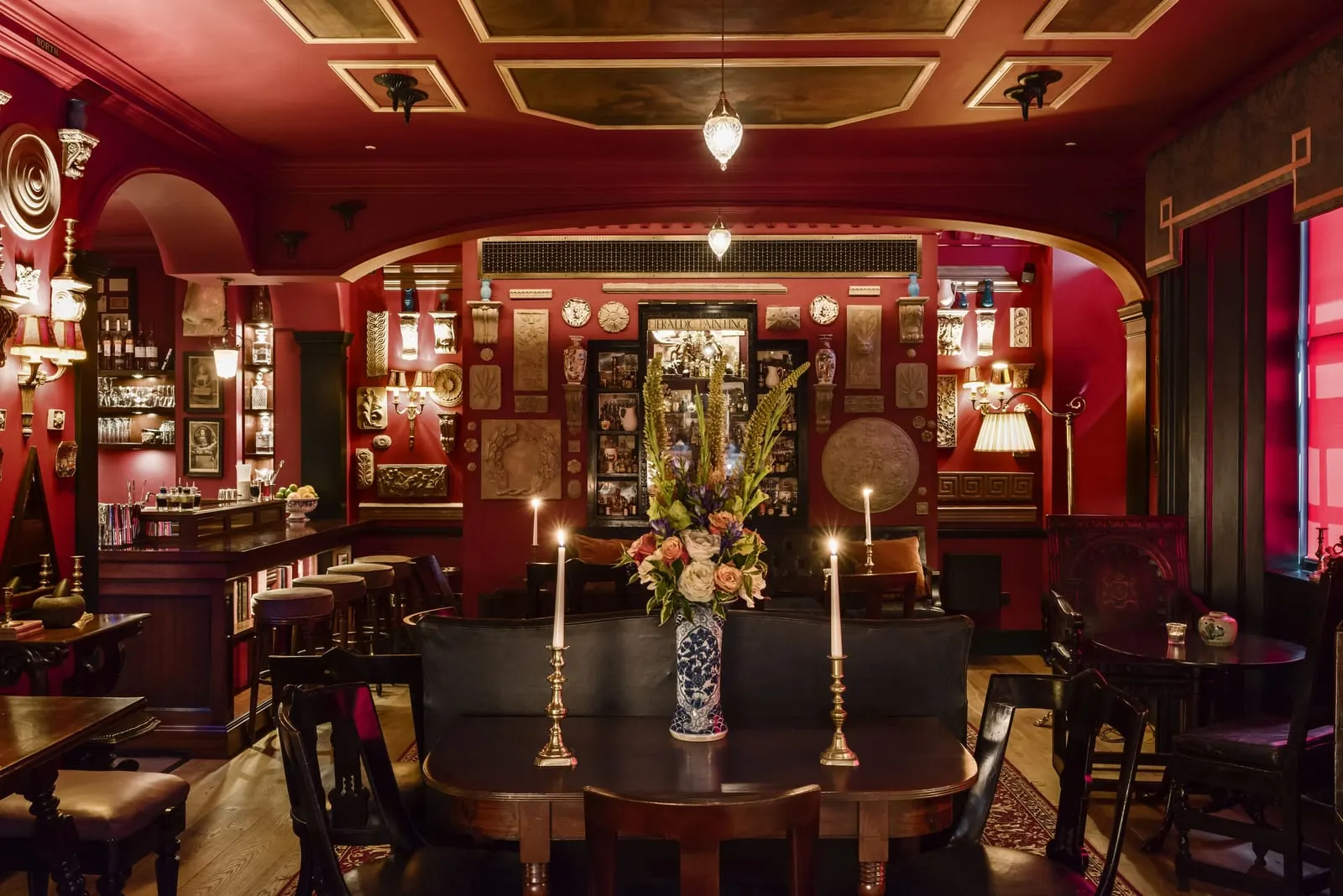
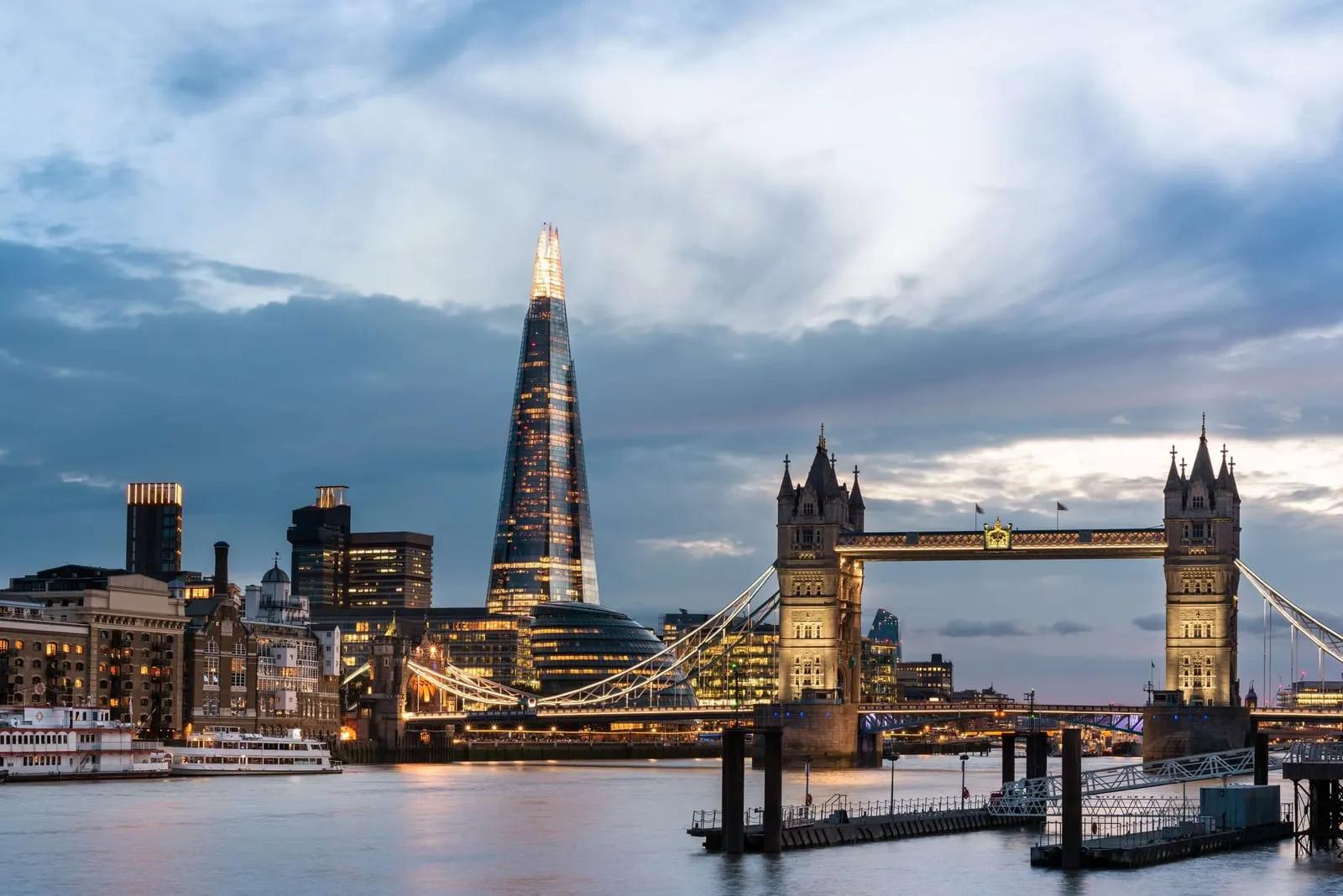
London is not one centre but a row of them, and the hotel question is which one you want to step out into. The West End holds three of the ten: Hazlitt's on Frith Street in Soho, The Zetter Marylebone a minute off Oxford Street, and Claridge's on Brook Street in Mayfair. The City is the other centre, full Monday to Friday and empty at weekends, and The Ned sits at the Bank junction. South of the river, Sea Containers London is on the Thames Path and Shangri-La The Shard is on top of London Bridge station. Then the edges: The Standard, London at King's Cross, The Pilgrm at Paddington, Artist Residence London in Pimlico and Town Hall Hotel in Bethnal Green, furthest out of the ten.
Heathrow is where most people land, and the route in is worth choosing. The Elizabeth line runs from Terminals 2 and 3 to Paddington in 27 minutes for £14.60, Bond Street in 31 and Tottenham Court Road in 33, both £15.50. The Piccadilly line is the trade: about 55 minutes to King's Cross, £5.90. Heathrow Express is 15 minutes to Paddington, four an hour, £26 on the day and from £10 booked ahead, and outside the daily caps. Gatwick Express is 30 minutes non-stop to Victoria and Thameslink reaches Blackfriars and St Pancras in 30 to 45. Stansted Express is 48 minutes to Liverpool Street every quarter of an hour, and Luton means the DART shuttle, under four minutes at £4.90, then 22 to 32 minutes to St Pancras.
Tap in with a contactless card or a phone and ignore everything else. A zone 1 Tube single is £3.00 off peak and £3.10 at peak, a bus is £1.75 with an hour of free changes, and the daily cap in zones 1 and 2 is £8.90, with a Monday to Sunday cap of £44.70 above it. Inside the West End, walking usually wins. Soho to Covent Garden, Mayfair to Hyde Park and King's Cross to the British Museum are walks rather than journeys, and the Tube earns its keep on the longer hops, out to Bethnal Green or under the river.
July is the warm month at an average 23.9C by day, and May to July is the sunniest run, close to 200 hours a month. Rain is thin and evenly spread, about 616 mm a year, with October and November the wettest, and December gives you roughly 53 hours of sun in the whole month. On rates, January is the floor across this edit and June the ceiling, with the autumn and December behind them. Wimbledon fortnight, the August carnival weekend and any large conference week move a room more than the season does. The City runs the other way round, so The Ned costs more midweek than at weekends.
Four nights is the honest minimum and five is better. Give the first two to whichever centre you picked and walk it, then spend the rest on the parts that need a train: Greenwich, Hampstead, the East End. If you have been before, split the stay instead. Three nights in the West End and two at London Bridge or in Bethnal Green gives you two cities in one trip, and changing hotels here costs you twenty minutes underground.
The honest part. Rooms are small and expensive for what they are, and the entry category is the one to skip in almost every hotel here. Air conditioning is not a given in an old building and neither is a lift, and Hazlitt's, Artist Residence London and The Pilgrm each ask something of you there. The Tube is hot in July and much of it has no step-free route. Sunday closes more than visitors expect, Town Hall Hotel's own kitchen among them. And the view is usually a paid upgrade rather than a room type, at Shangri-La The Shard and Sea Containers London.
 The iconCity of London