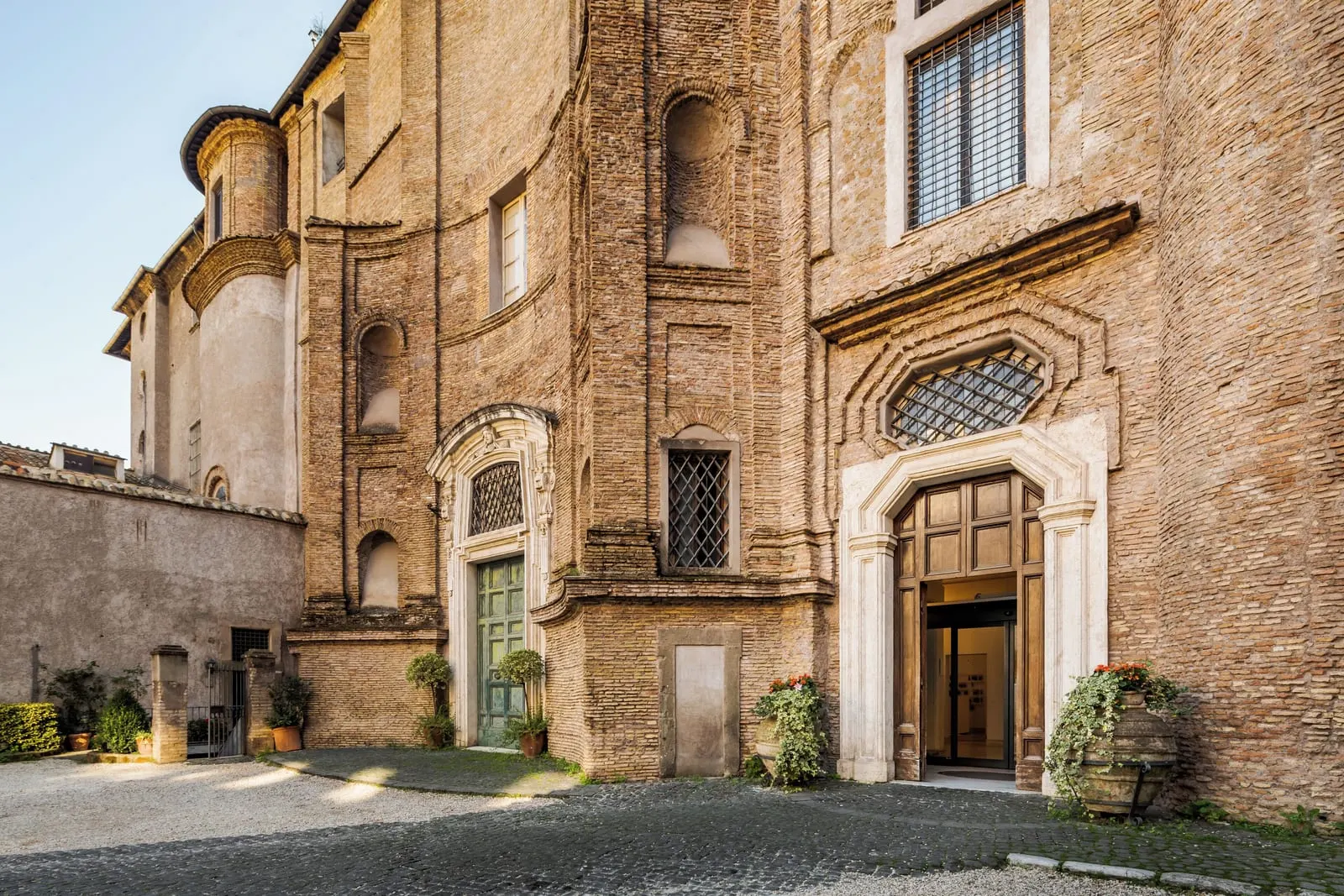
Camilla Virginia Savelli, Duchess of Latera, founded a community of Augustinian oblates around 1640 and commissioned Francesco Borromini to build its monastery on the Gianicolo slope in 1642. He stopped in 1655 when the money ran out, which is why the brick front on Via Garibaldi is still unfinished, curving in and out in the way he liked. One facade serves both doors, the church on the left and the hotel on the right. The church is still in use, and three nuns still live in a wing. The oblates ran a school for the daughters of impoverished noble houses. It served as a military hospital in 1849, was shelled in the taking of Rome in 1870, and sheltered 103 Roman Jews under the German occupation. The community was merged into another order in 1969, part of the monastery was sold, and the hotel opened in 2008 after a restoration carried out between 2005 and 2007. It trades today as Donna Camilla Savelli, a VRetreats hotel run by Voihotels of Gruppo Alpitour.
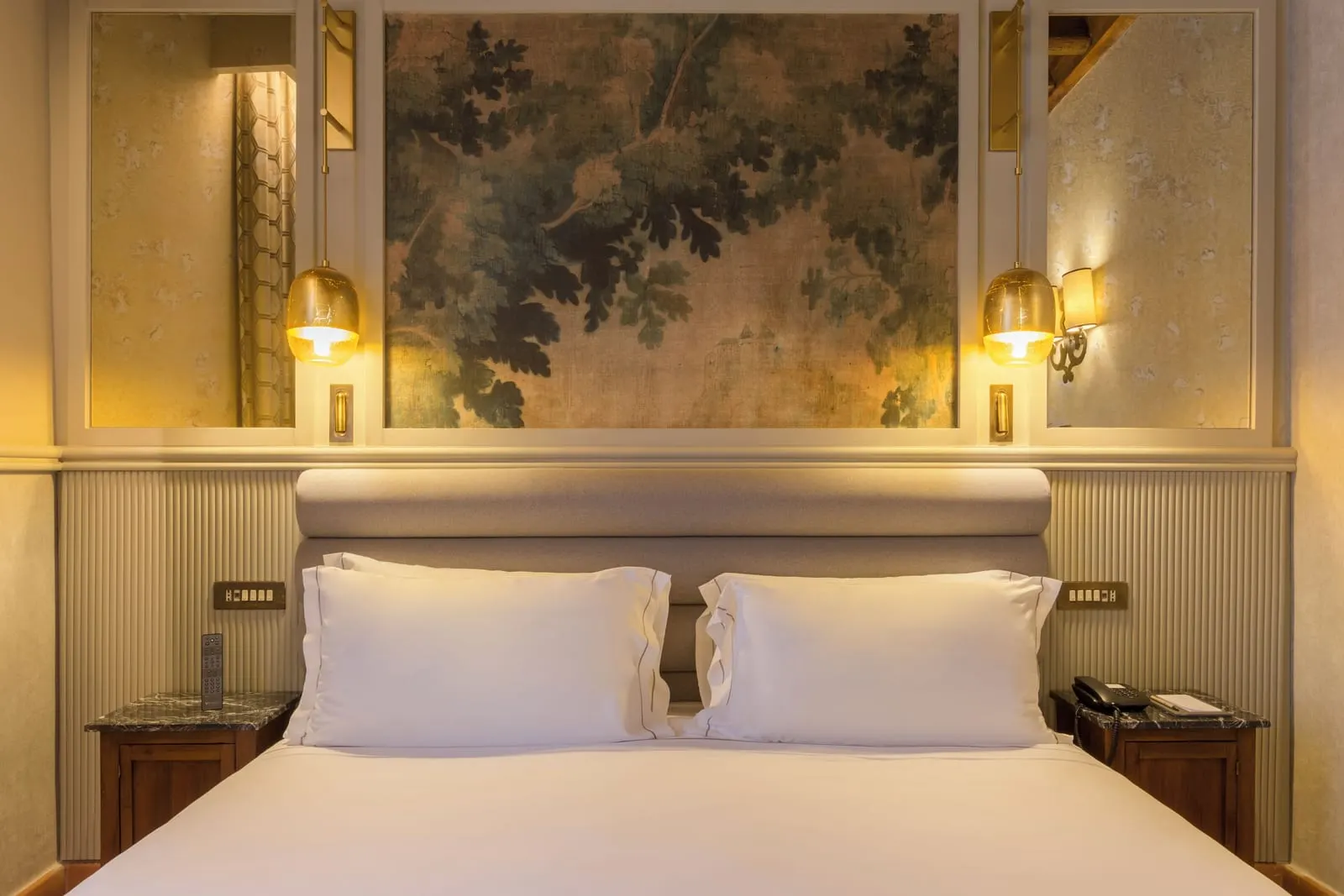
The hotel divides its ninety-four rooms into ten categories, and which wing you are in matters more than the category name. Classic and Superior rooms are the smallest, about 16 square metres, in the later and plainer part of the building. Executive rooms, about 18 square metres, sit inside the 17th-century convent and look onto the courtyards or the lanes. Deluxe rooms, about 20, are the ones made out of the monastic cells, with period furniture and, in some cases, the cloister garden under the window. Four Prestige categories run from 36 to 50 square metres, one beneath Borromini's facade with an exposed beam ceiling, the largest with a rose window facing the bath and a terrace of its own. The cells were on the first and second floors only, re-adapted without invasive work, and the stair that serves them keeps the tall wooden doors dividing one floor from the next. Travel writing calls that stair a monumental marble staircase; the hotel does not, and nor does any heritage record. Rooms and common areas were restyled in a refit the group announced as finished in September 2024.
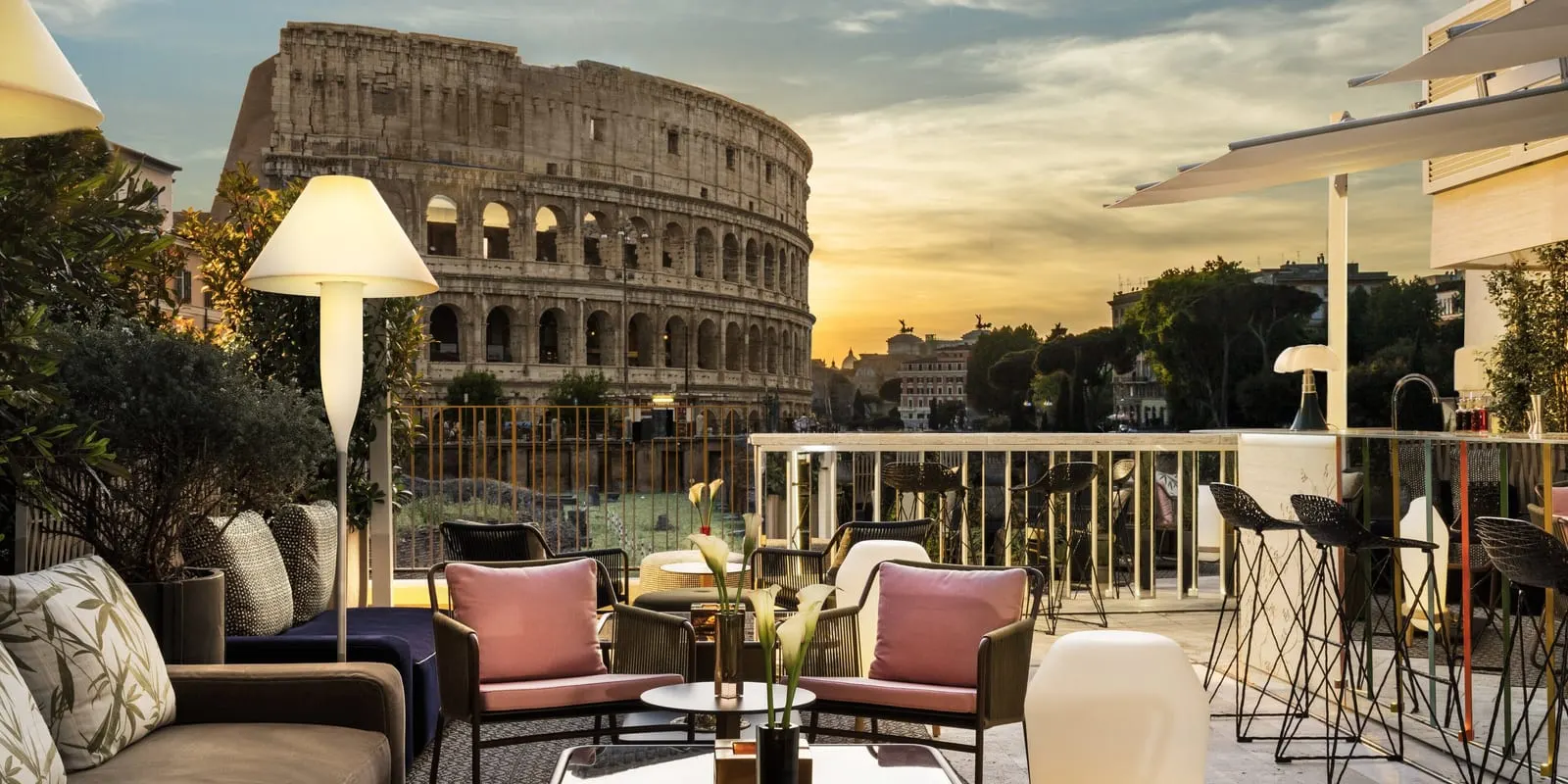
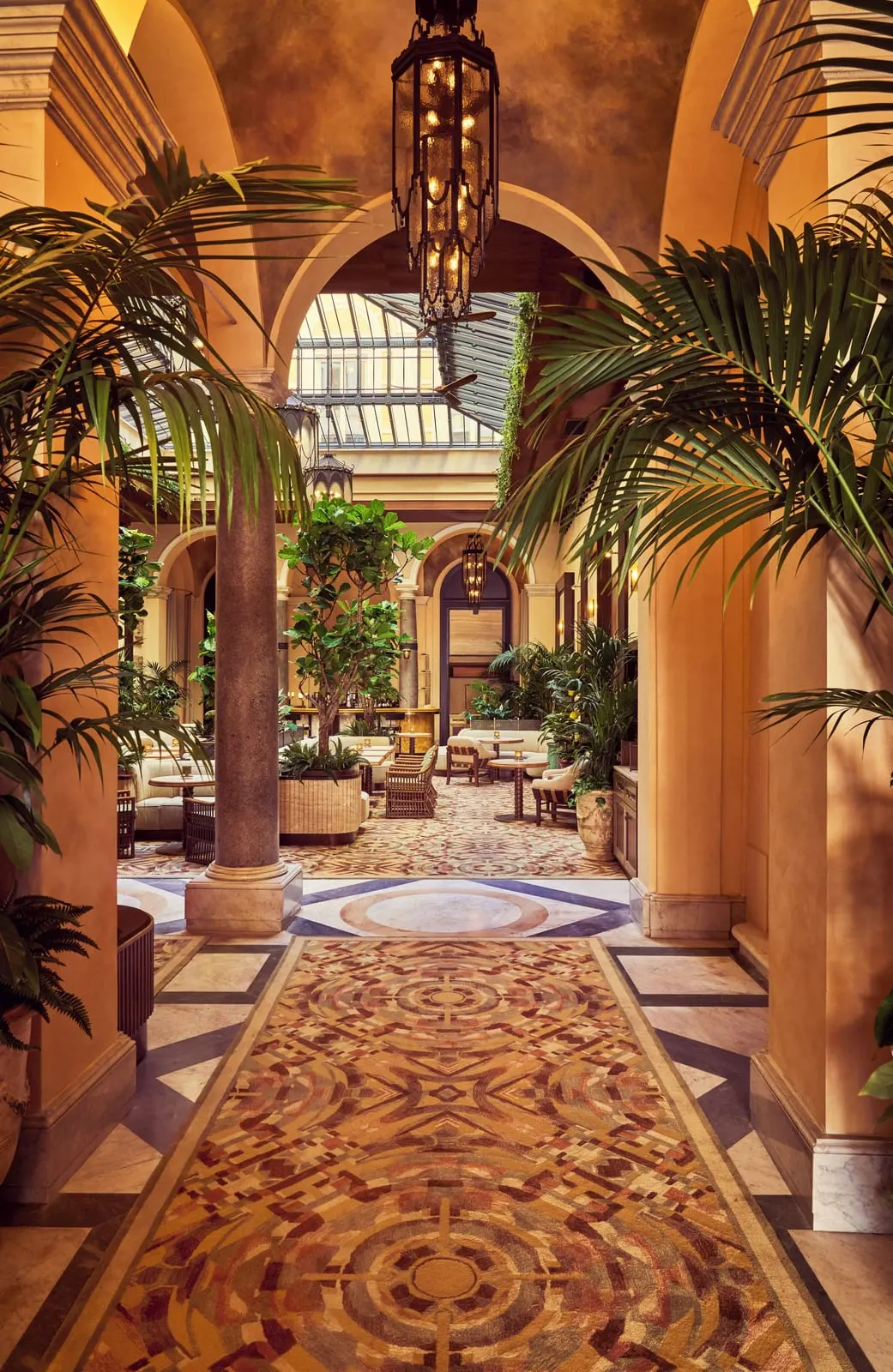
Contempo is the restaurant, run by Emidio Gennaro Ferro, a Salerno chef who reads Roman cooking through Campania; it traded as Il Ferro e il Fuoco until June 2025. Elementa Lounge Bar & Bistrò is the other room, off the cloister, with a bar counter that repeats Borromini's concave and convex curves. Breakfast is served there and, in good weather, in the garden, which is the part guests write about most; in winter it moves into the Sala Borromini, the former refectory. The garden is not Borromini's: its layout was drawn in 1864 and only the central fountain is 17th century. There is no spa, no pool and no gym. What the hotel has instead is an events business, and the cloister, the Italian garden, the Orangerie and the Savelli Terrace on the roof are all sold as venues, the refectory taking 150 under 18th-century paintings.
It is for people who came for the building and intend to eat in Trastevere every night, not for people who want to be looked after to a five-star standard. Eitch Borromini Palazzo Pamphilj is the obvious comparison in this edit, another Borromini interior at close to the same rate, though that is twenty-one rooms on Piazza Navona and this is ninety-four on a hill with a garden. The Inn at the Roman Forum is the small and quiet alternative. The reservations are specific. The hotel states that room assignment is random in the Executive, Deluxe and Chiostro Prestige categories. Breakfast is excluded from the Classic rates and added at check-in, about 30 euros a head. Hard floors carry sound along the corridors. And the public areas, the roof terrace included, can be closed for a private event.