A hundred years waiting for a train to change its shoes
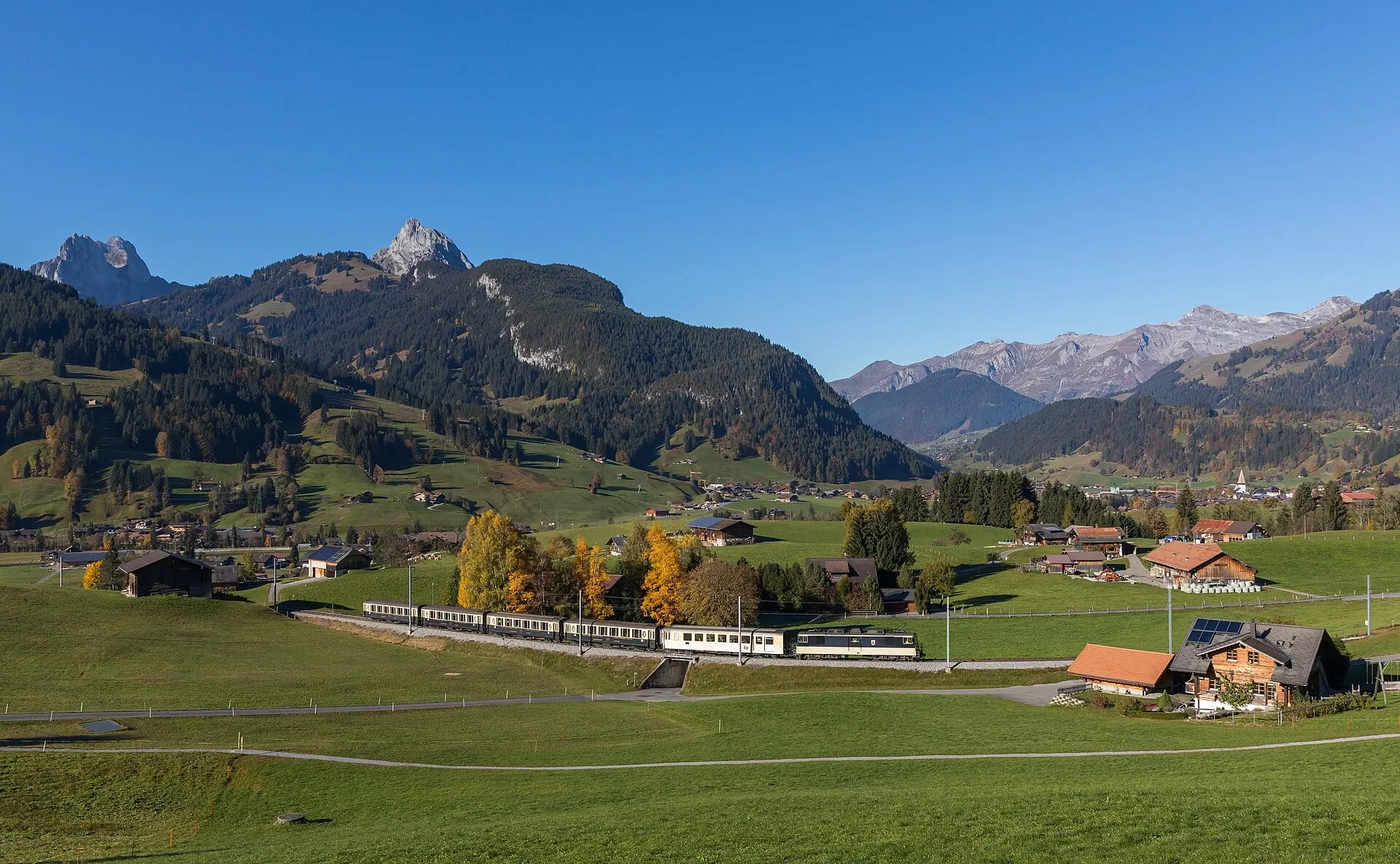
The idea of linking the Riviera to the lakes of Thun and Brienz is first written down in 1873, before there was a railway to do it. When the lines came, they came in two widths. The Montreux Oberland Bernois was built to metre gauge, better suited to its many bends, and in 1905 its 62.4 km from Montreux to Zweisimmen became the first line in Switzerland to run entirely on electricity. From Zweisimmen to Interlaken the track was standard gauge. From 1916 the GoldenPass Line could take you from Montreux to Lucerne, but only with two changes of train.
A third rail was studied in the 1920s, again in 1986, and finally given up in 2006, when it proved impossible to take mixed-gauge track through Spiez station without building a tunnel. So in 2008 the MOB turned the problem round: if the tracks could not change, the coaches would. Its own workshops built a prototype bogie, Alstom developed it into the series version, Stadler built 23 panoramic coaches, and Pininfarina drew the nose. The bill came to about CHF 89 million.
At Zweisimmen the train rolls over a ramp at 15 km/h. The weight comes off the wheels, the wheelsets slide out from 1,000 mm to 1,435 mm, and the body rises from 350 mm to 550 mm to meet the higher platforms. The MOB locomotive, which runs on 900 V direct current, hands over to a BLS one on 15 kV. The whole change takes eight minutes. The first passengers rode it on 11 December 2022, and the journey that always meant a change at Zweisimmen now needs none.