Why the Bergen Line is one of Europe's great train journeys
It took about fifteen years, from 1894 to 1909, to push a railway over the mountains between Norway's two largest cities. The engineers had to cross Hardangervidda, Northern Europe's largest mountain plateau, and they did it with 182 tunnels and a line that is still Northern Europe's highest railway. Bergen had had a railway to Voss since 1883; the mountain crossing tied it to Oslo, and Bergen's station, opened in 1913, four years after the line, still stands at the end of it.
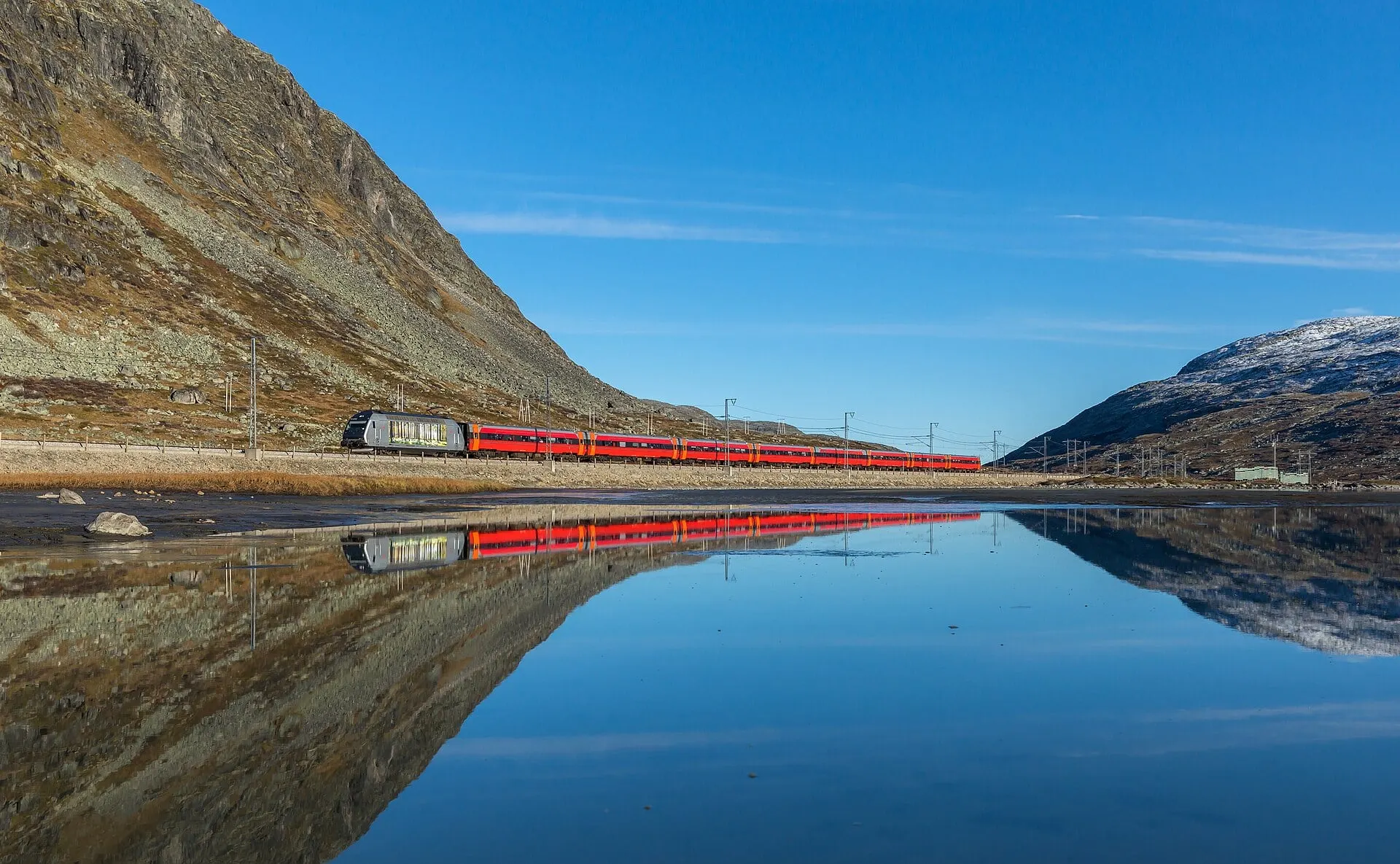
What makes the journey is the order in which the country is shown to you. For more than three hours the train follows rivers and lakes through the farms and forests of Buskerud and Hallingdal. After Geilo the trees thin and give out, and on the highest stretch the railway is the only way in: Finse, Hallingskeid and Myrdal have no road at all. The navvies' supply track across the plateau, the Rallarvegen, survives as a cycle route, and in summer people step off the train with bikes to ride it.
Finse is the high point at 1,222 metres, a hotel and a few buildings beside the platform with the Hardangerjøkulen glacier beyond. The film crew of The Empire Strikes Back stayed at the hotel in 1979 and used the snow outside as the ice planet Hoth. West of Finse the line goes into the 10.3 km Finse tunnel, where the track reaches its true summit at 1,237 metres, and comes out on the long fall to the west: snow sheds, the junction for the Flåm Railway at Myrdal, then Voss and the fjords.