Why the West Highland Line is one of the great railway journeys
The line was built in two pushes. The West Highland Railway opened in 1894, from Craigendoran on the Clyde to Fort William. On Rannoch Moor the bog was too soft for foundations, so the track was floated across it on a bed of brushwood, roots, earth and ash. When the money ran out in the summer of 1893, a director, J H Renton, saved the company from bankruptcy; the navvies carved his head in stone, and it still stands at the end of the platform at Rannoch station.
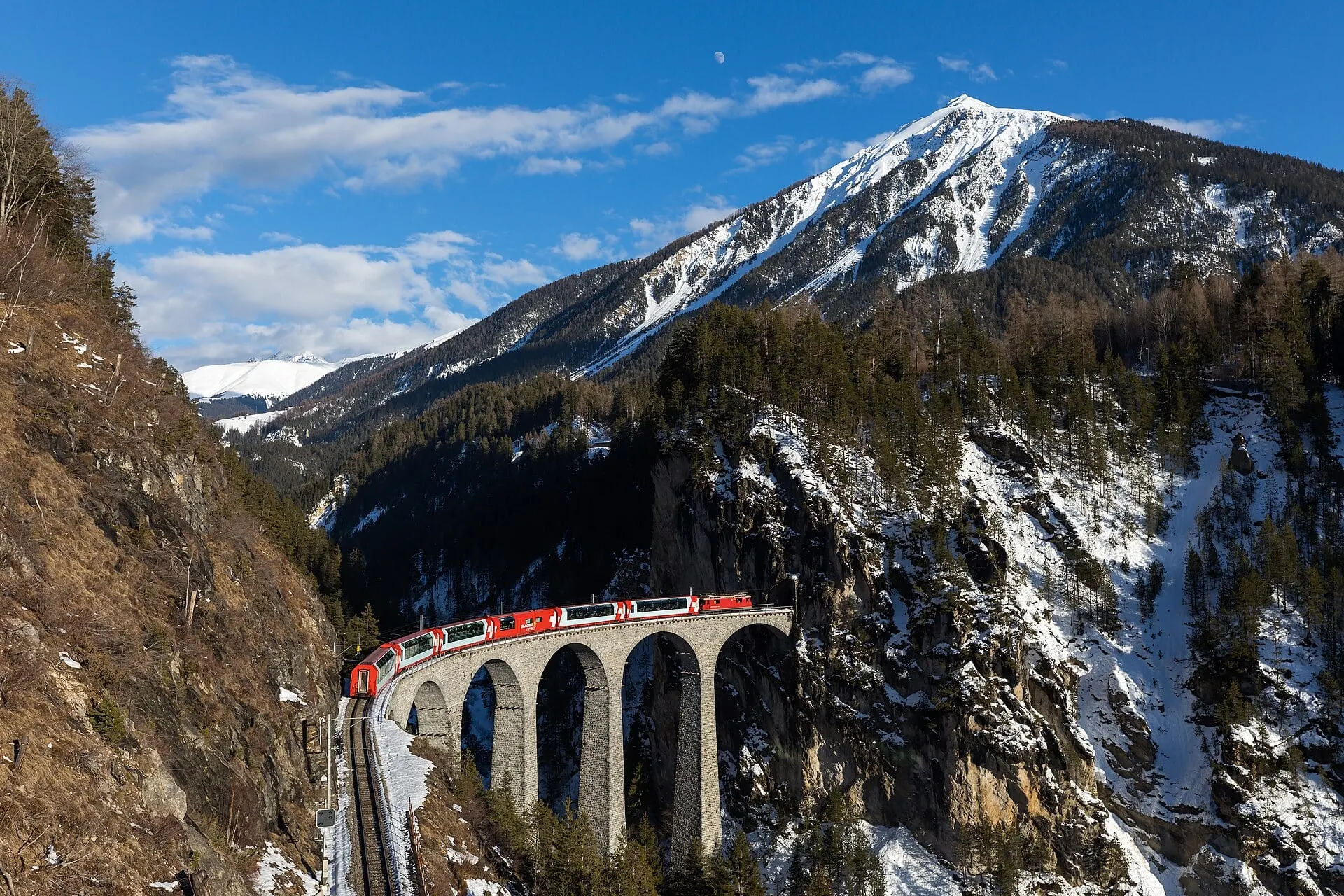
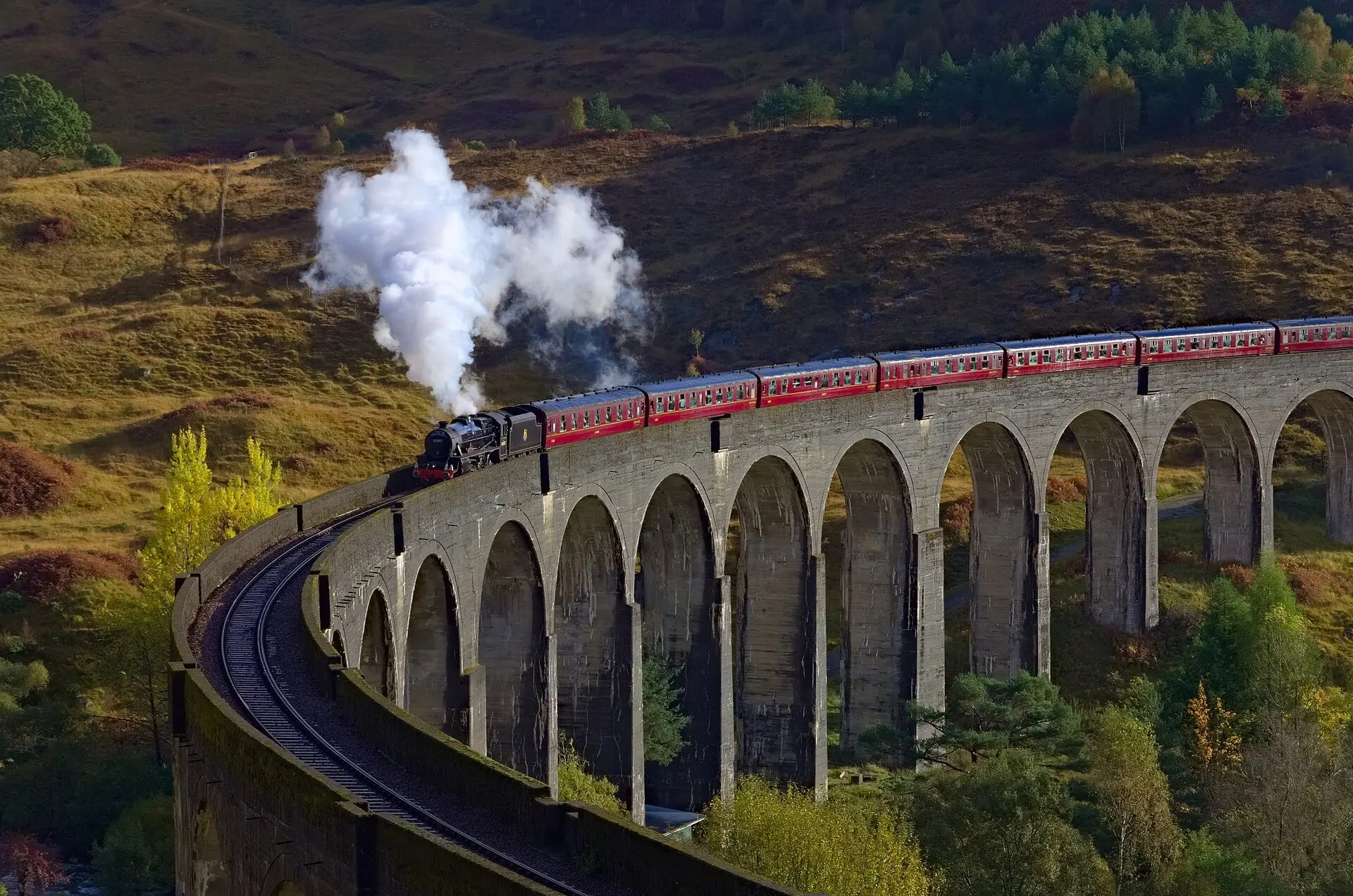
The extension to Mallaig opened on 1 April 1901, and its contractor, Robert McAlpine, built it in mass concrete, which earned him the name Concrete Bob. His Glenfinnan Viaduct, 21 arches and 380 metres long on a curve above the River Finnan, is the longest concrete viaduct in Scotland and is listed Category A. The stations of the first section were designed as a set: island platforms under swept roofs in a Swiss chalet style, and at Rannoch the scalloped shingles are believed to have come from Switzerland.
What makes it great is the order of things. Sea lochs first, then Loch Lomond from high on its western shore, then the mountains close in, then nothing at all: the moor, with Corrour station 408 metres up and no road to it. After Fort William the line turns west for the coast, past the monument where the 1745 rising began, and finishes among the islands. Steam returned to the Mallaig line in 1984, and in summer the Jacobite still runs it, but the ordinary ScotRail train crosses the same viaduct at a fraction of the fare.