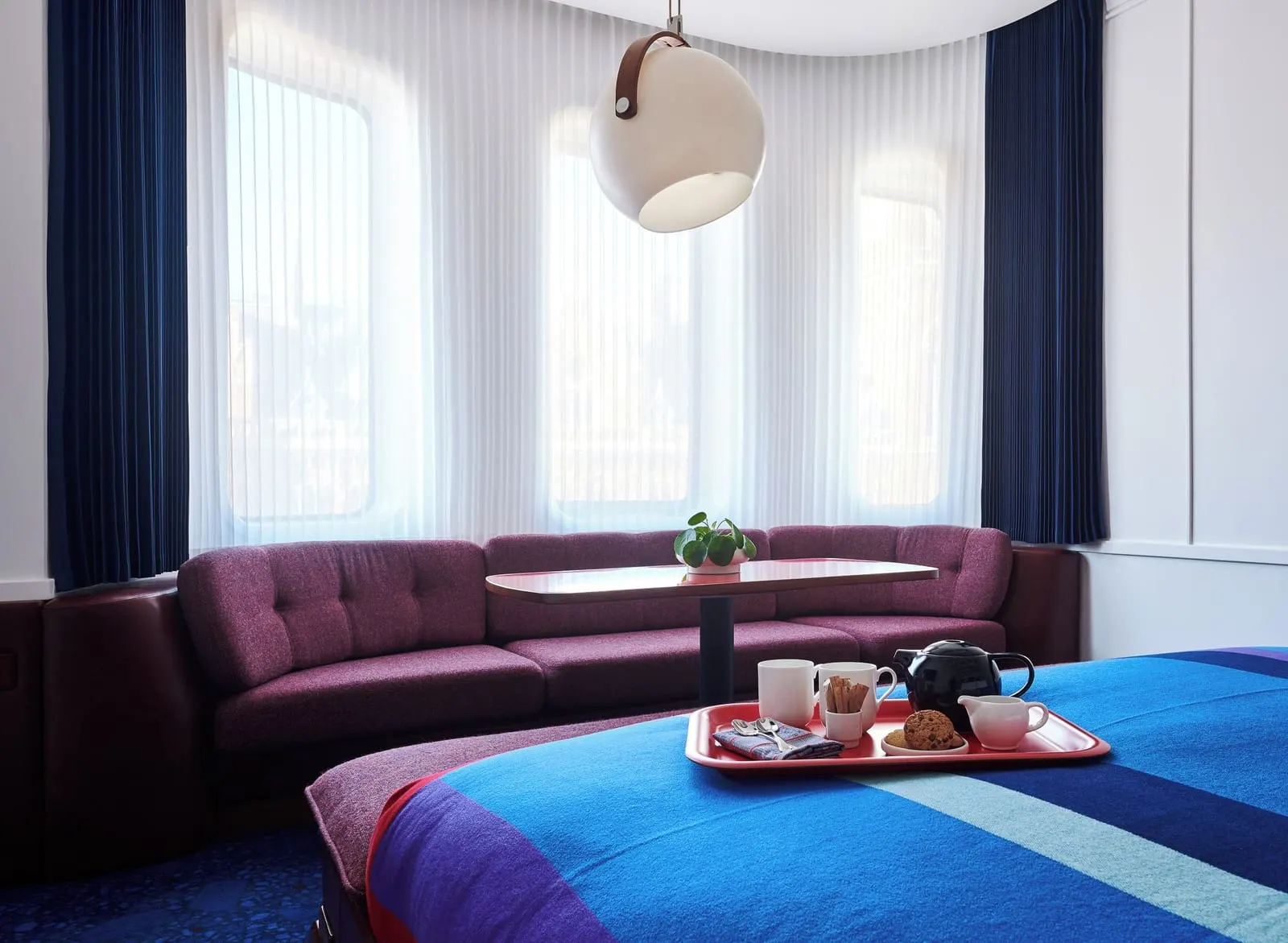
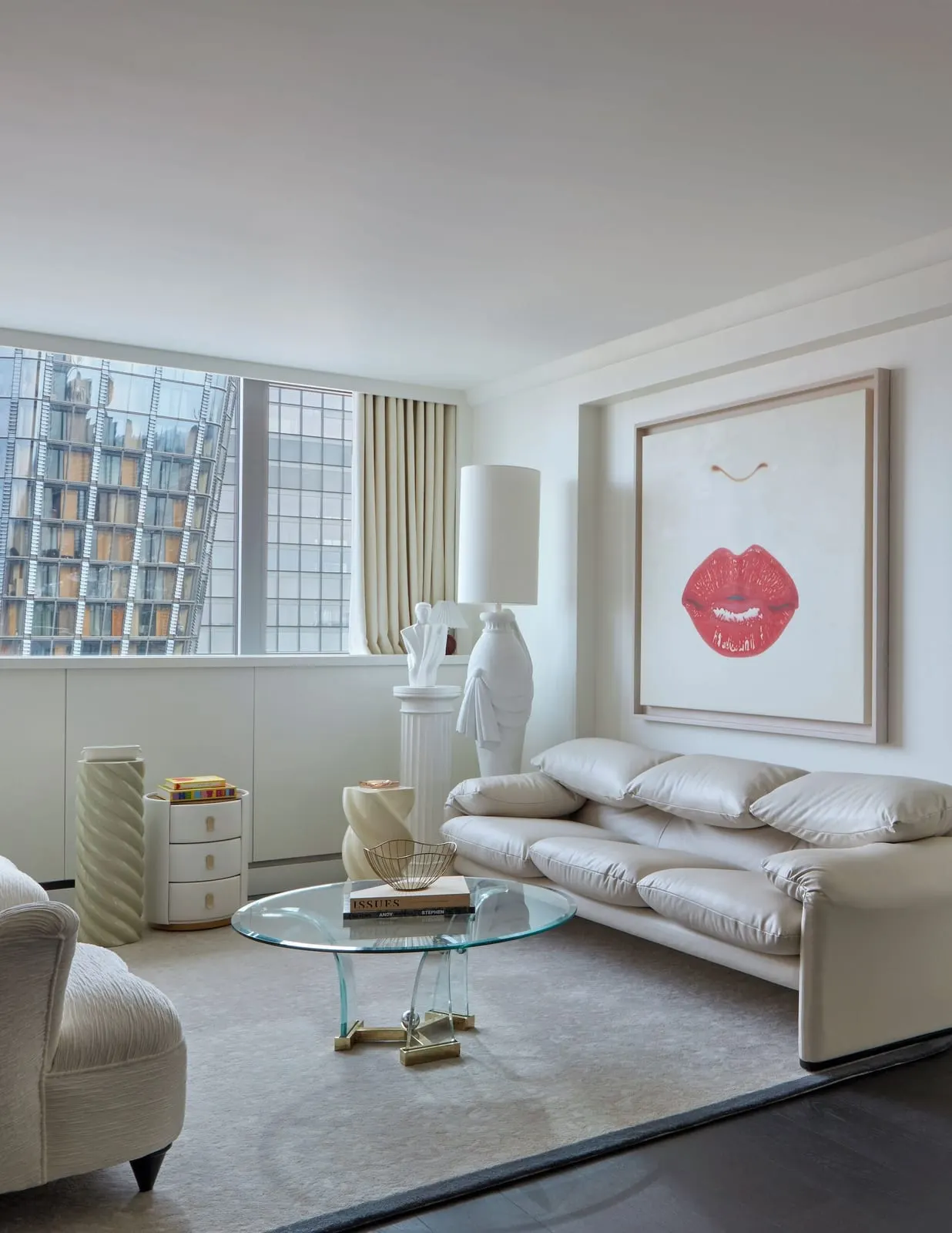
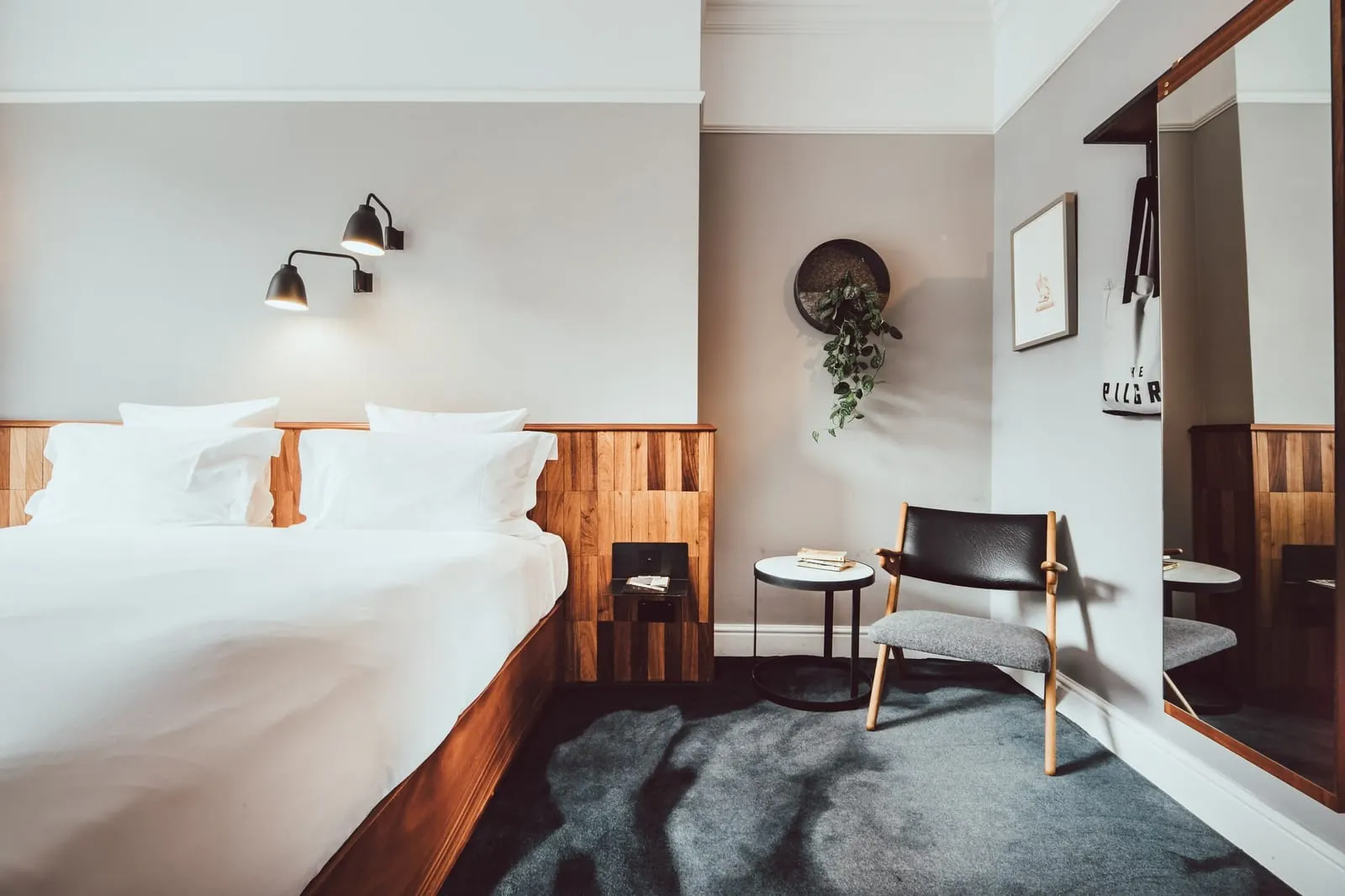
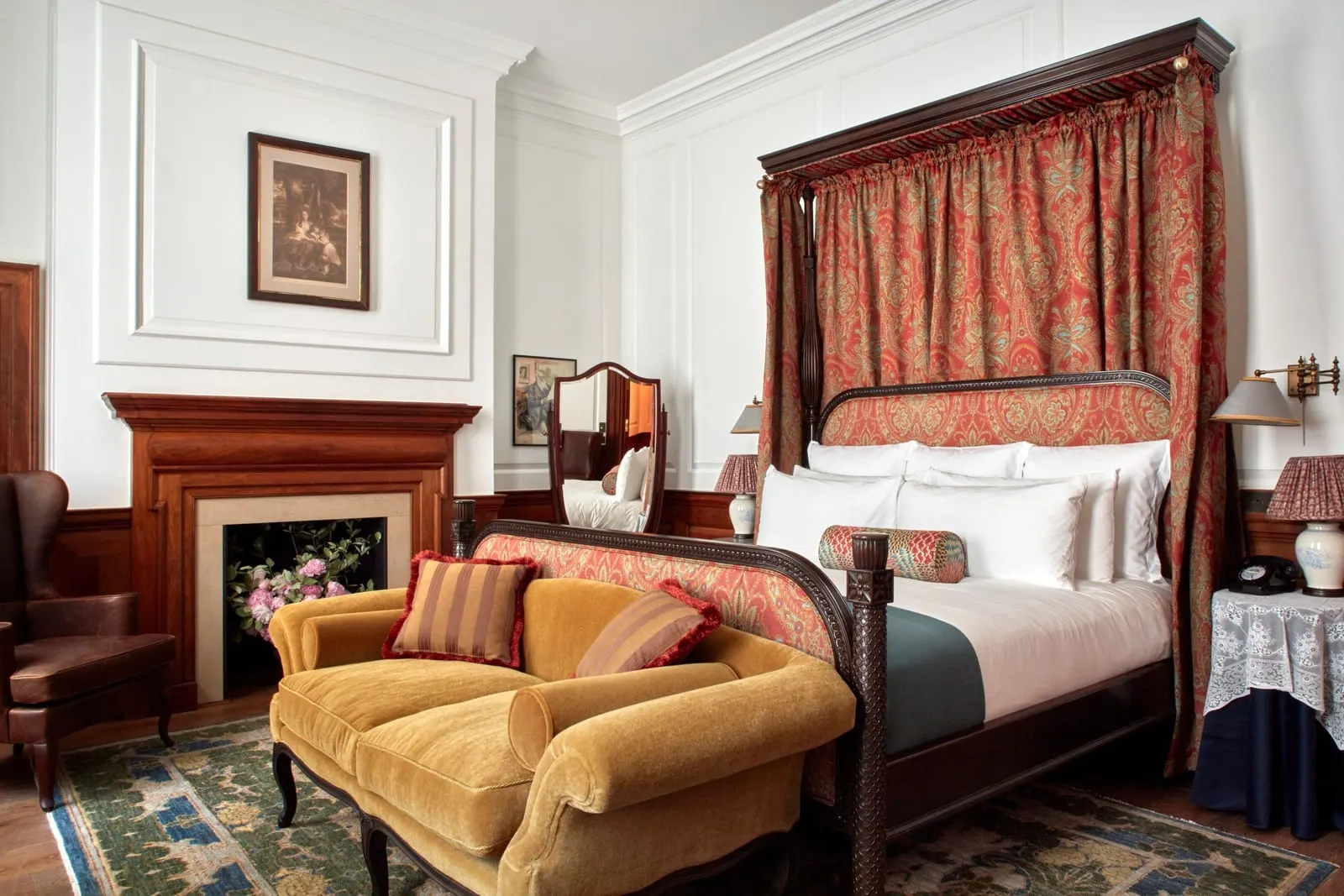
The Standard, London leads for design: Camden's 1970s council block, converted instead of demolished, with a red lift riding the outside wall to a tenth-floor restaurant facing St Pancras. Then come Sea Containers London, ship-themed inside by Tom Dixon's studio, and The Pilgrm, Victorian townhouses fitted out in salvage. For original architecture, The Ned is Lutyens's Midland Bank.
10 of our ten · Hand-pickedHotels cannot pay to be hereLast checked: September 2026
9.2/10
10,600+ Expedia guest reviews of the 10 hotels we list
Average of the guest scores Expedia publishes, weighted by review count; read 22 October 2026.
Design in London is mostly about what a hotel did with a building made for something else. Eight of these ten had another life first: Lutyens's Midland Bank, Bethnal Green's Edwardian town hall, a Camden council office with a library downstairs, a 1970s office block by the Thames, a Pimlico townhouse over a pub, and terraces of Georgian and Victorian houses. Claridge's has been a hotel on its Mayfair corner since 1856, and Shangri-La The Shard, London is the one hotel in a new building: levels 34 to 52 of Renzo Piano's Shard, finished in 2012.
So decide whether you want the old building or the new work inside it. The Ned, Town Hall Hotel and Hazlitt's are about what survived; The Standard, London, Sea Containers London and The Pilgrm are about what was added. Then book the room where the design is, which is rarely the cheapest: Lutyens's panelling is on The Ned's fifth floor, and at Town Hall Hotel the Signature Junior Suites keep the fireplaces and plasterwork.
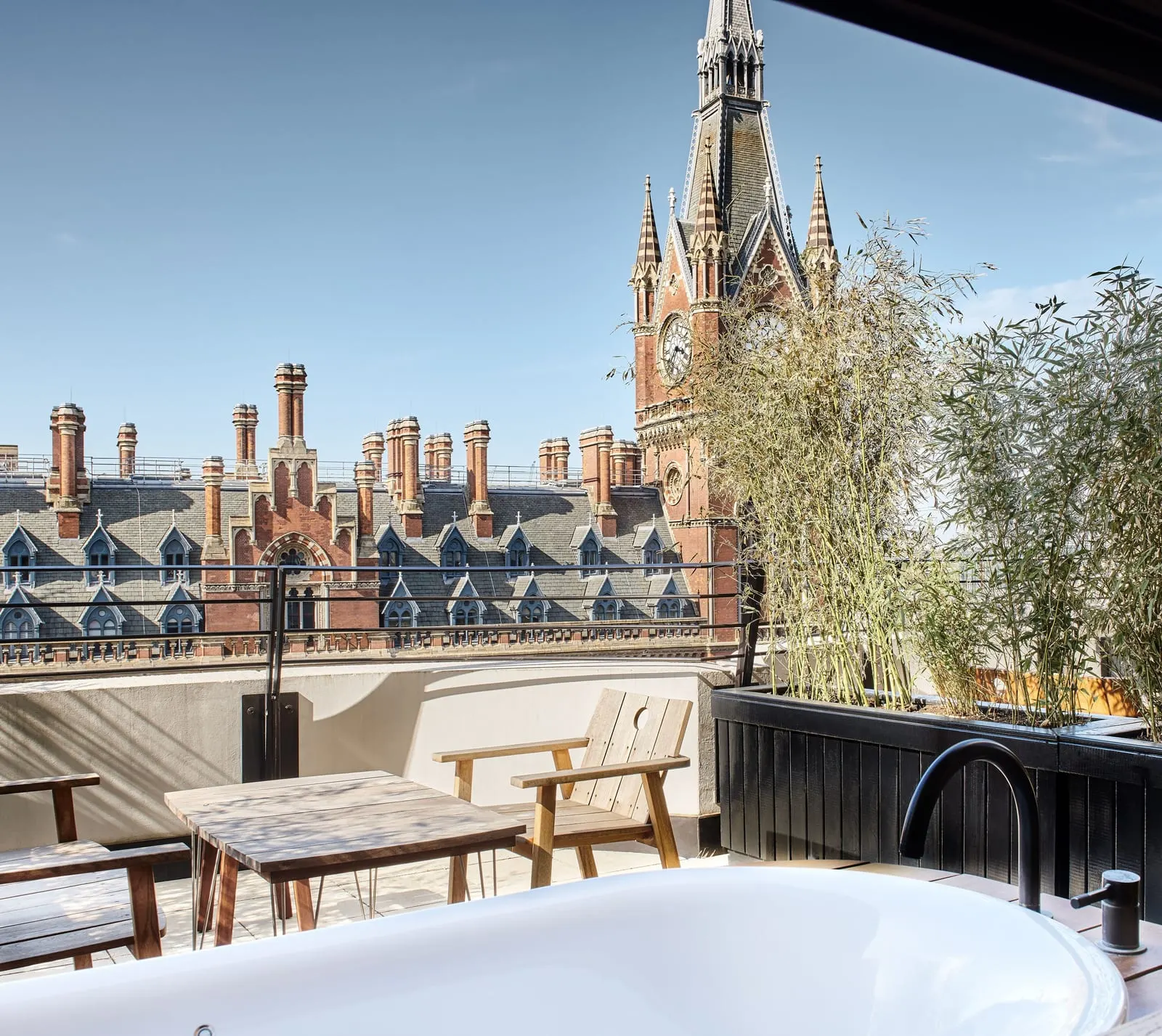
Camden built this for itself in the 1970s: an eight-storey annexe from the borough architect's department, clad in white precast panels with rounded window corners, with council offices upstairs and a library at street level. The conversion by Orms saved the concrete frame and the facade, ran new steel columns through the waffle slabs and built three extra storeys on the roof, and the interiors for the 2019 opening are by Shawn Hausman Design and Archer Humphryes. The old library is now The Library Lounge.
The signature is the red, pill-shaped lift that climbs the north face from the pavement to the tenth floor. Up there, Decimo faces the St Pancras clock tower over Euston Road, and Sweeties has a marble bar behind floor-to-ceiling glass. In the rooms, daylight is the design variable: the Standard King Interior is a windowless core room with planting in the shower, and the Premium rooms get bay window seating and a soaking tub.
The room to book
Premium King View
33 to 37 m²
The room the hotel is photographed for: bay window seating, a soaking tub and an outlook sold on St Pancras or the wider city, in 33 to 37 square metres.
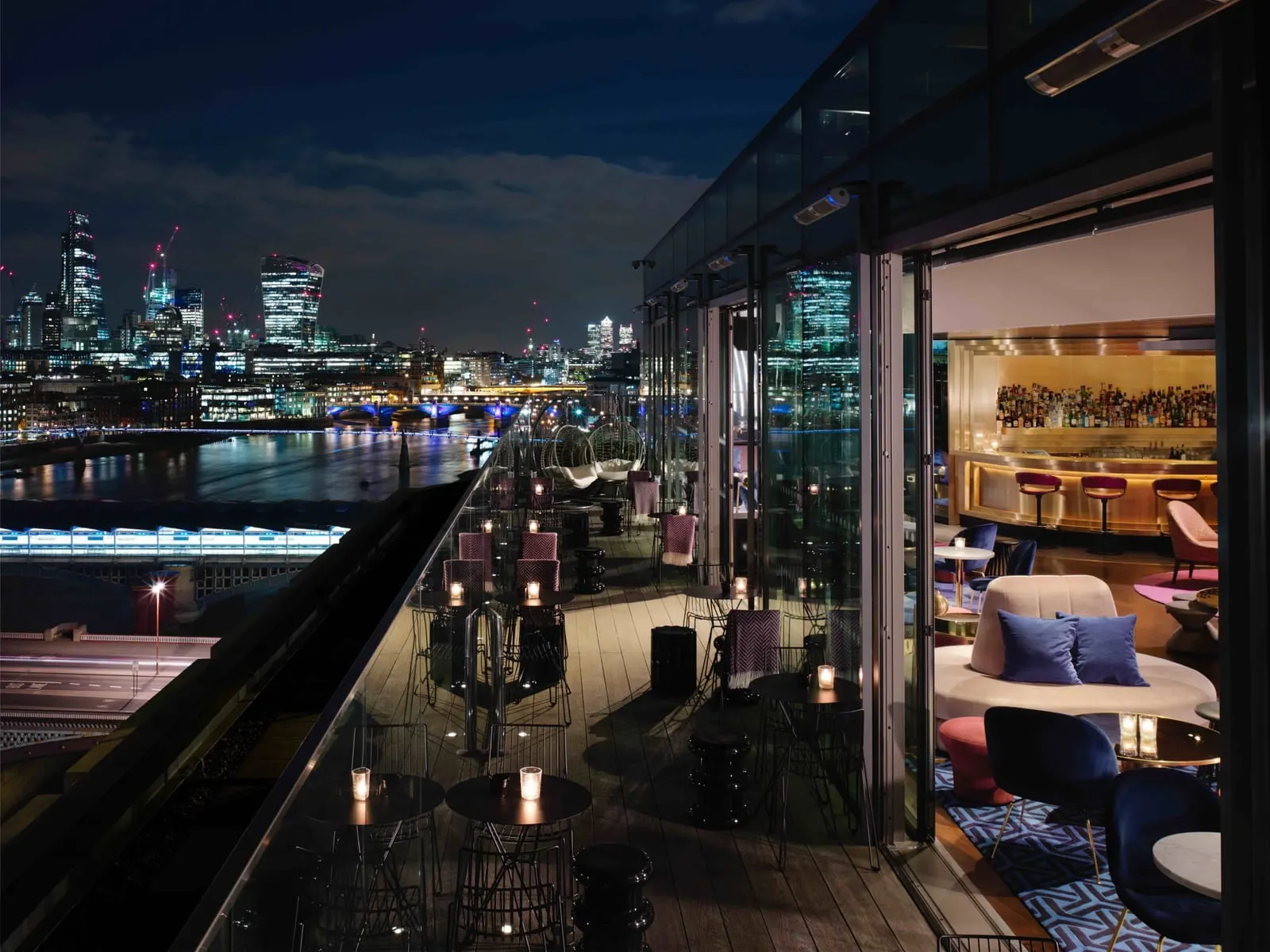
Warren Platner drew Sea Containers House in 1974 to be a hotel, but it opened in 1978 as offices, and only the refit begun in 2011 gave its south wing the use it was drawn for. Tom Dixon's Design Research Studio did the interiors for the 2014 opening, and the ship idea still runs through the public rooms. Jacu Strauss worked on that scheme at Dixon's studio and now revises it as Lore Group's creative director: the Riverview Studio Suites of 2026 are his, and so is Gordon Ramsay at Sea Containers, the riverside dining room finished in the reds of Blackfriars Bridge.
The rooms to look at are the four Cabin Suites, each a period set of its own: Edwardian with a copper bath, Art Deco with a nickel bath and a burl-wood headboard, Mid-Century with Danish powder-blue seating, and Dynasty as 1980s maximalism in pink marble. Strauss chose the antiques, and all four face the river.
The room to book
Dynasty Cabin Suite
55 m²£929 a night
The boldest of the four Cabin Suites, on the fifteenth floor facing the river: 1980s maximalism, pink marble and a Maralunga sofa, with champagne breakfast, Curzon tickets and a 1pm check-out included.
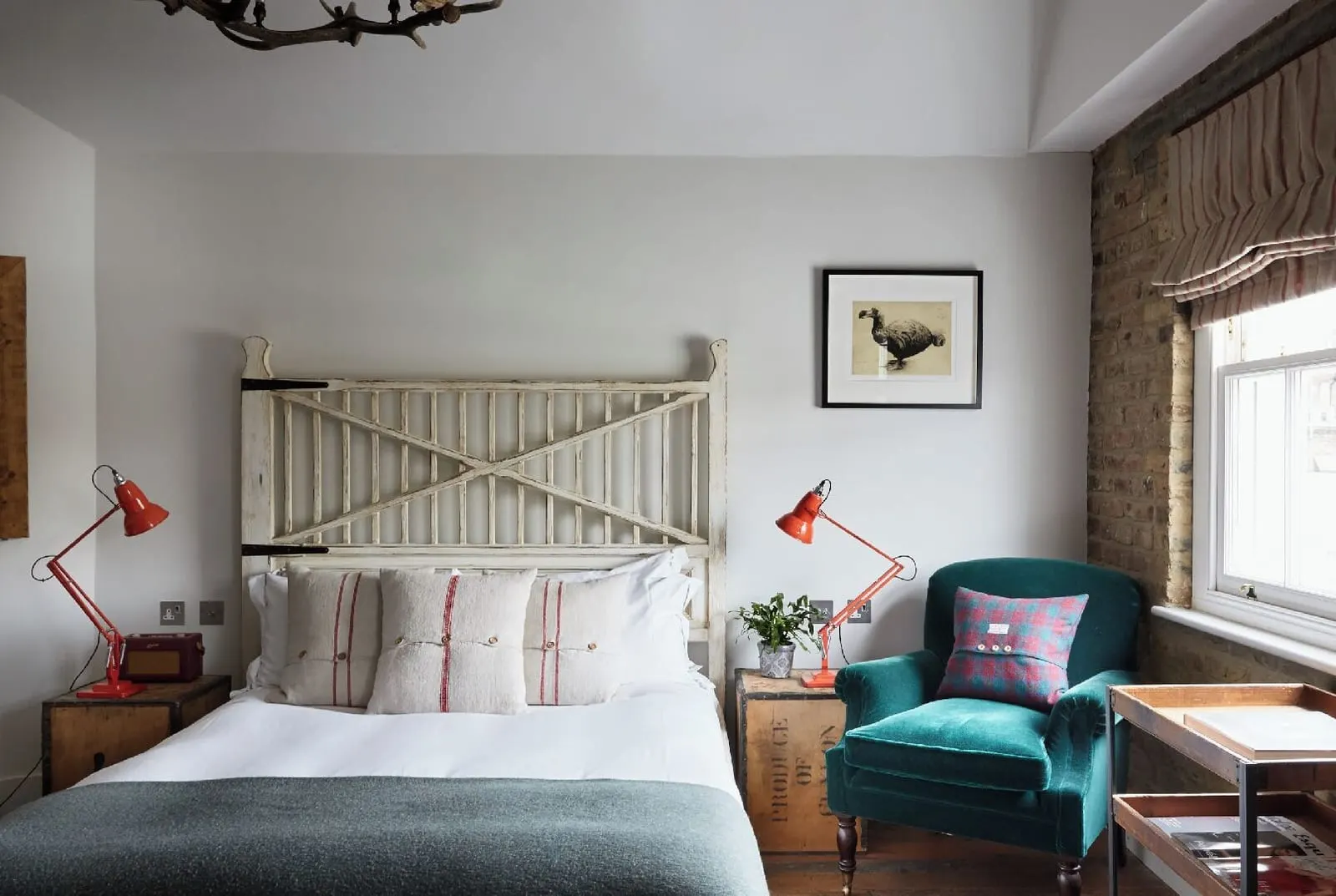
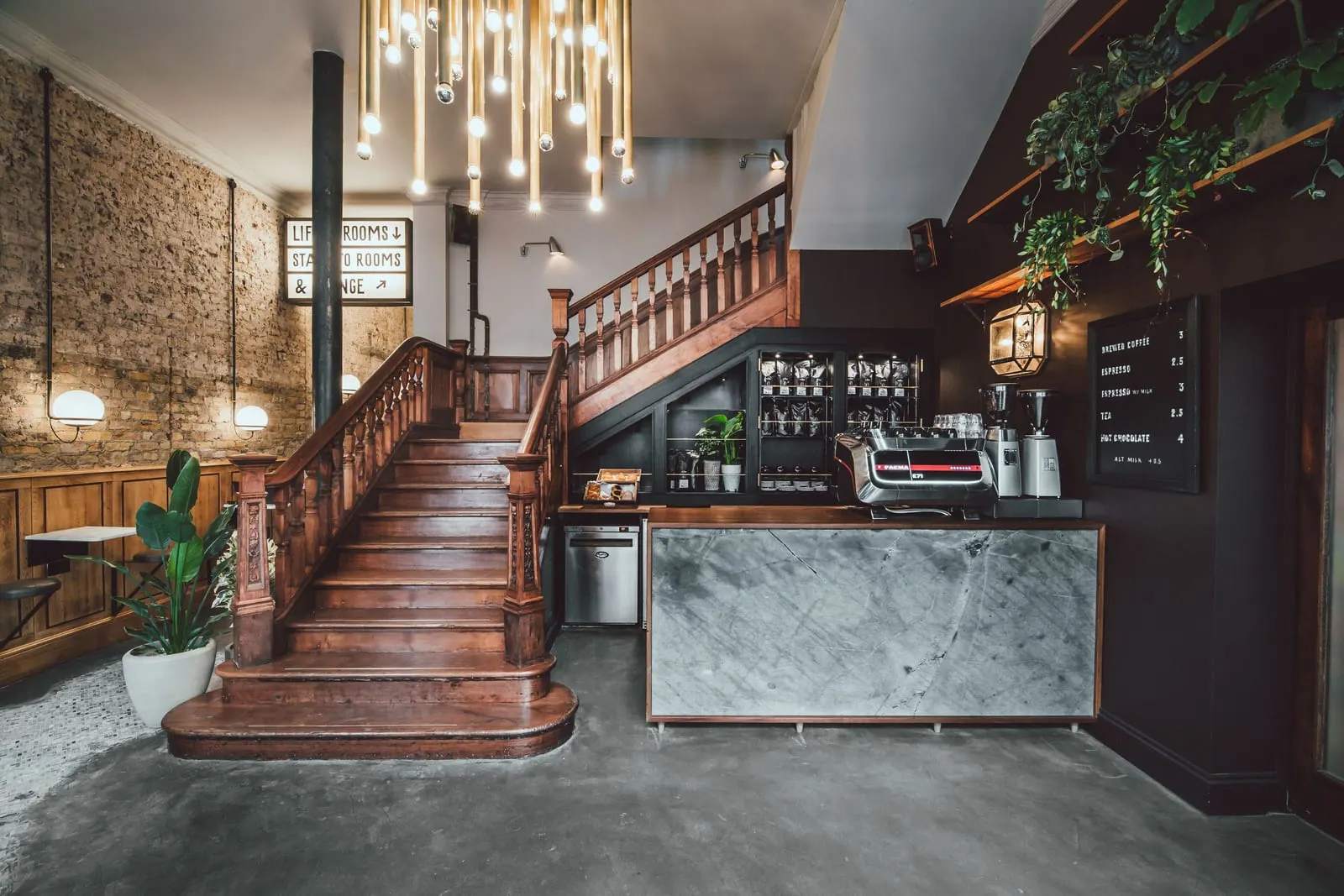
The interiors, and much of the furniture, are the work of 93ft, a Sheffield studio, and salvage is the whole idea. The parquet is nineteenth century and came out of an old army gym, the lamps from an old psychiatric house, the cast-iron radiators are reclaimed, and the staircase, which the hotel dates at 200 years, took 300 hours to restore. Some 150 living plants and a collection of art are spread through the house.
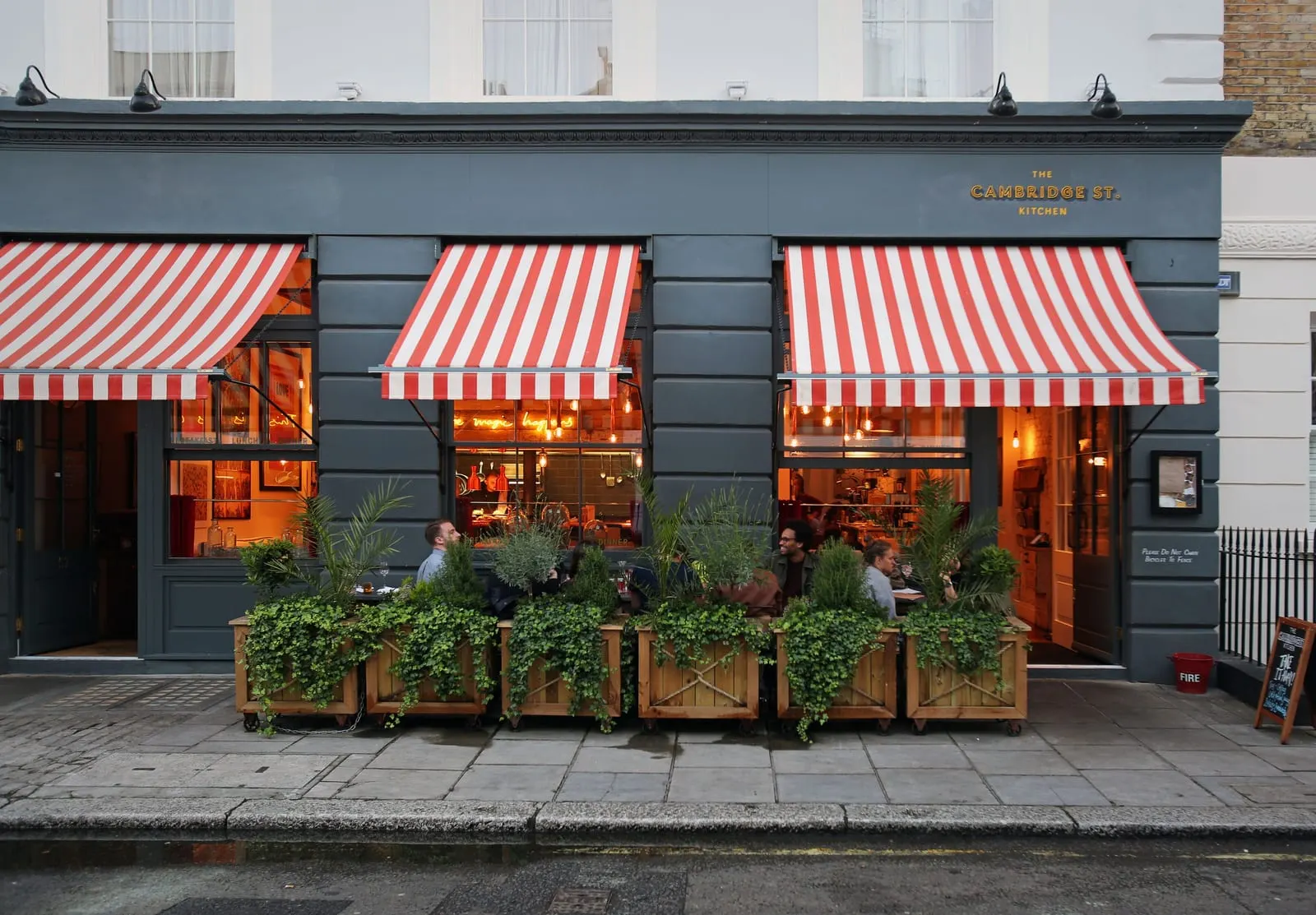
The building is five wings of Victorian terraces on London Street, so no two of the 73 bedrooms match, though every one gets the same kit: an organic cotton mattress, Egyptian cotton sheets, a Marshall speaker and a private shower room. The arrival is part of the design too. There is no reception desk, keys come from the café counter on the ground floor, and The Lounge upstairs has velvet seating and a terrace over the street.
The room to book
Comfy
14 m²£219 a night
Every category shares the same finish, so pay for floor: at 14 square metres, with a king or super-king bed, the Comfy is the only room with space to spare.
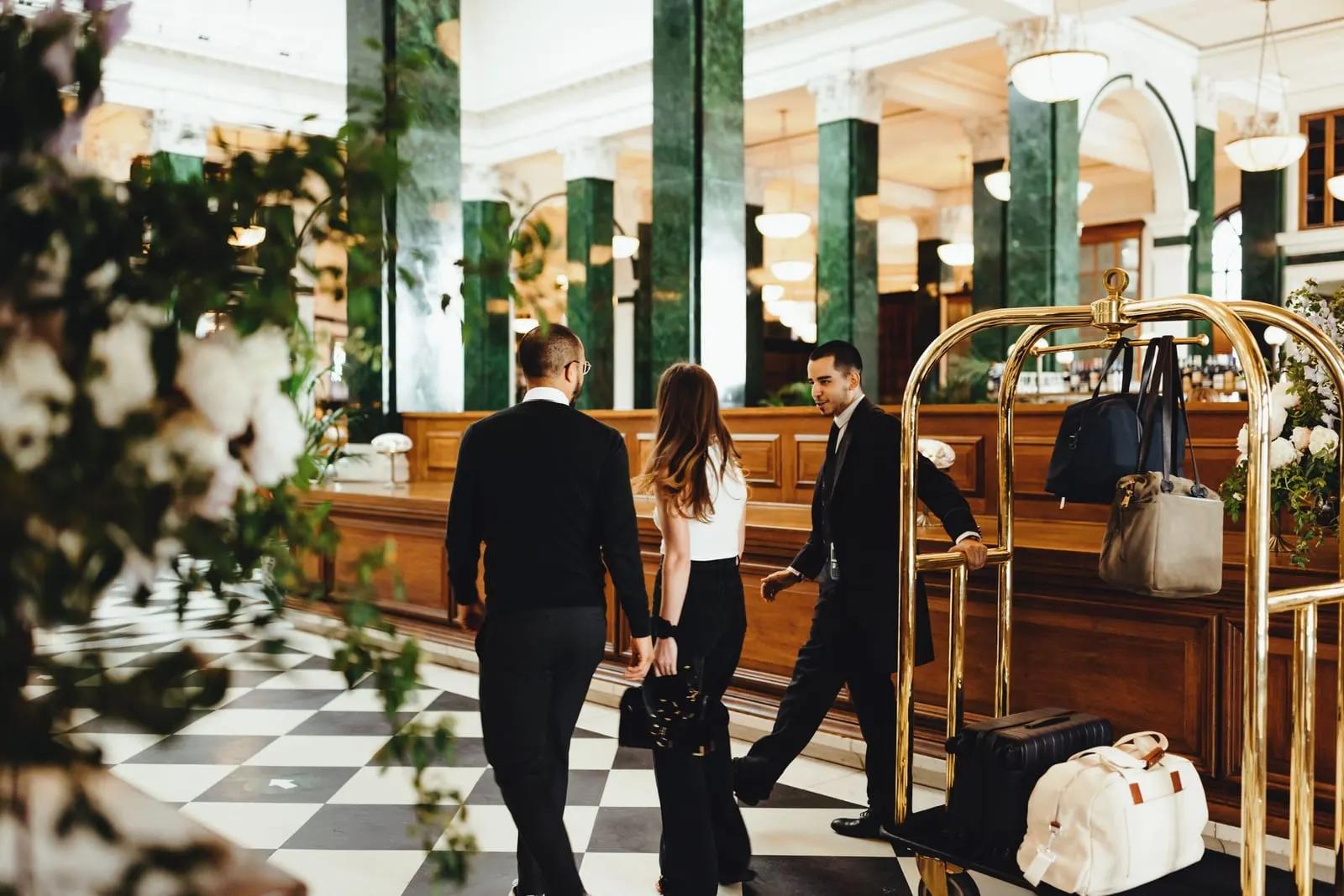
Sir Edwin Lutyens began the Midland Bank's headquarters on Poultry in 1924, a Grade I listed block in Portland stone, and since the four-year restoration that made it a hotel in 2017, anyone can walk into the banking hall. It keeps its 92 verdite columns and the bank's walnut counters, and the bank manager's wood-panelled office is now Lutyens Grill.
Upstairs, the Cosy, Medium and Large rooms are a reconstruction of the 1920s, done with care: heritage walnut beds, glass palm chandeliers, marble mosaic bathrooms, floral wallpaper and a drum table in the Cosy, a mirrored cocktail cabinet in the Medium. The fifth floor is the exception. Lutyens's own French-polished walnut panelling and marble fireplaces survive there, and the Heritage rooms sit among them. The Stairwell Studios, meanwhile, are built into the original stairwells.
The room to book
Heritage
35 to 45 m²£745 a night
The same 35 to 45 square metres as a Large, but on the listed fifth floor, where the walnut panelling and marble fireplace around you are Lutyens's own.
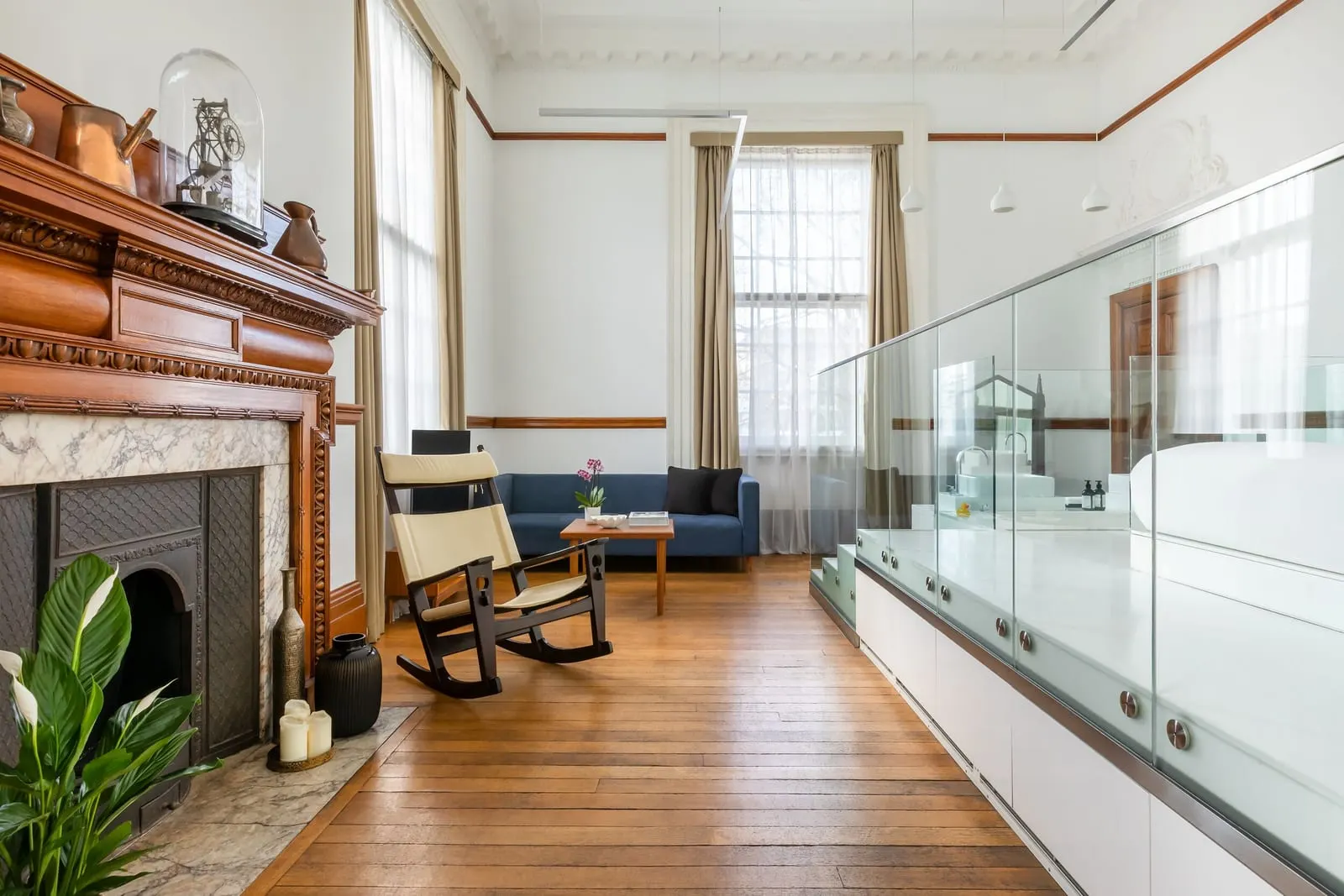
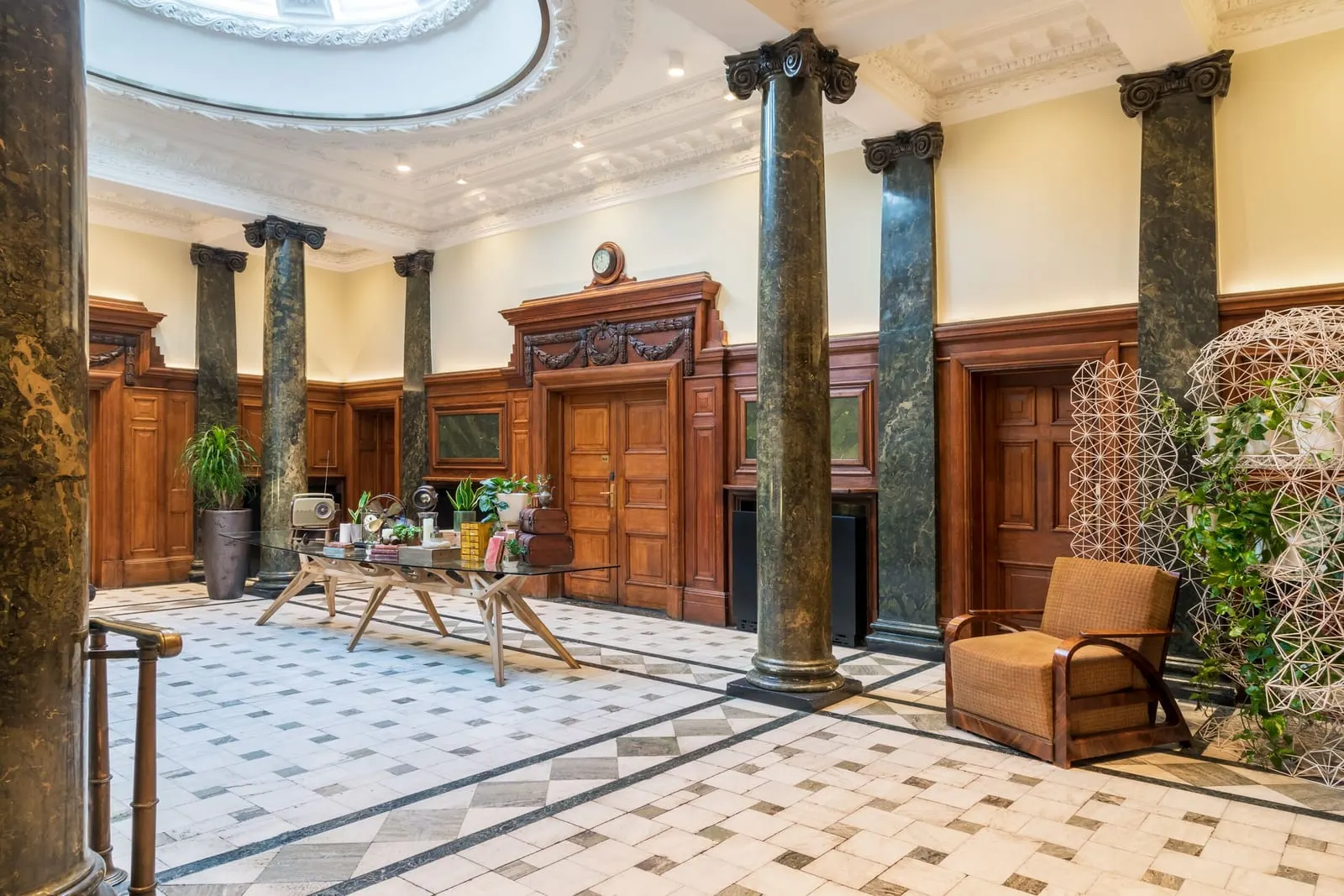
Percy Robinson and W Alban Jones designed Bethnal Green's town hall in Portland stone; it opened in 1910, and E. C. P. Monson extended it along Patriot Square at the end of the 1930s. It has been Grade II listed since 1973, and the interiors are the reason to come: the stairwell is marble under a glazed dome, the committee rooms are panelled in Austrian oak, the 1930s council chamber keeps its original benches and its Australian walnut panelling, and a Henry Poole sculpture stands over the door. Rare Architecture handled the 2010 conversion for Loh Lik Peng and wrapped the back of the building in laser-cut aluminium.
The rooms to book are the ones that kept the old interiors. In the Signature Junior Suites, glass partitions let the full ceiling height read, and the furniture is built around the fireplaces and plasterwork. The Assembly Lounge, where the council once met, is now the hotel's bar and lounge.
The room to book
Signature Junior Suites
35.8 to 49.2 m²
It keeps the town hall in the room: original fireplaces and plasterwork, glass partitions that leave the full ceiling height clear, and a kitchen, across 35.8 to 49.2 square metres.
The name tells the story. Justin Salisbury started with his family's guesthouse in Brighton and, with no money to redecorate, gave artists their board in return for painting it. The London house, which he opened with Charlotte Salisbury in 2014, keeps the idea: original art hangs where another hotel would put prints, and guests single out the salvaged furniture in the rooms as much as the pictures.
The building is a townhouse on Thomas Cubitt's Pimlico grid whose ground floor was the Clarendon pub until 2011, and the old pub cellar is now a cocktail bar with a club room beside it. Of the ten bedrooms, three go furthest: the art deco Club Suite with a George Smith sofa and a roll-top bath, the Grand Suite with floor-to-ceiling sash windows, a cast-iron bath and a four-poster, and The Loft in the eaves. The house holds one MICHELIN Key.
The room to book
The Loft
£465 a night
The only room below the suites with a bath, a French-style tub of the 1930s in an open-plan bathroom, tucked into the eaves with seating for two.
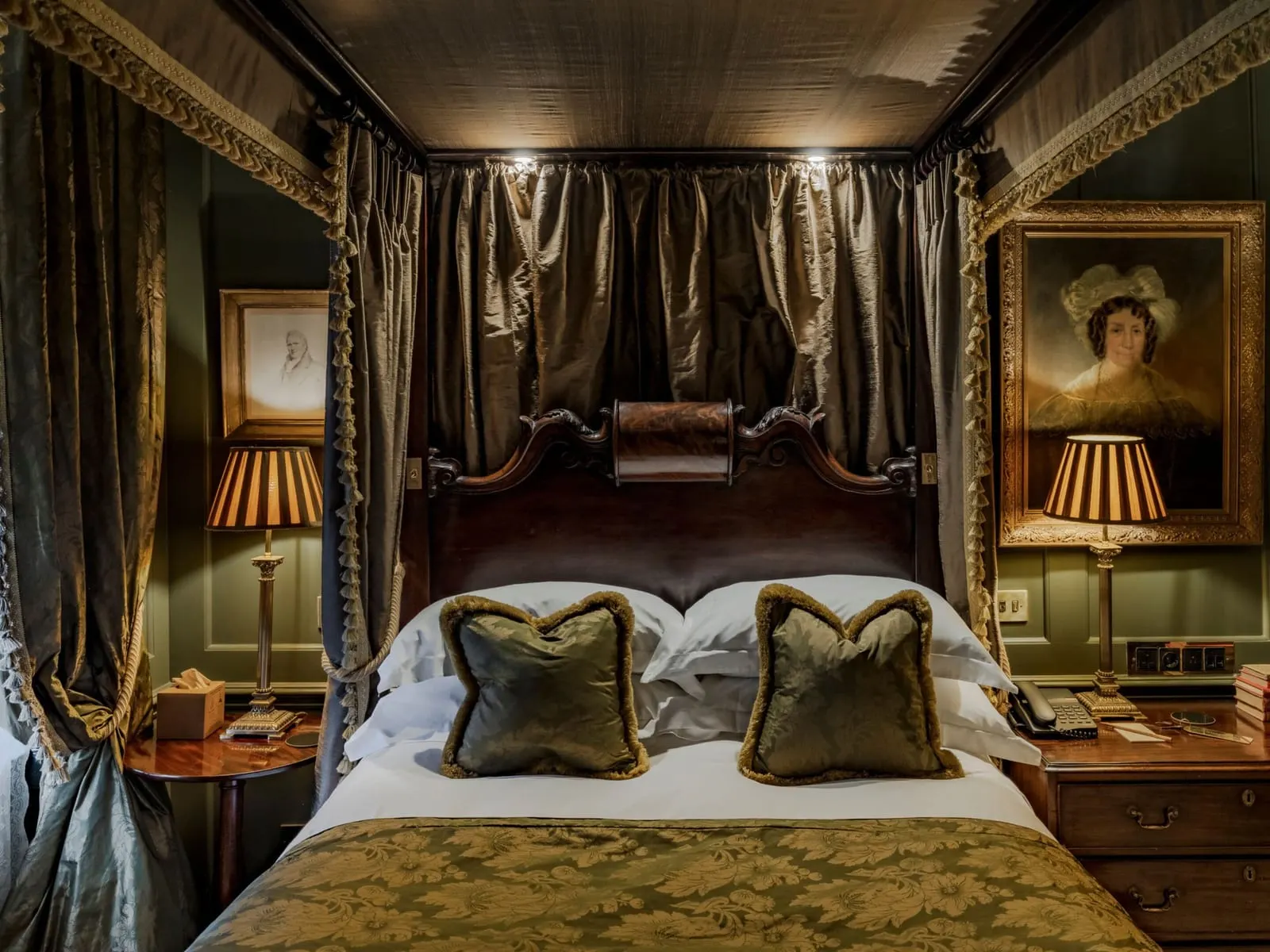
The hotel occupies 28 and 30 Seymour Street, a pair of Georgian houses of about 1780 to 1790 on the Portman Estate, part of a Grade II listed terrace; number 30 wore a plaque to Edward Lear until the 2012 reconstruction. The 2015 interiors are Russell Sage Studio's, and they tell a story: the house is furnished as if it belonged to Wicked Uncle Seymour, an imaginary owner back from the Grand Tour, and his spoils fill the rooms.
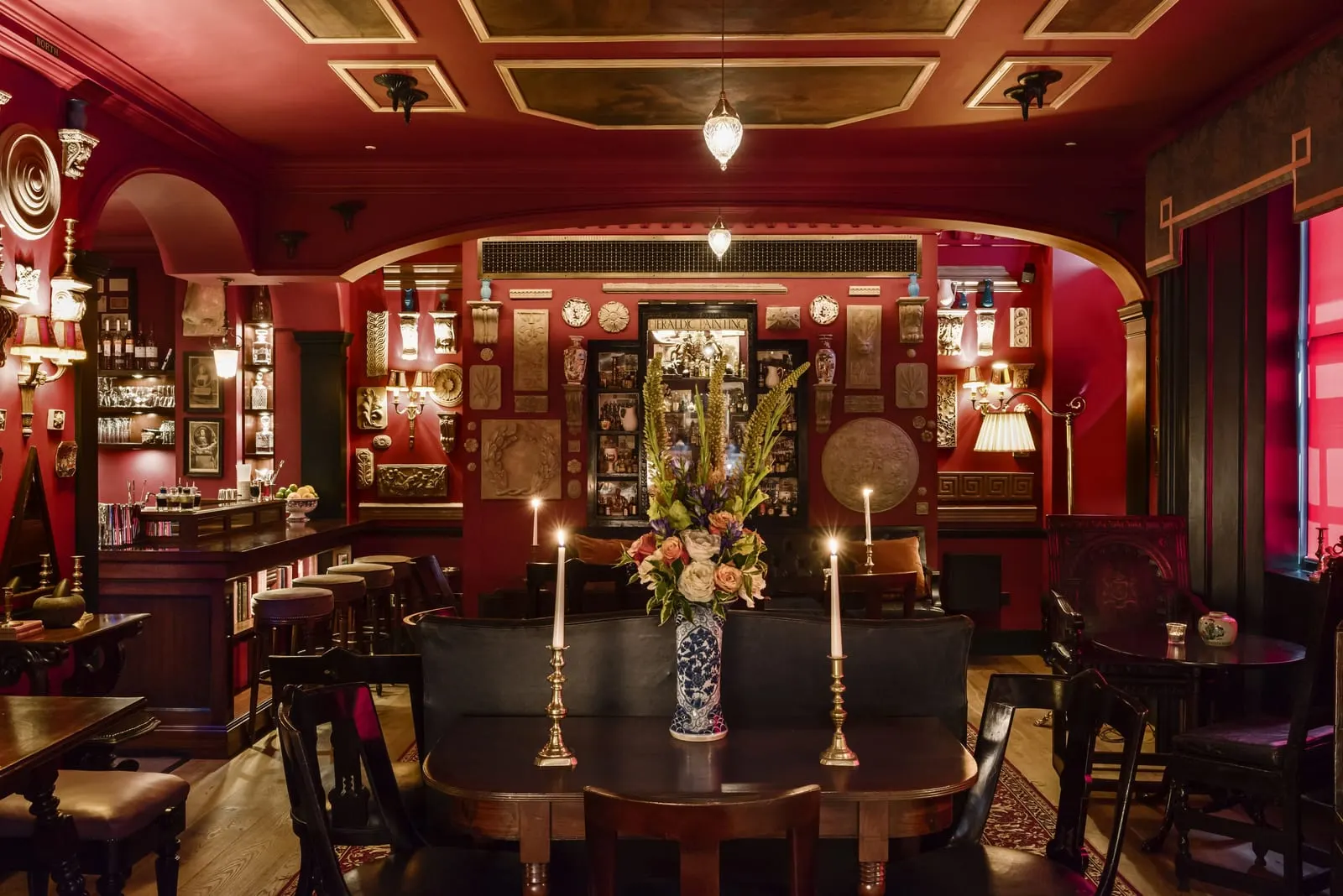
The set piece is the ground-floor Parlour: gilded mirrors, a fireplace and cabinets full of oddments in a dark Georgian drawing room. It doubles as the lobby, the breakfast room and the cocktail bar. The house has 24 rooms in four categories. No two of the four Junior Suites share a layout, and Lear's Loft, up on the roof, has its bath outside on the terrace.
The room to book
Junior Suite
30 m²£435 a night
Each of the four is laid out differently, so you get a one-off room rather than a type, and the hotel describes them with views over Marylebone.
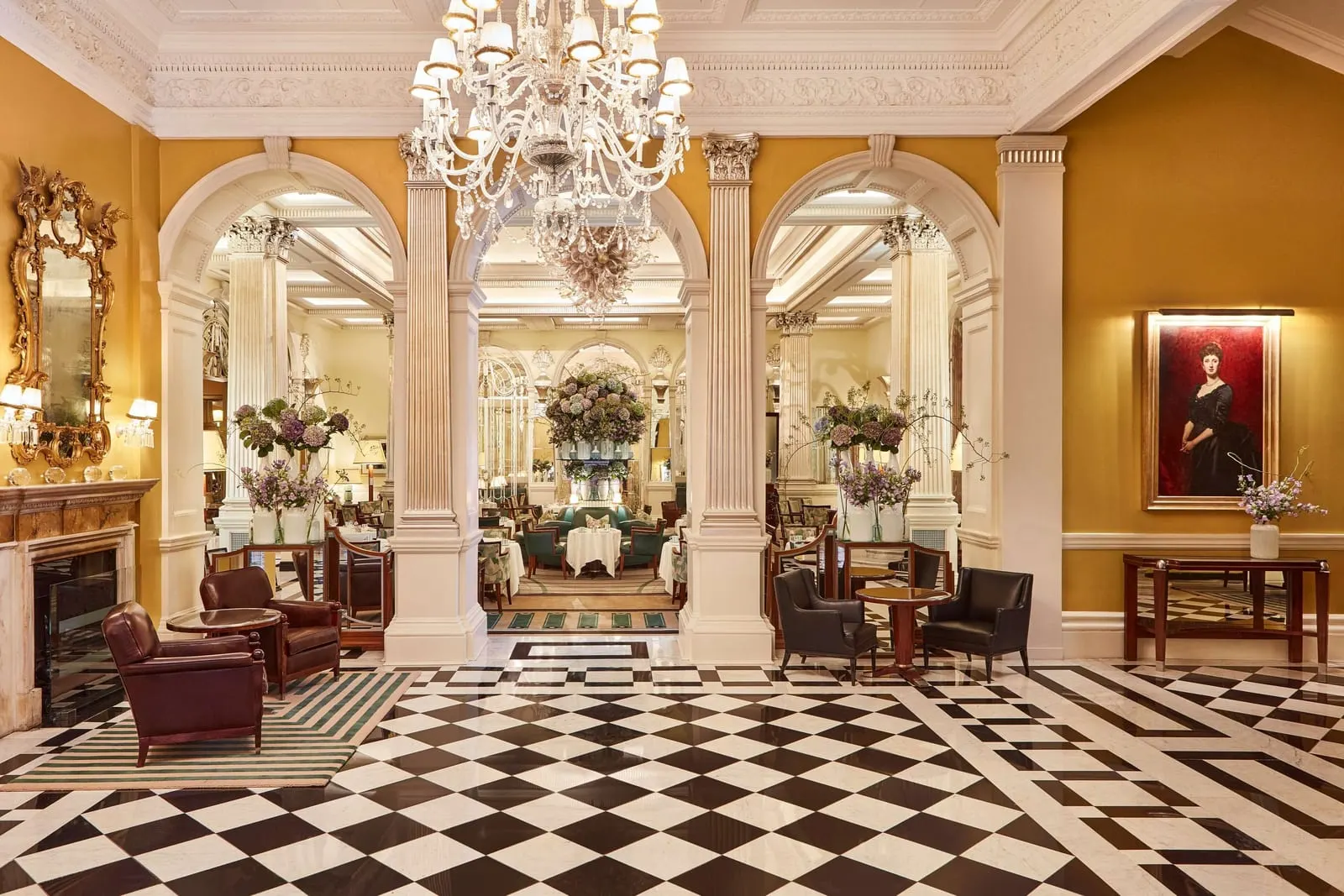
The building is C. W. Stephens's of 1898, put up for Richard D'Oyly Carte of the Savoy, and Rupert D'Oyly Carte's 1920s extension brought the art deco. The Foyer pairs its original art deco mirrors with a Chihuly glass sculpture, the recent works restored the deco ballroom and the French Salon, and each December a different designer is given the Christmas tree.
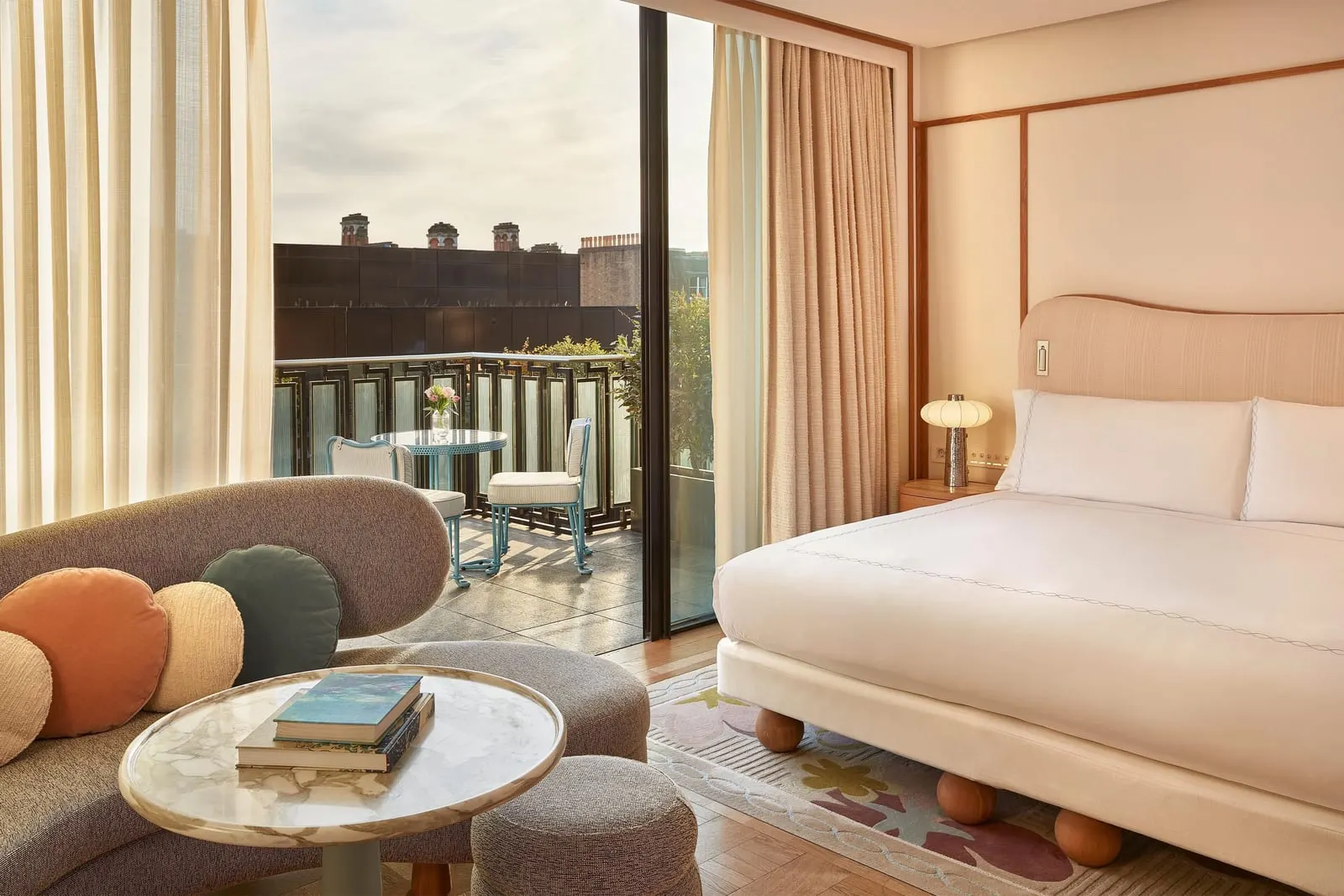
Later designers left their names on it too. The Painter's Room is Bryan O'Sullivan's, built in 2021 in pink onyx and peach glass, with a monochrome mural by Annie Morris; Claridge's Bar is a David Collins Studio room, and André Fu designed the spa three floors below the lobby. Bedrooms come in two finishes, traditional with gilded cornices or art deco, and the suites run to interiors by David Linley, Pierre-Yves Rochon and Diane von Furstenberg.
The room to book
Mayfair Balcony Room
45 m²
The first category with a balcony and a street outlook rather than the courtyard, and it comes in both the traditional and the art deco finish.
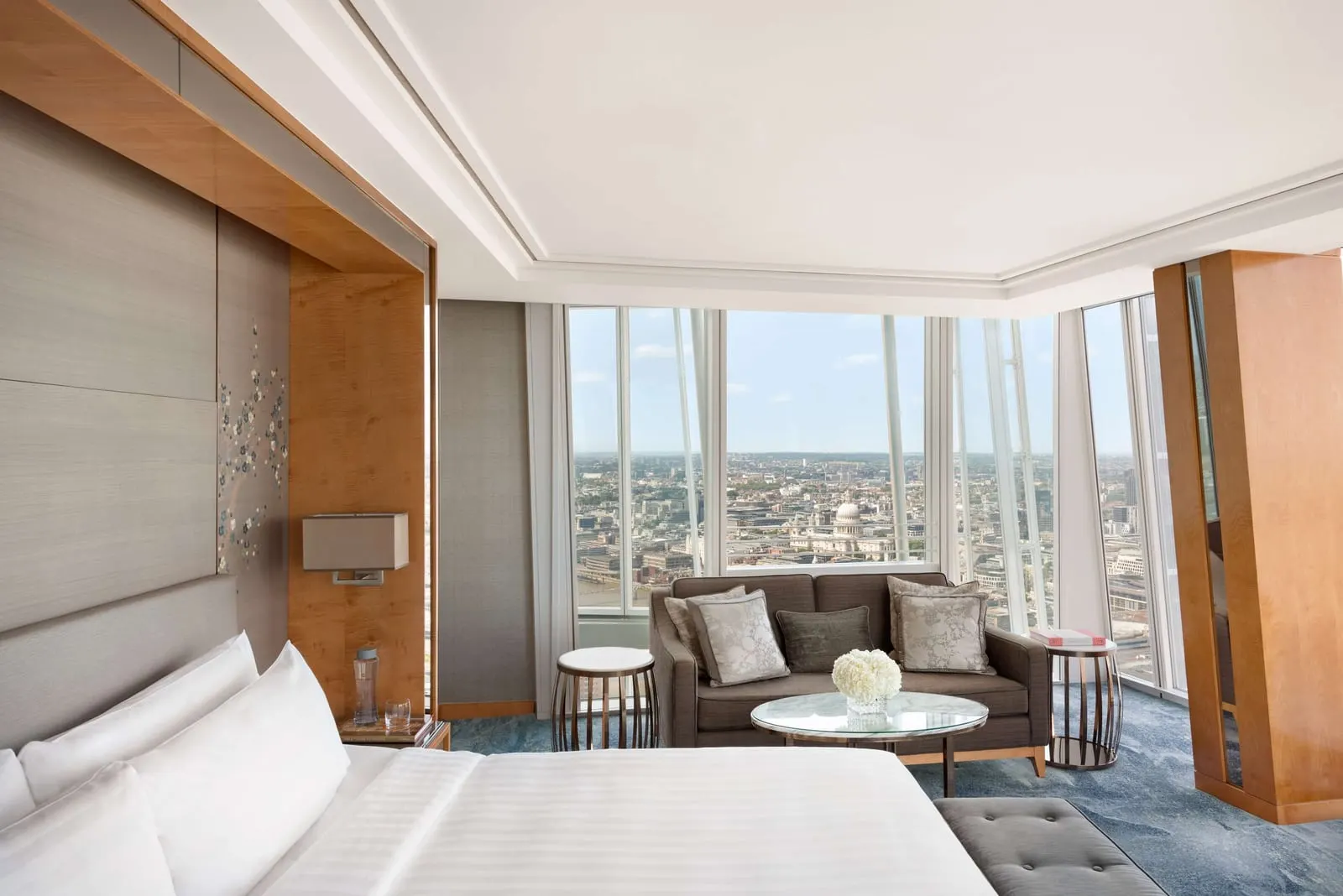
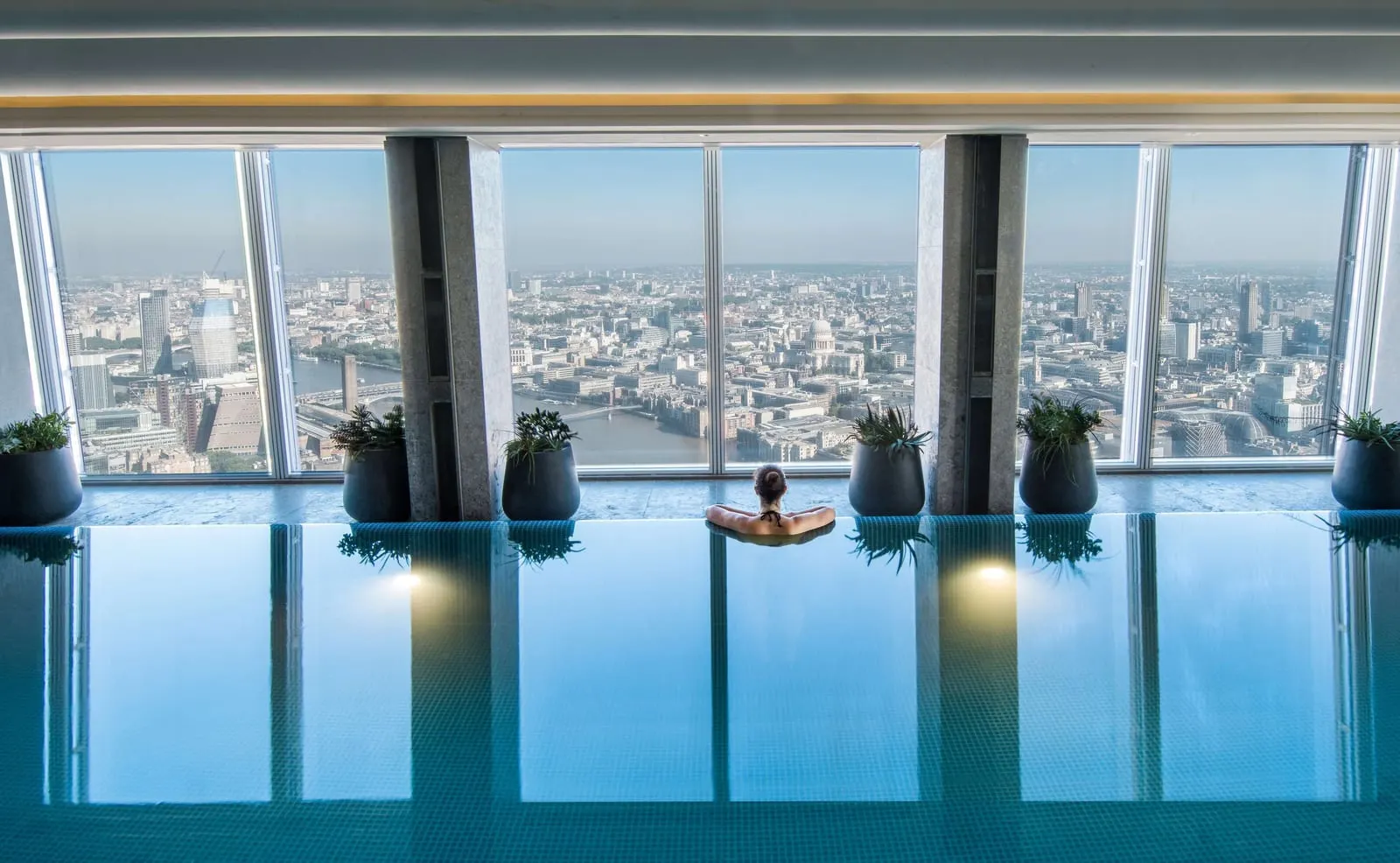
This is the one new building on the list: Renzo Piano's Shard, finished in 2012 and the tallest building in Western Europe, with the hotel on levels 34 to 52 and an express lift to the sky lobby on level 35. The design idea is the glass. Every one of the 202 rooms and suites is glazed floor to ceiling, the marble bathrooms have heated floors, and in many rooms the bath looks out, so the city is part of the furnishing.
What changes up the ladder is direction, not finish. The Shard rooms face south over south London, the City View rooms turn north across the river, and the Iconic City View rooms take the corners of each floor, with 180 degrees of glass. At the top, on level 52, the pool sits behind glass beside GŎNG, the highest hotel bar in Western Europe.
The room to book
Iconic City View Room
43 to 60 m²
The corner rooms: 43 to 60 square metres, and the only room category sold on a 180-degree view, which the hotel says takes in Big Ben, Tate Modern and Shakespeare's Globe.
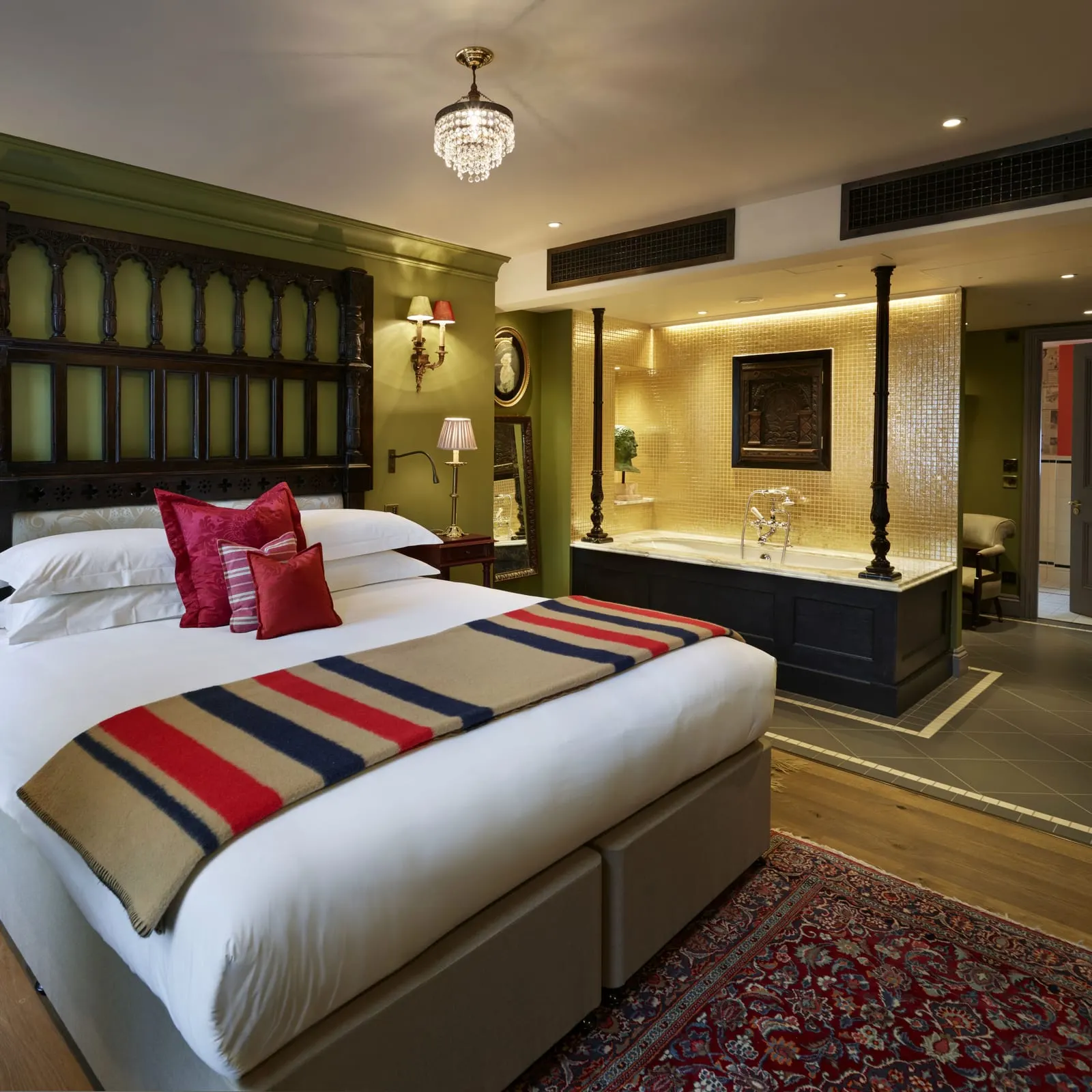
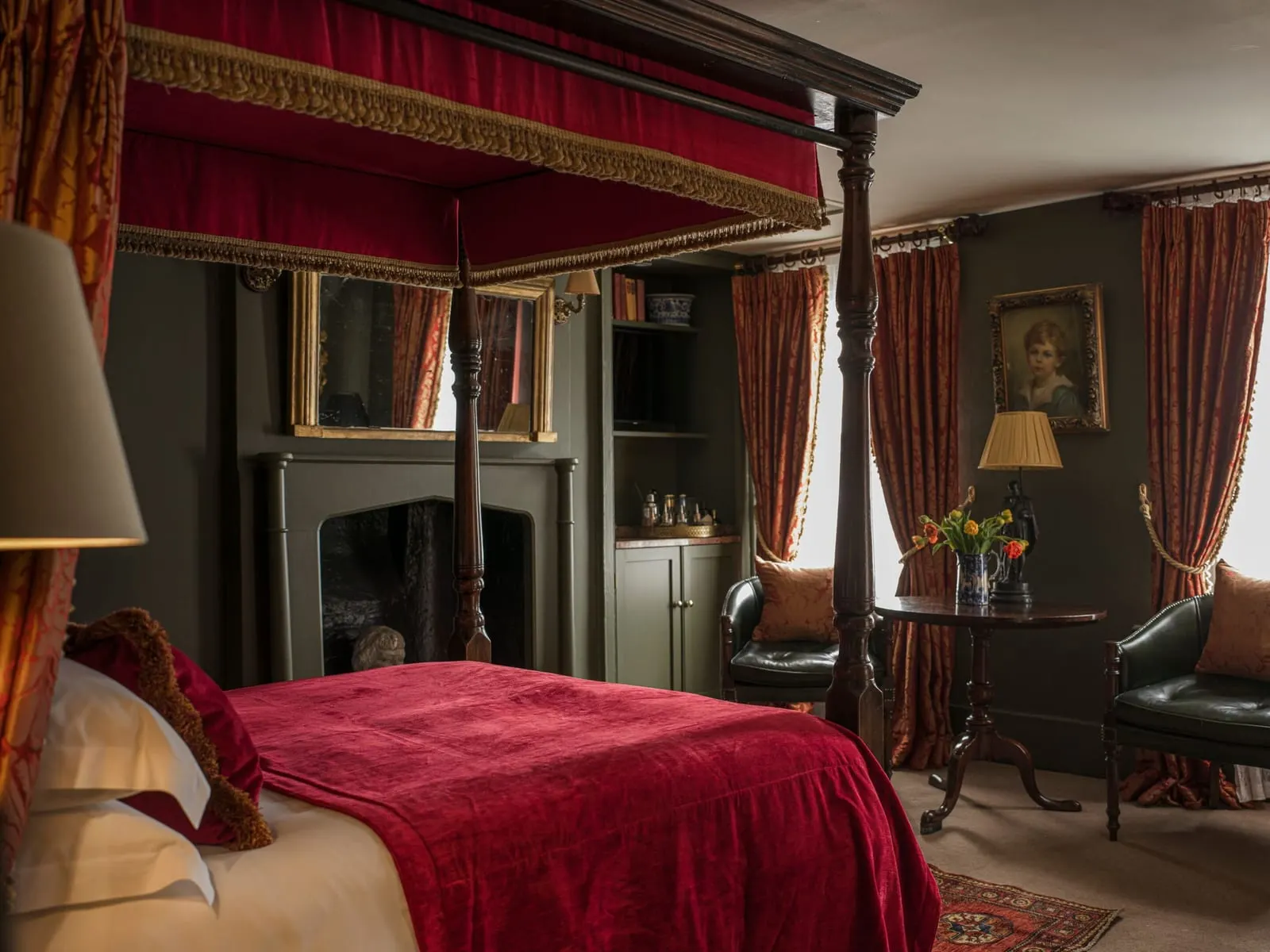
Hazlitt's is the design pick for people who would rather nothing had been redesigned. The houses on Frith Street went up in 1718, and the essayist William Hazlitt died at number 6 in 1830. In 1986 they were a nurses' hostel heading for conversion into flats, until Peter McKay and Douglas Blain bought them and kept them deliberately unmodernised: steep stairs, floors that slant, and 30 rooms named after people connected with the houses rather than numbered.
What separates the rooms is what survived in each. Several have four-posters, one Club Double has a 17th-century carved-oak bed, the Club Single comes with an 18th-century writing desk, and the Superior Doubles have roll-top or theatre baths. The Duke of Monmouth Suite adds a working fireplace and a terrace under a sliding glass roof, and downstairs the Library and the Wardrobe hold the guests-only honesty bar and gin bar.
The room to book
Superior Double
23 m²£404 a night
At about 23 square metres it gives the old proportions room to breathe, with king or large king beds, some of them four-posters, and roll-top or theatre baths.
Which London hotels are in converted historic buildings?
Most of our ten. The Ned fills Lutyens's Grade I listed Midland Bank, begun in 1924, Town Hall Hotel the Grade II listed Bethnal Green Town Hall of 1910, and Hazlitt's a Frith Street terrace of 1718. The Zetter Marylebone is two houses from a listed Georgian terrace built around 1780 to 1790, The Pilgrm a run of Victorian townhouses, and Artist Residence London a Pimlico townhouse whose ground floor was a pub. The Standard, London and Sea Containers London are conversions of 1970s buildings: a Camden council block and a riverside office building.
Is there an affordable design hotel in London?
Two on this list start below £200 a night in January. Town Hall Hotel, in a listed Edwardian town hall in Bethnal Green, starts at about £173, and The Pilgrm, Victorian townhouses fitted out in salvage two minutes from Paddington, at about £184. The Standard, London starts near £250. These are low-season starting prices, and June is the dearest month across all ten. At The Pilgrm every category shares the same finish, so the entry room gets the same design; at Town Hall Hotel the period rooms cost more, a Signature Junior Suite about £100 a night above the entry double on a January night.
Is The Standard, London in a Brutalist building?
Yes. Camden's borough architect's department put it up on Euston Road in the 1970s, an eight-storey annexe faced in white precast panels with rounded window corners, with a library on the ground floor and council offices above. Orms converted it rather than knocking it down, keeping the concrete frame and facade and adding three floors on top, and the hotel opened in 2019 with interiors by Shawn Hausman Design and Archer Humphryes. The library is now The Library Lounge, and a red lift on the outside of the building climbs to the tenth floor.
Who designed the interiors at Sea Containers London?
Tom Dixon's Design Research Studio, for the 2014 opening as Mondrian London, inside the block Warren Platner designed in 1974. Jacu Strauss, who worked on that scheme in Dixon's studio, is now creative director of Lore Group, which has run the hotel since 2019, so the changes come from one of the original hands: the Riverview Studio Suites added in 2026 and Gordon Ramsay at Sea Containers, the dining room finished in the reds of Blackfriars Bridge. Strauss also chose the antiques in the four Cabin Suites.
Which London hotels have art deco interiors?
Among our ten, Claridge's most of all. Its art deco came with Rupert D'Oyly Carte's 1920s extension, the Foyer keeps its original deco mirrors, the recent works restored the deco ballroom, and bedrooms come in either an art deco or a traditional finish, so ask for the one you want. The Painter's Room, a 2021 bar in pink onyx and peach glass, carries the style forward. At Sea Containers London the Art Deco Cabin Suite has a nickel bath and a burl-wood headboard, and at Artist Residence London the Club Suite is art deco with a roll-top bath.
How did you choose these hotels?
Independently, through extensive research, trusted sources and first-hand visits. Hotels cannot pay to be included, and every one of the ten has to exist for a different reason.
 The design one